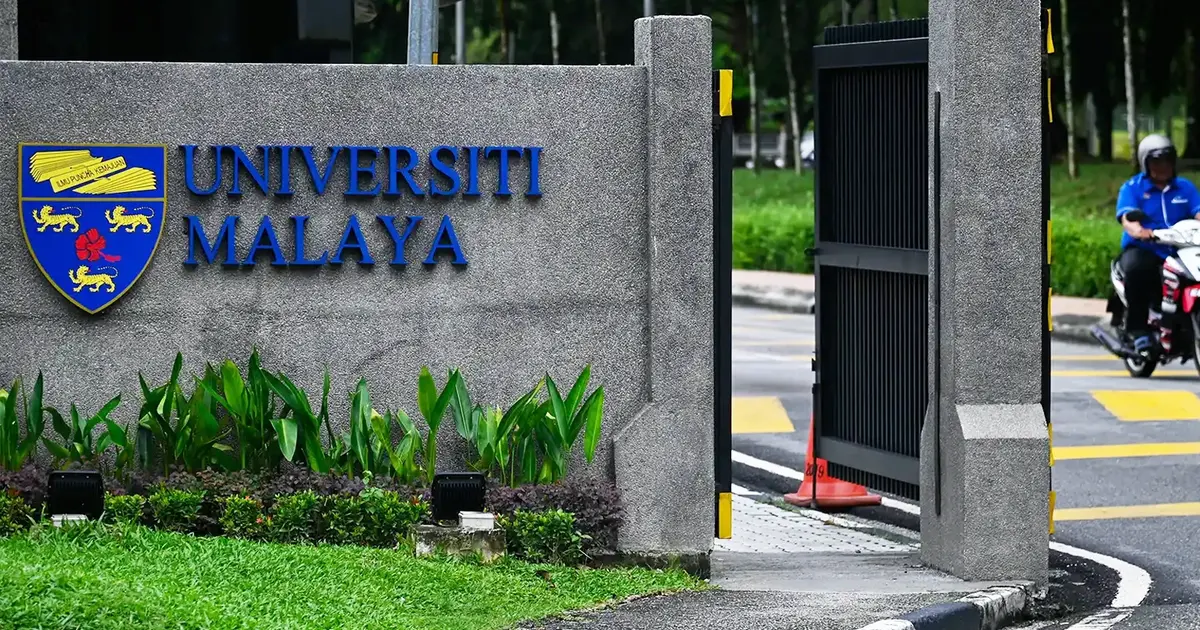
University of Malaya faces mounting pressure from student activists over an unresolved sexual harassment investigation into one of its academic staff members, with advocacy group NewGen UM accusing the institution of delaying the release of findings initially expected to emerge last year.
The student-led organisation has publicly called for the university to provide an update on the investigation's status and conclusions. This demand comes nearly five months after University of Malaya announced in September that the inquiry had reached an advanced stage, raising questions about why the results have not yet been made public or communicated to relevant parties.
NewGen UM's intervention highlights a broader tension between institutional accountability and student activism in Malaysian higher education. Universities operate with considerable autonomy in handling disciplinary and investigative matters, yet student bodies increasingly view such closed-door processes as incompatible with campus transparency and institutional integrity. The group's public pressure represents a shift in how younger generations engage with university governance, moving beyond private petitions toward direct advocacy campaigns.
The delayed outcome of the investigation raises practical concerns for potential complainants, witnesses, and the broader campus community. Without clear communication about investigation timelines and results, the university risks creating perceptions of cover-ups or institutional paralysis, regardless of the actual facts. Transparency in handling harassment allegations is particularly crucial given the power imbalances inherent in academic hierarchies, where professors wield substantial influence over students' grades, recommendations, and career prospects.
The case also reflects international trends in higher education accountability. Universities worldwide have faced sustained criticism for inadequate responses to sexual harassment and misconduct, prompting many institutions to establish clearer protocols and enforce stricter timelines for investigations. Malaysia's universities, positioned as aspirational regional leaders in education, operate under increasing scrutiny to meet international standards in protecting campus safety and supporting survivors of misconduct.
University of Malaya's apparent delay in concluding or announcing the investigation could be attributed to several factors. Complex cases involving harassment allegations often involve legal considerations, witness coordination challenges, or disputes over findings between different institutional bodies. However, extended timelines without communication can compound trauma for complainants and erode institutional credibility among the student population.
NewGen UM's activism fits within a broader student movement across Southeast Asian universities demanding greater say in campus governance. Malaysian students have increasingly mobilised around issues ranging from accommodation quality to academic freedom, leveraging social platforms and public campaigns to influence institutional decision-making. This investigation represents a natural focal point for such advocacy, touching on fundamental questions of safety and institutional responsibility.
The university has not publicly responded to NewGen UM's specific demands, maintaining its customary practice of conducting sensitive matters through internal channels. This approach reflects conventional institutional thinking that public announcements during ongoing processes could compromise fairness or prejudice outcomes. However, students argue that withholding all information indefinitely differs substantially from disclosing completion of investigations and their results.
For Malaysian higher education more broadly, the situation underscores the need for clearer external oversight mechanisms. While universities rightly maintain confidentiality to protect all parties' privacy, completely opaque processes undermine public trust. Establishing independent review bodies or mandatory timelines—implemented successfully in several Commonwealth universities—could balance confidentiality with accountability.
The standoff also carries implications for victim support. Survivors of harassment who report incidents expect clarity on investigation progress and outcomes. Prolonged silence can leave complainants in limbo, uncertain whether their concerns were taken seriously or whether institutional action succeeded. This uncertainty can discourage future reporting and reinforce perceptions that universities prioritise protecting staff reputations over protecting students.
NewGen UM's persistence suggests this issue will remain in the spotlight until University of Malaya provides substantive updates. The group's public positioning makes it unlikely to accept routine institutional responses without concrete information. Student movements have proven effective in forcing Malaysian universities to act on accountability issues, and this campaign may catalyse broader demands for standardised protocols across the sector.
The investigation's final outcome—and the university's willingness to share it transparently—will signal whether Malaysian universities are genuinely committed to protecting students from harassment or merely managing public relations around misconduct allegations. For a university of Malaya's standing and influence within regional education networks, how it concludes this process will resonate beyond its campus gates.