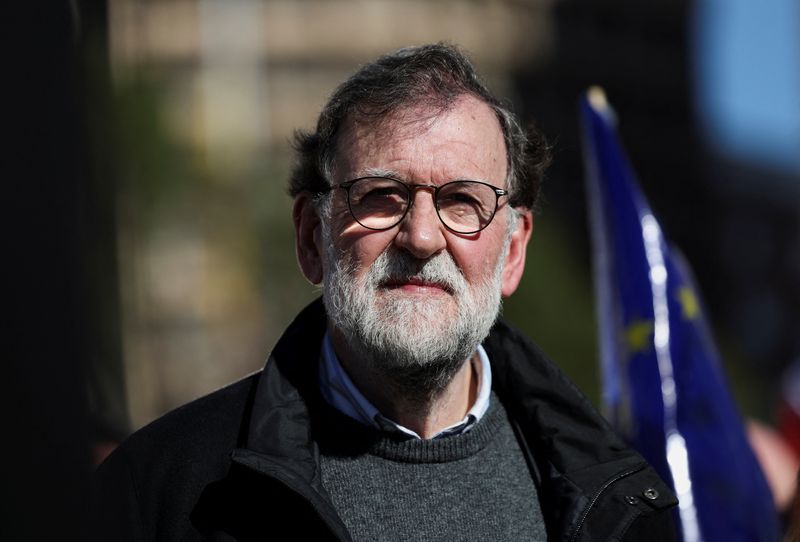
Spain's government has issued a formal apology over a controversial column written by conservative former Prime Minister Mariano Rajoy that cast doubt on the national identity of France's men's soccer team, drawing condemnation from Madrid's political establishment and swift reactions across Europe on the eve of a crucial World Cup clash between the two nations.
Foreign Minister Jose Manuel Albares delivered the apology to his French counterpart on Tuesday, characterising Rajoy's remarks as "intolerable" and laden with "the poison of racism and xenophobia." The timing could not have been more pointed, coming just hours before Spain and France were scheduled to meet in the World Cup semi-finals. Albares was emphatic in rejecting the implicit associations made in Rajoy's piece, emphasising that such comments do not represent the views held by the vast majority of Spanish citizens and that they fundamentally contradict Spain's values.
Rajoy, who served as Spain's Prime Minister from 2011 to 2018, published his column in the online publication El Debate on Friday. While ostensibly praising France's squad as formidable, the piece pivoted to questioning the team's "Frenchness," an apparent reference to the ethnic and ancestral backgrounds of several players with African and Afro-Caribbean heritage. In perhaps the most contentious line, Rajoy wrote: "France has a squad of the very highest calibre. Mind you, there are no French players in it." The statement immediately triggered outrage across Spanish political circles and international commentators.
Albares appeared on Cadena SER radio to elaborate on the severity of the situation, highlighting the troubling undertones embedded in Rajoy's logic. "It's a very serious matter to go around using skin colour to determine who can be a citizen and who cannot," he said, underscoring how the column's implication that non-white players somehow lacked legitimacy as French nationals crossed a red line. This critique struck at the heart of the issue: the notion that nationality could be assessed through phenotype or heritage rather than citizenship and loyalty.
Spain's current Prime Minister Pedro Sanchez, who happened to be in Paris for France's National Day celebrations on Tuesday, weighed in with particular force. Through a post on social media platform X, Sanchez condemned "those who measure nationality by a person's surname, birthplace or skin colour," specifically describing Rajoy's words as "shamefully xenophobic." His intervention was notable because it demonstrated the political consensus within Spain's governing coalition that the remarks were indefensible, transcending the usual partisan divides.
Borja Semper, the spokesperson for Rajoy's People's Party (PP), attempted to minimise the controversy by characterising the column as satire written without malicious intent. According to Semper, the provocative statement was meant as "sarcastic expression" rather than a genuine reflection of Rajoy's beliefs. However, this defence gained little traction, particularly given the widespread understanding that such formulations, whether presented as satire or not, reinforce xenophobic narratives and contribute to a broader climate of discrimination.
The controversy unfolded against a broader backdrop of racist comments targeting French athletes during the tournament. Just days earlier, Paraguayan Senator Celeste Amarilla had posted a virulent attack on France captain Kylian Mbappe following Paraguay's elimination. Amarilla described Mbappe as a "colonised Cameroonian, desperately trying to pass himself off as French," remarks that sparked international condemnation and official complaints. Mbappe responded with dignity, defending not only himself but also Paraguay's players while characterising Amarilla's statements as despicable. Paraguay's government subsequently distanced itself from Amarilla's comments, declaring them contrary to the nation's values.
France's response to Rajoy's column demonstrated rare political unity. Foreign Minister Jean-Noël Barrot told BFM TV that the comments were "pathetic," further declaring: "Once and for all, France has no skin colour. Any statement to the contrary is a sign of idiocy, racism, or both combined." Remarkably, the far-right National Rally, typically positioned in opposition to the government, also condemned the remarks. Party spokesman Julien Odoul told Franceinfo television that Rajoy's comments were "scandalous, shameful, deplorable," and went further by declaring: "Rajoy is a racist, it's as simple as that."
The incident highlights how questions of national identity and belonging continue to animate debates across Europe, particularly in the context of sports where representation becomes charged with symbolic meaning. For Malaysian and Southeast Asian observers, the controversy offers a sobering reminder of how casual remarks about identity and ethnicity can escalate into international incidents. It also underscores the persistent tensions surrounding immigration, citizenship, and what it means to truly belong to a nation—tensions that resonate across the region as countries grapple with questions of integration and pluralism.
The French Football Federation announced it would file a criminal complaint in response to Amarilla's remarks, signalling an escalation in consequences for such statements. As European nations become increasingly diverse and as sporting competitions provide platforms for millions of viewers, the tolerance for ethno-nationalist commentary continues to narrow. Rajoy's attempt to reframe his comments as satire may ultimately prove ineffective in dampening the diplomatic fallout and the broader message it sends about acceptable discourse in contemporary Europe.

