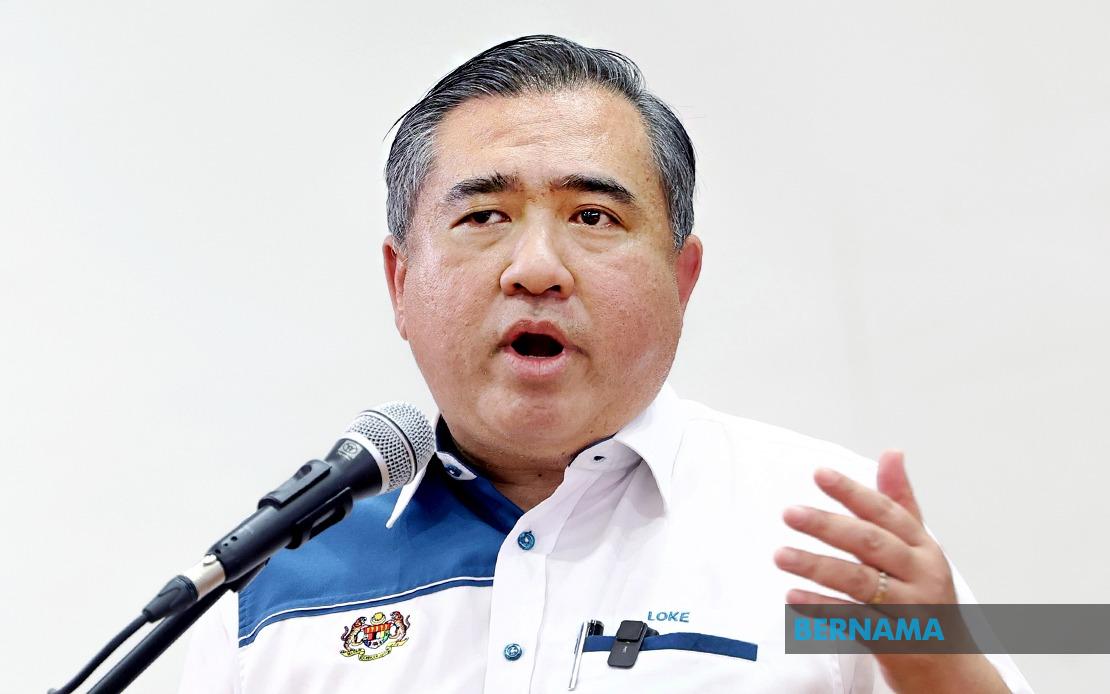
Transport Minister Anthony Loke has clarified that the Southern Shuttle service's current reliance on diesel trains is merely a stopgap measure to serve commuters in Johor while the nation awaits the arrival of new Electric Multiple Unit (EMU) trains. Speaking through a Facebook statement on June 20, Loke defended the interim arrangement, emphasizing that the government faced a straightforward choice between maintaining service continuity or compelling residents to endure an extended wait for modern rolling stock.
The ministry's decision to deploy existing diesel trains reflects a pragmatic approach to public transport expansion. Rather than delay the launch of the Southern Shuttle service by two to three years pending completion of ten new EMU train sets, authorities opted to commence operations immediately using available locomotives. This strategy aligns with broader government efforts to expand rail-based mobility across Malaysia, particularly in corridors where such infrastructure has historically lagged behind Klang Valley standards.
The government has committed substantial financial resources to support the service, allocating between RM11 million and RM15 million annually in subsidies. These funds aim to broaden access to rail-based public transport and reduce dependency on automobiles across the region. The investment demonstrates recognition of growing transportation demands in southern Johor, where economic activity and population density have expanded significantly over recent years.
The Southern Shuttle service currently connects three key nodes: Kulai, JB Sentral, and Pasir Gudang. Journey times remain competitive for the regional context, with the Kulai to JB Sentral segment covering its distance in approximately 40 minutes, while the Kempas Baru to Pasir Gudang route requires between 40 and 45 minutes. These travel times position the service as an attractive alternative to congested road corridors during peak periods, particularly for commuters accessing the port facilities and industrial zones concentrated in Pasir Gudang.
A significant development accompanying the Southern Shuttle launch involves repurposing freight infrastructure for passenger operations. The Kempas Baru to Pasir Gudang corridor had historically served exclusively as a freight conduit, but the ministry has now opened this route to regular commuters for the first time. This infrastructure redeployment maximizes asset utilization while simultaneously enhancing regional connectivity without requiring substantial new capital expenditure.
Loke indicated that the diesel-to-electric transition will occur upon completion of the Gemas-Johor Bahru electrified double-tracking project. Once this infrastructure upgrade concludes, the Southern Shuttle service will transition to modern Electric Train Service (ETS) operations, eliminating reliance on diesel locomotives entirely. This phased approach allows the ministry to extend service benefits to residents during the interim period while simultaneously pursuing longer-term electrification objectives that align with Malaysia's sustainability priorities.
The service upgrade has attracted criticism from certain quarters regarding fare structures and rolling stock quality. Critics have highlighted that Southern Shuttle fares exceed those charged for comparable services in the Klang Valley and Seremban corridors, with some calculating fares to be approximately three times higher. This pricing disparity reflects multiple factors, including the developmental stage of the route, capital cost recovery considerations, and operational expenses associated with deploying diesel traction in an era when most developed rail networks have shifted toward electrified systems.
The deployment of older diesel trains, while functionally adequate, presents an image challenge for the service. Malaysian commuters have grown accustomed to modern EMU operations in mature corridors, and the introduction of diesel traction may be perceived as a downgrade rather than a service expansion. However, Loke's framing emphasizes that immediate service availability outweighs aesthetic considerations, particularly for residents previously lacking convenient rail alternatives.
For the broader Malaysian transport landscape, the Southern Shuttle represents a significant development in eastern Johor connectivity. Pasir Gudang's role as a major port and industrial hub has intensified demand for efficient people-movement systems. The service extension to this corridor potentially reduces vehicular traffic pressures on the North-South Expressway and secondary road networks, with downstream benefits for congestion management and air quality across the region.
The eventual electrification of the Gemas-Johor Bahru corridor will position southern Johor as an increasingly integrated node within Malaysia's expanding rail network. When completed, this infrastructure upgrade will provide seamless electric train connectivity from the central belt through to the southern industrial zones, enhancing regional economic integration and reducing operational costs compared to diesel alternatives. The ETS service will align with contemporary public transport standards while providing modern, comfortable travel experiences that justify premium fares relative to older diesel services.
The Southern Shuttle initiative also signals the Transport Ministry's commitment to extending rail connectivity beyond traditional urban corridors into secondary cities and industrial zones. This spatial expansion of rail-based public transport infrastructure responds to Malaysia's ongoing urbanization patterns and the geographical diffusion of economic activity beyond the primary metropolitan centers. Johor's designation as a growth corridor under various national development frameworks makes enhanced transportation connectivity increasingly essential for supporting logistics operations and worker mobility.
Investor and commuter confidence in the Southern Shuttle will likely strengthen once the EMU trains arrive and electrification progresses. The current diesel phase represents a temporary sacrifice of modernity for pragmatism—a trade-off that Loke's messaging attempts to reframe as responsible governance prioritizing service availability over perfection. As new trains enter service and infrastructure improvements materialize, the Southern Shuttle should evolve into a flagship example of how interim solutions can successfully bridge the gap between transport demand and capital readiness.

