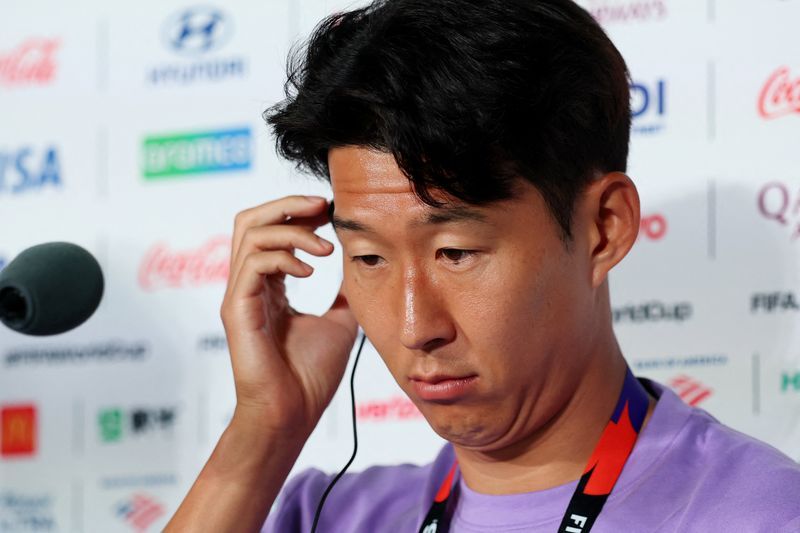
The South Korean national football team has taken the unusual step of boycotting voluntary media engagements during the World Cup after journalists allegedly ridiculed captain Son Heung-min's military service commitment, an incident that has exposed broader tensions between the sport's media apparatus and the squad. The controversy emerged when reporters were caught on an open microphone making derisive comments about the 33-year-old Tottenham Hotspur forward while he trained separately from his teammates at the Guadalajara base camp, according to multiple regional news outlets covering the tournament.
Military service occupies a distinctive and deeply complex position within South Korean society, far beyond the typical conscription obligations found in other nations. Every able-bodied male citizen must complete approximately 21 months of active military duty as a cornerstone of the country's national security strategy, a legal requirement designed to maintain operational readiness against potential threats from North Korea. This obligation is so embedded in the national fabric that it shapes career trajectories, public perception, and social standing across virtually all sectors of South Korean life, from entertainment to politics to professional athletics.
Yet the system does contain provisions acknowledging exceptional achievement. Athletes who capture gold medals at the Olympic Games or triumph at the Asian Games qualify for complete exemption from this mandatory service requirement, a recognition that such accomplishments bring considerable prestige to the nation. Son Heung-min and his teammates earned precisely this exemption when they secured the championship title at the 2018 Asian Games, a triumph that granted them freedom from the standard conscription path and allowed them to continue their professional careers without the extended interruption that military service would normally demand.
Despite possessing this exemption, Son nonetheless undertook a three-week basic military training programme during the 2020 off-season when COVID-19 temporarily halted Premier League competition. This voluntary engagement saw him endure the full rigor of recruit training, including exposure to tear gas, live-fire exercises, and grueling 30-kilometre hikes, demonstrating a commitment to honouring his national obligations even though legal exemption was available to him.
The Korea Football Association moved swiftly to address the incident, issuing a formal statement that acknowledged the gravity of the situation and expressed deep regret over what it characterised as inappropriate remarks by certain media personnel. The association framed the controversy not merely as a personnel matter but as a threat to the team's ability to represent the nation with full focus and unity. The organisation emphasised that the Taegeuk Warriors, the traditional nickname for South Korea's national football team, are working with complete dedication to honour the confidence and hopes that the South Korean public has invested in them.
The impact of the media controversy on the squad's morale appears substantial enough to warrant collective action. Rather than proceed with voluntary press conferences and interviews, the players have enacted an informal boycott of non-mandatory media interactions, effectively demonstrating their displeasure with conduct they view as disrespectful and damaging to team cohesion during a critical tournament. This represents a rare moment of unified resistance by athletes against journalistic practices, signalling that the squad views the incident as serious enough to warrant visible retaliation.
The Korea Football Association has called upon media organisations to exercise greater restraint and professionalism when covering the national team, requesting that journalists demonstrate more thoughtful consideration for the athletes and adopt more responsible editorial practices. The association has committed itself to protecting the squad's welfare and working towards establishing a more constructive relationship between the team and the press corps, though the success of such efforts remains uncertain given the underlying tensions now laid bare.
However, the players' ability to sustain this boycott faces practical limits rooted in international football governance. FIFA, the sport's world governing body, imposes mandatory media obligations on all participating teams throughout tournament competition. These requirements ensure consistent media access that serves the global broadcast partnerships and official World Cup communications infrastructure. Consequently, South Korea must ultimately comply with FIFA's press regulations even as the team maintains its position regarding voluntary beyond-obligation engagements.
This controversy illuminates the particular sensitivities surrounding military service discourse in South Korean culture, where the topic intersects with national security, generational expectations, and individual sacrifice in ways that differ markedly from most other democracies. What might constitute minor locker-room banter in other contexts carries substantially different weight in a nation where mandatory military service represents a fundamental civic obligation and cultural touchstone. The incident serves as a cautionary reminder that journalists covering South Korean athletes must navigate these cultural nuances with considerably more awareness and discretion than may be required in other sporting contexts.
The fallout also reflects broader questions about the relationship between elite athletes and media during high-stakes international competitions. When journalists prioritise provocative commentary over constructive coverage, they risk alienating the very subjects they depend upon for access and information. In this case, the South Korean squad's response demonstrates that athletes collectively possess leverage to push back against perceived disrespect, even if that leverage remains constrained by competition rules and international obligations. The episode will likely prompt South Korean football authorities to reassess their media credential policies and access arrangements going forward.

