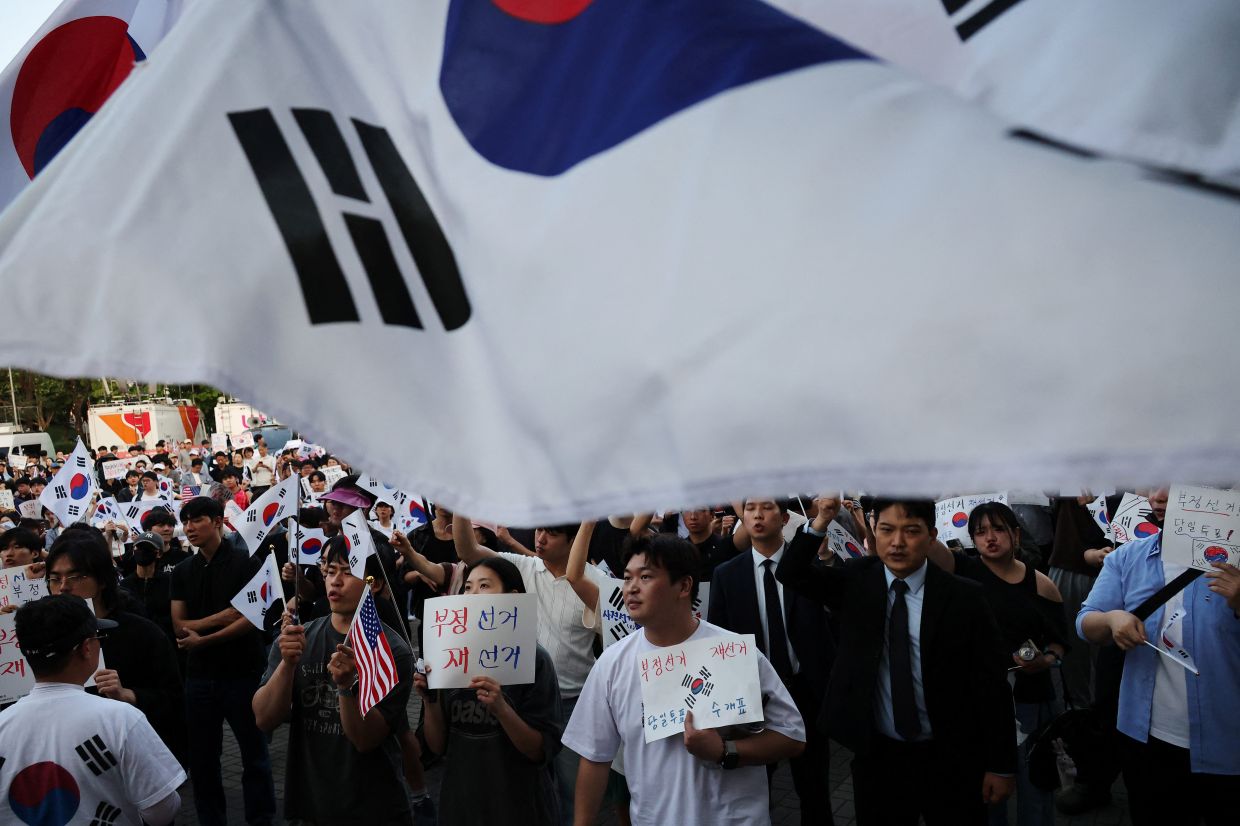
South Korean President Lee Jae Myung has struck a careful balance between acknowledging serious failures in the country's June 3 local election administration and drawing a firm line against what he describes as unfounded conspiracy theories regarding electoral manipulation. The mixed messaging reflects deep public frustration over voting irregularities that disrupted the democratic process, whilst the president attempts to prevent legitimate grievances from metastasizing into broader institutional distrust.
On June 15, Lee posted on social media platform X, cautioning demonstrators who have camped around Olympic Park's handball arena—the vote-counting centre for the contested elections—to avoid overstepping into the infringement of other citizens' rights and freedoms. His intervention came after reports surfaced that sports organisations with offices in the Olympic Park complex had been unable to conduct essential administrative operations due to protester blockades. For some of these bodies, the disruptions posed genuine complications, as they scrambled to complete paperwork necessary for South Korean athletes' participation in forthcoming international sporting competitions.
The specific location of the ongoing protests carries symbolic weight in South Korea's political landscape. The handball arena at Olympic Park functioned as the central vote-counting facility and housed ballot boxes following the June 3 elections, making it a focal point for those demanding answers about what went wrong during the polling process. The decision to maintain a visible presence there signals protesters' determination to keep pressure on authorities to conduct thorough investigations into the irregularities that marred the election day experience for many voters.
On June 14, a day before his call for restraint, Lee had issued a more forceful statement, describing the National Election Commission's management of the June 3 elections as a substantial institutional failure that directly violated voters' fundamental rights. Speaking via video link from the Vatican, where he was attending meetings, Lee characterised the ballot shortage issues and other voting logistics problems as deeply troubling to South Korea's democratic foundations. Yet he simultaneously cautioned against what he termed baseless theories alleging systematic election rigging, seemingly concerned that legitimate anger could be weaponised to undermine confidence in electoral institutions themselves.
The technical failures on election day included ballot paper shortages and operational mismanagement that resulted in voting being suspended or delayed at numerous polling stations across the country. These tangible problems gave rise to public anger, as citizens experienced direct obstacles to exercising their most fundamental democratic right. Lee's recognition of these legitimate grievances demonstrated his awareness that downplaying the failures would only deepen public cynicism and fuel speculation about what authorities might be concealing.
However, Lee drew a sharp distinction between criticising the commission's administrative competence and entertaining claims that the election outcome had been manipulated. He warned that certain actors were capitalising on public anger to promote what he called absurd conspiracy narratives. According to his account, some individuals spreading election fraud allegations had engaged in threatening behaviour toward police officers and ordinary citizens, conducted suspicious investigations, blocked access to public facilities, and obstructed official functions. Such conduct, Lee suggested, crossed the line from legitimate protest into illegal activity that warranted prosecution.
The president instructed police to conduct rigorous investigations not only targeting those who used force to obstruct work or prevent civilians from entering facilities, but also those who may have coordinated such actions behind the scenes. This directive represented an attempt to demonstrate that authorities would hold accountable anyone whose protests crossed into illegality, whilst simultaneously maintaining that the underlying election had been conducted fairly despite its operational failures.
Lee's position reflects a broader challenge facing democracies when administrative failures intersect with electoral politics. When voting processes malfunctions occur, they inevitably invite questions about whether outcomes were affected, even if no evidence supports such claims. The danger lies in allowing justified frustration over administrative incompetence to metastasise into broader institutional delegitimation. Yet simultaneously, dismissing public concerns too readily risks appearing dismissive of genuine violations of voting rights and can further fuel conspiracy thinking.
To address these tensions, Lee called for multiple investigative mechanisms operating in parallel. He urged the National Election Commission to cooperate fully with a parliamentary investigation expected to commence that week, whilst simultaneously pressing prosecutors and police to accelerate their joint investigation into responsibility for the failures. He emphasised that such investigations must proceed transparently and without offering sanctuary to any official or institution, signalling that high-ranking commission members should not expect protection from accountability.
Lee framed the crisis as an opportunity to strengthen democratic institutions and popular sovereignty, but only if handled through what he called healthy criticism and constructive alternatives pursued collaboratively. He advocated for rapid completion of thorough fact-finding processes that would illuminate exactly what went wrong and why, enabling preventive measures for future elections. This emphasis on process transparency represented an implicit acknowledgment that public trust would require more than mere assertions of electoral integrity; citizens needed visible evidence of comprehensive investigation and accountability.
The president's comments also reflected recognition that South Korea's younger citizens and broader public had mobilised around genuine concerns about voting rights violations. Rather than dismissing their anger as misguided or conspiratorial, Lee suggested their righteous indignation should prompt society-wide reflection on how electoral administration could be improved. This framing potentially allowed authorities to address legitimate failings without validating unfounded claims of fraud, though success would depend on whether investigations produced credible answers and meaningful reforms.
For Malaysia and other Southeast Asian democracies, South Korea's experience offers instructive lessons about managing the intersection of administrative failures and electoral credibility. Election commissions throughout the region face similar pressures to demonstrate both operational competence and institutional integrity. When logistical problems occur, transparent investigation and visible accountability mechanisms become essential tools for preventing erosion of democratic legitimacy.

