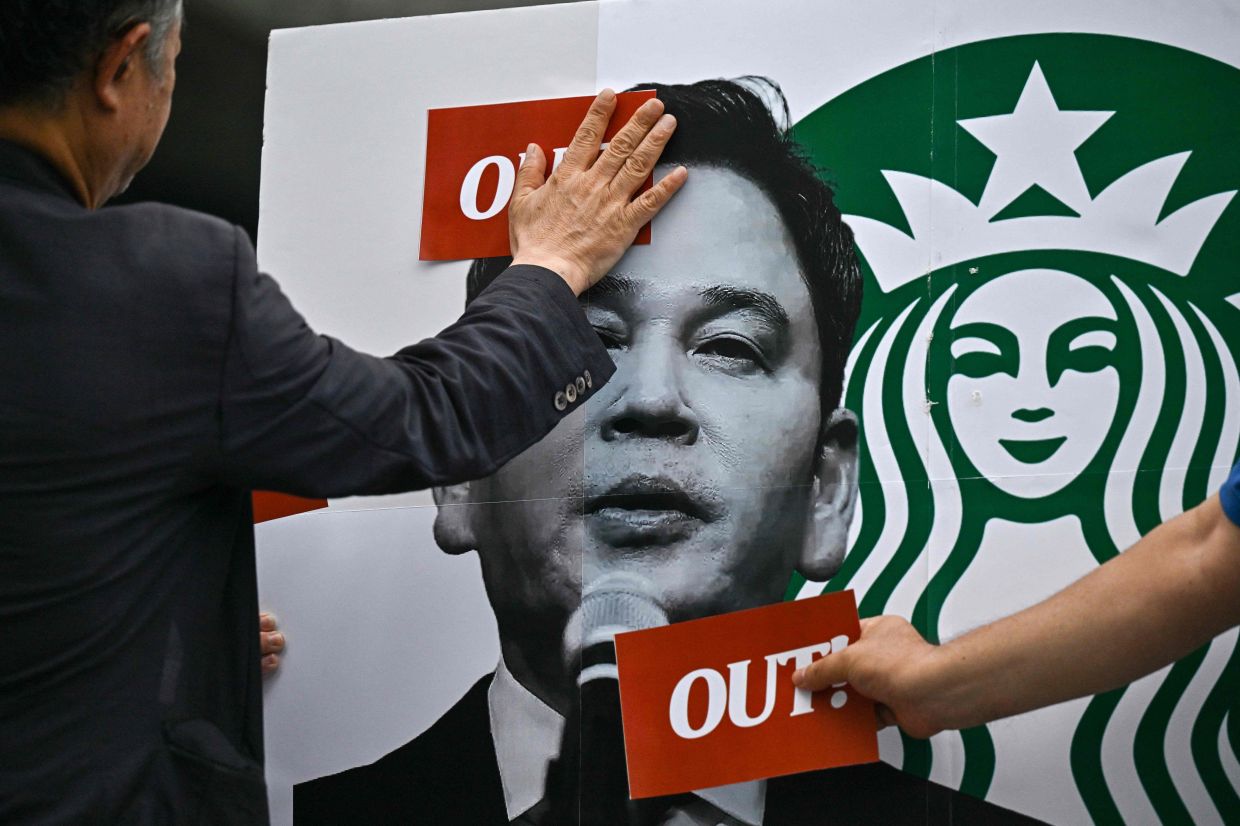
South Korean police have launched a formal inquiry into Starbucks Korea's handling of a promotional campaign that inadvertently evoked memories of a deadly military crackdown, with investigators questioning an executive from the company's operator, Shinsegae Group. The May 18 reusable cup promotion, themed "Tank Day," sparked widespread public fury after coinciding with the 46th anniversary of the Gwangju uprising, a pivotal moment in Korean history when government forces suppressed a pro-democracy demonstration, killing at least 165 civilians according to official accounts, though independent scholars and survivors contend the true death toll was substantially higher. The incident has mushroomed into a legal and corporate crisis for one of South Korea's largest conglomerates, with investigators now examining whether company leadership violated domestic laws protecting the historical narrative of the 1980 crackdown.
The timing of the promotion appeared to be an oversight rather than deliberate provocation, yet the convergence of a militaristic campaign theme with the nation's most sensitive historical anniversary created an immediate firestorm. Sharbucks Korea, which operates over 2,000 locations across the country under licence from Shinsegae Group, had developed the campaign without apparently recognising the cultural resonance of May 18 in South Korean collective memory. The disconnect between corporate marketing objectives and historical awareness underscores how multinational brand strategies can collide with local sensitivities, particularly in nations where certain dates carry profound political and emotional significance. For Malaysian readers familiar with similar historical sensitivities across Southeast Asia, the incident illustrates how globalised corporations must navigate intricate local contexts that international head offices may not fully comprehend.
Following the public outcry, Shinsegae moved swiftly to contain the damage. The conglomerate terminated its Korea chief executive on the day the scandal became public, signalling rapid corporate accountability to stakeholders and the broader public. Subsequently, Shinsegae Group chairman Chung Yong-jin issued a formal apology, acknowledging the gravity of the misstep. These measures, however, failed to quell civic demands for accountability. A citizens' advocacy group escalated matters by filing a formal complaint against Chung and other senior executives, alleging violations of a 2016 law designed to protect the integrity of the Gwangju uprising's historical record. The statute explicitly prohibits the dissemination of false or distorted information concerning the 1980 pro-democracy crackdown, reflecting South Korea's legislative commitment to preventing historical revisionism.
The Seoul Metropolitan Police Agency subsequently questioned Yang Jong-hwan, head of Shinsegae Group's audit function, in what authorities characterised as a witness interview. The questioning represents an escalation from corporate self-regulation to formal state investigation, indicating that prosecutors view the matter as potentially breaching criminal statutes rather than merely constituting poor business judgement. Beyond the legal dimensions, the complaint also alleges defamation and insult, suggesting that civic groups view the campaign not simply as historical insensitivity but as an affront to victims and survivors of the 1980 crackdown. The multi-layered legal exposure facing Shinsegae executives reflects how corporations operating in post-authoritarian democracies must contend with laws and public sentiment designed to protect collective historical memory from commercial exploitation or trivialisation.
Internal investigations by Shinsegae identified a series of organisational failures that permitted the campaign to reach public launch. Company officials had approved marketing materials without thoroughly reviewing the design files, suggesting inadequate compliance procedures and insufficient cross-functional communication regarding cultural sensitivity. This accountability finding, while demonstrating some corporate transparency, also raises questions about systemic risk management within large conglomerates. For Shinsegae, a diversified business empire spanning retail, food service, and luxury goods, the episode exposed gaps in governance structures that should ideally flag potential reputational hazards before campaigns reach consumers. Malaysian corporations of comparable scale operate in an equally complex multicultural environment where religious, ethnic, and historical sensitivities require rigorous internal vetting processes.
The commercial consequences have been immediate and measurable. Starbucks Korea experienced a "sharp decline in sales" during the initial scandal phase, as consumers either boycotted the brand in protest or consciously shifted purchasing behaviour to competitors. The sales contraction reflects how quickly brand damage accumulates in the digital age, where social media amplification can transform corporate missteps into nationwide controversy within hours. The economic impact extends beyond Starbucks itself, potentially affecting Shinsegae Group's broader reputation and consumer perception across its diversified business portfolio. In Southeast Asia, where many regional consumers remain attentive to corporate social responsibility and cultural respect, the case demonstrates the financial fragility underlying brands perceived as culturally tone-deaf.
In response to the escalating crisis, Starbucks Korea has implemented remedial measures intended to educate staff and leadership about the historical context of May 18. All Starbucks stores across the nation will suspend operations for half a day on the following Monday to facilitate mandatory history education for employees. More significantly, Shinsegae Group's chairman and senior executives will participate in similar educational sessions two days later, symbolically positioning organisational leadership alongside frontline staff in confronting the historical record. These measures function both as internal corrective action and as public demonstration of institutional contrition. The enforced historical education suggests that company leadership intends to internalise the lesson that commercial operations in South Korea require acute awareness of the nation's historical trauma and the ongoing significance of May 18 within Korean political and social consciousness.
South Korea's position as Starbucks' third-largest market globally, trailing only the United States and China, underscores the financial magnitude of the Korean market for the American coffee chain. This commercial importance amplifies both the reputational stakes and the incentive for Starbucks to demonstrate genuine commitment to resolving the crisis and preventing recurrence. For a brand operating in multiple markets simultaneously, the South Korean situation illustrates the inherent tension between standardised global marketing strategies and the necessity of granular local contextualisation. The company must now balance efficiency gains from centralised campaign development against the risks of cultural insensitivity in markets where historical narratives carry exceptional weight.
The political dimension of the scandal crystallised when President Lee Jae Myung publicly condemned the campaign as "inhumane and disgraceful," elevating what might otherwise remain a corporate governance matter into national political discourse. Presidential statements on commercial controversies signal to the broader public the importance of historical remembrance and establish normative expectations regarding corporate behaviour toward sensitive national narratives. For multinational companies operating across Asia, such political statements represent both warning and clarification: governments retain the capacity and willingness to intervene when corporate conduct intersects with protected historical narratives or political legitimacy. The episode thus carries implications for how foreign and domestic businesses calibrate risk assessment in markets where historical consciousness remains politically salient.
The investigation's progression will likely establish precedent regarding enforcement of South Korea's 2016 historical protection legislation. If prosecutors determine that corporate negligence in historical matters constitutes criminal violation rather than merely regulatory infraction, the ruling would substantially elevate compliance obligations across industries. Marketing professionals, compliance officers, and corporate communications specialists throughout South Korea and potentially across the region will study the outcome to recalibrate their own organisations' procedures for cultural sensitivity vetting. The Starbucks case thus transcends a single brand's misstep to become a broader conversation about how contemporary corporations must integrate historical consciousness into operational decision-making, particularly in nations where the past remains actively contested and politically consequential.

