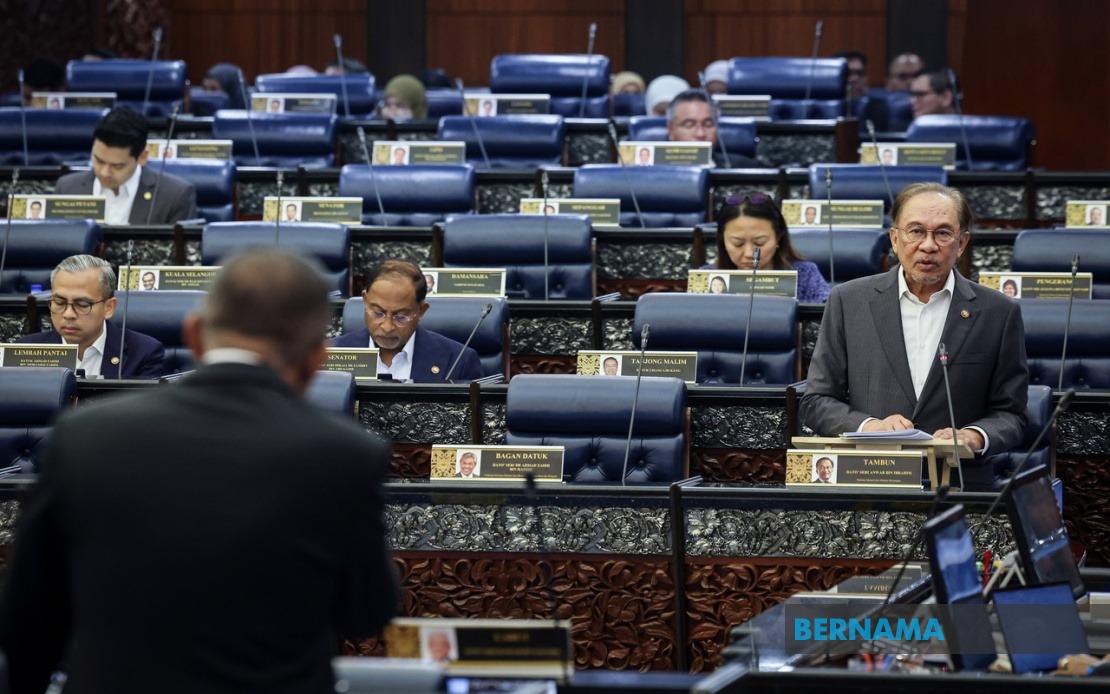
The government has intensified its financial support for Malaysia's small business sector, with Syarikat Jaminan Pembiayaan Perniagaan (SJPP) green-lighting RM4.9 billion in financing facilities for over 6,000 micro, small and medium enterprises during the first half of 2026. Prime Minister Datuk Seri Anwar Ibrahim, who also holds the Finance Ministry portfolio, outlined this initiative during parliamentary question time in the Dewan Rakyat, underscoring the administration's commitment to bolstering entrepreneurship amid challenging global economic conditions.
These approvals represent a strategic response to longstanding barriers that prevent small business operators from accessing traditional credit channels. By channelling substantial capital through SJPP, a wholly-owned entity under the Ministry of Finance, the government aims to reduce friction in the lending process and provide more affordable borrowing options for enterprises that form the backbone of Malaysia's economy. The timing is particularly significant as Southeast Asian markets grapple with uncertainty stemming from geopolitical tensions and shifting international trade dynamics.
Prime Minister Anwar addressed the query raised by Lee Chuan How, the Member of Parliament representing Ipoh Timor, regarding the MADANI government's awareness of business sector pressures and the concrete steps being implemented to ensure MSME sustainability. This parliamentary exchange highlighted growing concerns among Malaysian business communities about survival and growth prospects in an environment marked by rising operational costs and tightening profit margins across numerous industries.
The RM4.9 billion approved in the first six months of 2026 forms part of a substantially larger support architecture. The government has mobilised more than RM15 billion in total loans and financing guarantees specifically designed to address working capital constraints among small enterprises. This comprehensive approach recognises that cash flow challenges, rather than lack of viable business models, frequently prevent MSMEs from scaling operations or weathering temporary revenue fluctuations.
Within this broader framework, policymakers have prioritised indigenous entrepreneurs through a dedicated allocation. A separate RM5 billion tranche has been ring-fenced exclusively for Bumiputera-owned businesses, reflecting the administration's emphasis on inclusive economic development and ensuring that affirmative action policies translate into tangible financial access. This targeted allocation addresses historical disparities in credit availability for Bumiputera entrepreneurs, who have traditionally faced greater difficulty in securing institutional financing despite possessing viable business propositions.
The SJPP mechanism operates as a crucial intermediary in Malaysia's financial ecosystem, functioning as a guarantee provider that mitigates lender risk when financing small businesses. By absorbing a portion of default risk, SJPP enables commercial banks and other financial institutions to extend credit to borrowers who might otherwise be deemed insufficiently creditworthy under conventional lending criteria. This risk-sharing arrangement has proven instrumental in expanding financial inclusion while maintaining prudent lending standards.
For Malaysian entrepreneurs navigating unprecedented business conditions, access to affordable financing represents a critical competitive advantage. The RM4.9 billion deployment during 1H 2026 encompasses diverse sectors, from retail and hospitality to manufacturing and digital services, reflecting the MSME ecosystem's remarkable heterogeneity. Each approved facility theoretically enables business owners to invest in technology upgrades, inventory replenishment, or workforce expansion—investments that drive productivity improvements and sectoral competitiveness.
The scale of these interventions underscores the government's recognition that macroeconomic headwinds disproportionately impact small enterprises relative to large corporations. While multinational corporations can access international capital markets and maintain geographically diversified operations, MSMEs typically depend on localised customer bases and domestic financing sources. Consequently, targeted government support through mechanisms like SJPP becomes essential for economic resilience and job preservation at the grassroots level.
Regional context amplifies the significance of these financing initiatives. Across Southeast Asia, governments are similarly intensifying MSME support programmes as inflationary pressures and reduced consumer spending threaten small business viability. Malaysia's RM15 billion commitment positions the nation competitively within this regional trend, potentially attracting entrepreneurial talent and fostering business formation that generates employment and tax revenues.
The government's dual-track approach—combining blanket availability with targeted Bumiputera allocations—reflects nuanced policymaking that acknowledges both universal business challenges and specific equity objectives. By simultaneously pursuing broad-based credit expansion and affirmative action, authorities attempt to expand the overall entrepreneurial base while redressing historical imbalances in economic opportunity distribution.
Looking forward, the sustainability of these financing programmes depends not merely on capital availability but on complementary interventions addressing operational efficiency, digital adoption, and export capabilities among MSMEs. Access to credit alone cannot overcome structural vulnerabilities in business models or inadequate technical skills. Consequently, observers view the RM4.9 billion approval as one component within a more comprehensive ecosystem development strategy encompassing training, mentorship, and market access facilitation.
The parliamentary exchange between Prime Minister Anwar and MP Lee Chuan How signals continued legislative scrutiny of MSME support effectiveness. This accountability mechanism encourages government agencies to track deployment efficiency, monitor default rates, and demonstrate tangible business survival and growth outcomes. Such oversight mechanisms strengthen confidence among policymakers and stakeholders that public resources are generating genuine economic benefits rather than merely creating accounting entries.
As Malaysia's business environment evolves throughout 2026 and beyond, SJPP's financing machinery will face practical tests regarding disbursement speed, borrower satisfaction, and ultimate business performance among supported enterprises. These real-world outcomes will determine whether government financing commitments effectively translate into sustained entrepreneurship and economic dynamism at the community level.

