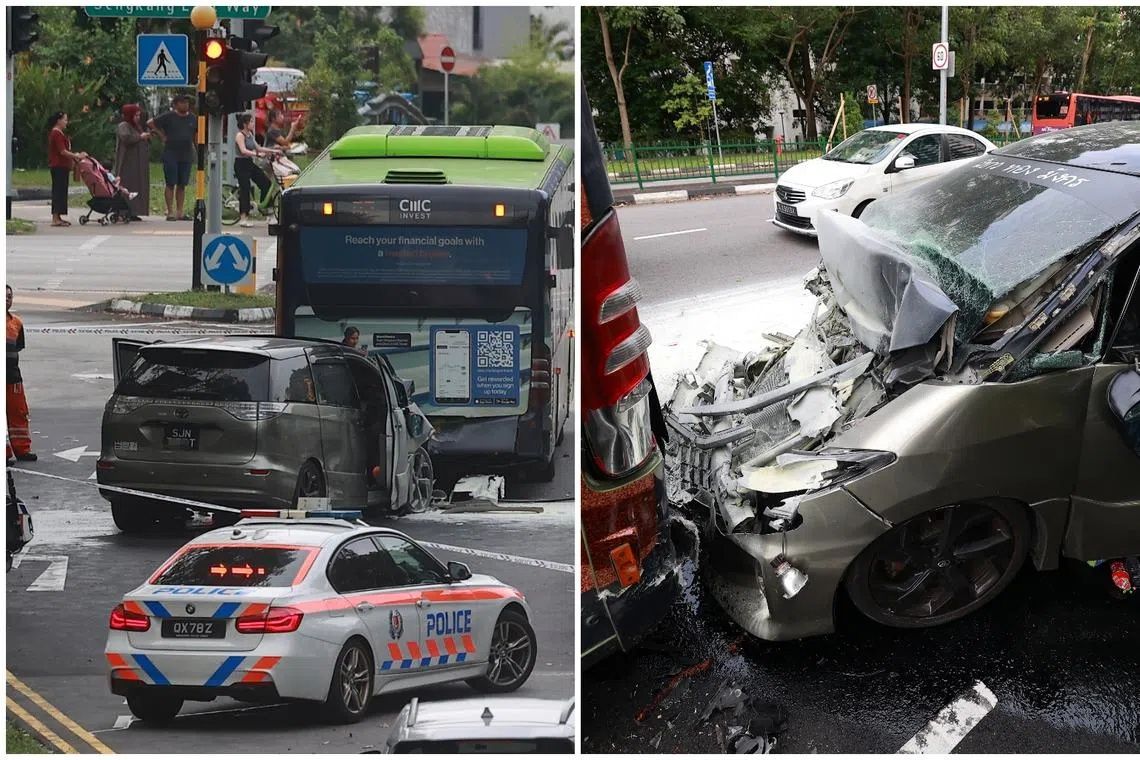
Singapore is grappling with a dangerous public health threat that extends beyond individual drivers to endanger every person on the road. Over a recent 12-day stretch in June, authorities charged three men with driving under the influence of substances—all cases uncovered only after collisions occurred. Two had consumed methamphetamine, while the third had used etomidate, an anaesthetic agent increasingly incorporated into e-vaporisers marketed as Kpods. The pattern of these incidents underscores a troubling gap in road safety: impaired drivers are only being intercepted after causing harm rather than being detected and prevented from driving in the first place.
The gravity of the situation becomes clear when examining the medical perspective. Jonathan Tang, a clinical toxicologist at the National University Hospital's Emergency Medicine Department, has treated multiple trauma patients injured in accidents where drivers had consumed etomidate-laced vapes. His clinical experience reveals that etomidate impairs driving ability in ways comparable to alcohol intoxication, yet many road users remain unaware of the substance's potency. The drug creates a dangerous combination of effects: it slows reaction times, degrades the driver's ability to perceive hazards, and undermines vehicle control—consequences that ripple outward to affect not only the intoxicated driver but also passengers, pedestrians, and other motorists who had no choice in the risk being imposed upon them.
Perhaps most alarming is the psychological dimension of etomidate use. Research cited by Tang indicates the substance can trigger psychiatric symptoms including depression, heightened aggression, and impulsive behaviour. In some cases, users have attempted suicide while under the drug's influence. These mental states are wholly incompatible with the concentration and judgement required to operate a vehicle safely, yet the connection between substance use and psychiatric destabilisation remains poorly understood among the general public.
The scale of the problem is staggering when viewed through official statistics. Between 2023 and 2025, authorities recorded 38 traffic accidents linked to drug and etomidate use, resulting in 19 fatalities. What is particularly alarming is the acceleration: of those 38 accidents, 29 occurred in 2025 alone. Among the fatal cases, nine involved etomidate while ten involved other drugs. In 2025, etomidate was implicated in 18 of the year's drug-related accidents, with a further seven involving combinations of drugs and etomidate. These figures suggest not merely an established problem but one that is intensifying rapidly.
The broader traffic safety context makes these drug-related incidents especially concerning. Singapore recorded 149 traffic deaths in 2025, the highest toll in a decade, compared with 141 deaths in 2016 and 142 in 2024. The number of people injured in traffic accidents also climbed to 9,955 in 2025 from 9,342 the previous year. Against this deteriorating backdrop, the emergence of drug-impaired driving as a significant contributory factor represents a compounding crisis requiring urgent attention.
Recent court cases illustrate the human cost of these incidents. In May 2025, a collision in Punggol between a car and a bus claimed the life of a 28-year-old woman. Investigators discovered 42 vapes and over 1,200 pods—some containing etomidate—in the vehicle. Analysis revealed etomidate in the blood of both the driver and the deceased passenger. Mohamed Firdousz Mohamed Akram, aged 36, caused injuries to two people in a dangerous driving incident in Kallang on June 19, having consumed methamphetamine; police found drugs, vaporisers, and weapons in his vehicle. Puah Zhe Cong, 34, allegedly drove under etomidate's influence and caused one death and two injuries. Sivakandesh, 32, crashed his Mercedes-Benz into a rubbish chute in Yishun Street after consuming methamphetamine, striking bollards and parked vehicles before coming to rest.
The legal framework exists to punish these offences. Driving under the influence of intoxicating substances carries penalties of up to one year's imprisonment and fines reaching S$10,000 for first-time offenders, with repeat offenders facing up to two years' jail and S$20,000 in fines. Yet punishment after the fact does nothing for victims already harmed. In February, Member of Parliament Valerie Lee raised concerns in Parliament about whether Traffic Police routinely screened accident victims for drug use. Coordinating Minister K. Shanmugam confirmed that Traffic Police assess motorists for impaired driving following accidents and will order blood tests if drug or etomidate use is suspected. However, reactive testing after collisions occur remains inadequate to prevent the injuries and deaths that precede detection.
For Malaysia and other Southeast Asian nations, Singapore's experience offers a cautionary lesson. The emergence of etomidate-laced vaping products as a drug vector represents a novel and evolving threat that may not yet be fully visible in regional statistics. The sophistication of concealing an anaesthetic within a consumer product designed for inhalation suggests organised criminal activity rather than isolated incidents. Cross-border trafficking of these products is entirely plausible, and the gateway nature of vaping—particularly among younger demographics—means that drug-use patterns identified in Singapore may soon emerge in neighbouring countries.
The root cause of Singapore's crisis extends beyond individual choice to encompass supply-side factors. The proliferation of etomidate-laced Kpods suggests either manufacturing capacity within the region or importation from elsewhere. Authorities have focused on prosecuting impaired drivers, which is necessary but insufficient. Disrupting the supply chain and understanding how etomidate products enter the market are equally critical to stemming the problem. The volume of vaping paraphernalia recovered—42 vapes and 1,200 pods in a single vehicle—suggests not personal use but potential distribution networks.
From a public health standpoint, the situation demands a multifaceted response. Public awareness campaigns must educate drivers about the dangers of etomidate and other drug-impaired driving, particularly given that vaping carries a false perception of safety compared to smoking or injecting. Healthcare providers require training to identify and counsel patients showing signs of etomidate use, particularly regarding psychiatric risks and driving safety. Road safety interventions should incorporate substance-use screening as part of standard accident response protocols, not only to prosecute offenders but to gather epidemiological data about the extent and nature of the problem.
For Malaysian authorities and road safety advocates, the lesson is clear: drug-impaired driving represents a growing threat to public safety that requires urgent, coordinated action across enforcement, health, and prevention domains. The emergence of etomidate-laced vaping products demonstrates how traditional drug-control frameworks can lag behind evolving methods of substance distribution. Without proactive measures to detect and intercept these products before they reach drivers, and without public education about their dangers, other countries in the region may soon face the same grim traffic fatality statistics now afflicting Singapore.

