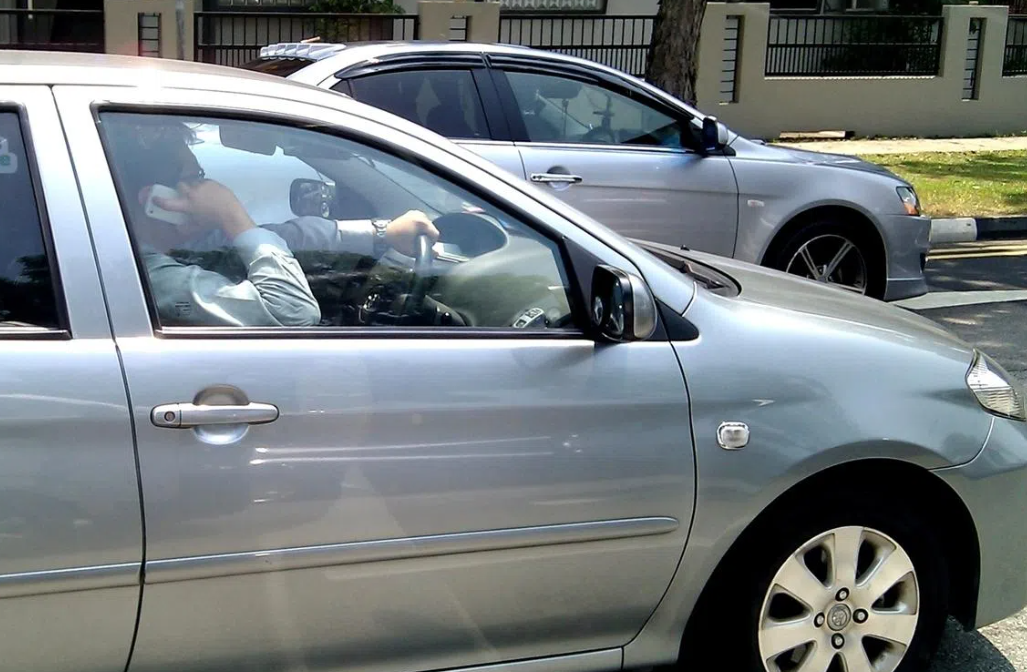
Singapore is moving to strengthen its road safety framework with sweeping legislative changes that would make holding a smartphone while driving an offence—regardless of whether the device is actually being used. The Road Traffic (Miscellaneous Amendments) Bill, tabled by the Ministry of Home Affairs on Tuesday, represents a significant escalation in the city-state's enforcement approach, driven by alarming trends in traffic fatalities and violations over the past five years.
The urgency behind these measures is reflected in sobering statistics. Between 2021 and 2025, traffic fatalities climbed by approximately 24 per cent, while traffic violations surged by 38 per cent. Most troublingly, deaths on Singapore's roads reached a decade-high of 149 in 2025, compared with 141 in 2024 and 141 in 2016. Injuries have similarly mounted, climbing from 9,342 recorded incidents in 2024 to 9,955 in 2025. These figures underscore a deteriorating safety situation that prompted authorities to recalibrate their legislative and enforcement strategies.
The amendment targeting phone usage represents a departure from existing enforcement practices. Currently, Singapore law already criminalises texting or calling while holding a phone, with offenders typically receiving 12 demerit points and fines ranging from $400 to $500. More serious cases proceed to court, where first-time convicts face up to six months imprisonment and $1,000 in fines, while repeat offenders can be imprisoned for up to a year and fined $2,000. However, this approach has a critical weakness: enforcement requires authorities to observe active phone usage in real time, making detection cumbersome and inconsistent.
Under the proposed legislation, the burden of proof shifts fundamentally. Merely possessing a mobile phone while a vehicle is in motion would constitute an offence, without need to demonstrate active use. The Ministry of Home Affairs justifies this approach by arguing that holding a phone inherently compromises driver attention and creates unacceptable risk. This change would empower Traffic Police to leverage technological solutions, including traffic cameras and citizen-submitted footage, significantly expanding enforcement capability. The amendment would not restrict mounting devices or holding phones when vehicles are stationary, preserving legitimate navigation and communication uses.
Beyond phone usage, the Bill addresses a gap in sentencing for drivers who deliberately endanger others. Current law confines such cases to dangerous or careless driving charges, which carry maximum sentences of eight years imprisonment. This sentencing ceiling has prompted judicial concern, particularly in high-profile cases like that of Jarrett Tee Lee Kiat, whose expressway racing incident killed an 18-year-old resulted in only five years and eight months imprisonment despite demonstrated lack of remorse.
The legislation introduces a new offence of purposeful endangerment using a vehicle causing death or grievous hurt, carrying substantially harsher penalties. Convicts face imprisonment up to 15 years, fines, caning, and permanent or minimum 10-year driving disqualifications. This framework aims to capture conduct falling between dangerous driving and murder—situations where drivers deliberately use vehicles as weapons without provable intent to kill. A December 2025 case involving drunk driver Yoong Kok Kai, whose high-speed crash left an auxiliary police officer in a vegetative state, exemplifies the types of incidents motivating this change. The High Court had questioned whether existing maximum sentences adequately reflected the gravity of such offences, effectively prompting legislative action.
The Bill also escalates penalties for dangerous and careless driving causing grievous hurt. For dangerous driving resulting in grievous injury, maximum imprisonment for first-time offenders increases from five to seven years, while repeat offenders face a rise from ten to thirteen years. Aggravating circumstances—particularly drink driving—now attract additional jail terms of up to 18 months, increased from one year. These graduated penalties create proportionate consequences for varying culpability levels while providing judges with appropriate sentencing tools.
The implications for Malaysian and regional motorists warrant attention. Singapore's regulatory intensification reflects broader Southeast Asian concerns about road safety as vehicle ownership and traffic density increase across the region. Malaysia, which has experienced comparable road fatality challenges, may face pressure to adopt similar strictures. The phone-holding amendment particularly signals a regional trend toward shifting enforcement from proof-of-use to possession-based offences, potentially influencing transportation policy across ASEAN nations.
For Singapore residents and business travellers, these changes necessitate immediate behavioural adjustment. Drivers must now treat phone handling as categorically prohibited, eliminating discretionary judgement about use. The expanded enforcement mechanisms—particularly crowd-sourced footage—transform public roads into monitored environments where violations become instantly recordable. This approach prioritises rapid, camera-based detection over traditional traffic stops.
The legislative package reflects Singapore's philosophy of combining deterrence and proportionate punishment. By lowering the evidentiary threshold for phone offences while substantially increasing penalties for deliberate endangerment, authorities aim to reduce both distracted driving incidents and the most culpable violent road conduct. Yet success depends heavily on consistent enforcement and public acceptance of stricter surveillance and prosecution standards.
These amendments also address legitimate judicial concerns about sentencing adequacy. Judges previously faced constraints when dealing with egregious cases, lacking statutory tools to impose consequences matching the gravity of deliberate vehicle endangerment short of murder convictions. The purposeful endangerment offence bridges this gap, providing a middle pathway between dangerous driving and homicide charges. This represents a nuanced legislative response to identified gaps rather than simple penalty inflation.
As Singapore implements these measures, regional observers should note the underlying reasoning: incremental worsening of road safety metrics prompted comprehensive legislative recalibration. This suggests that road safety concerns are not static challenges but require continuous policy evolution. For Malaysia and other ASEAN nations experiencing similar trends, Singapore's approach offers both cautionary lessons about the necessity of intervention and practical models for enforcement innovation, particularly regarding technology-enabled detection systems that could supplement traditional traffic policing.

