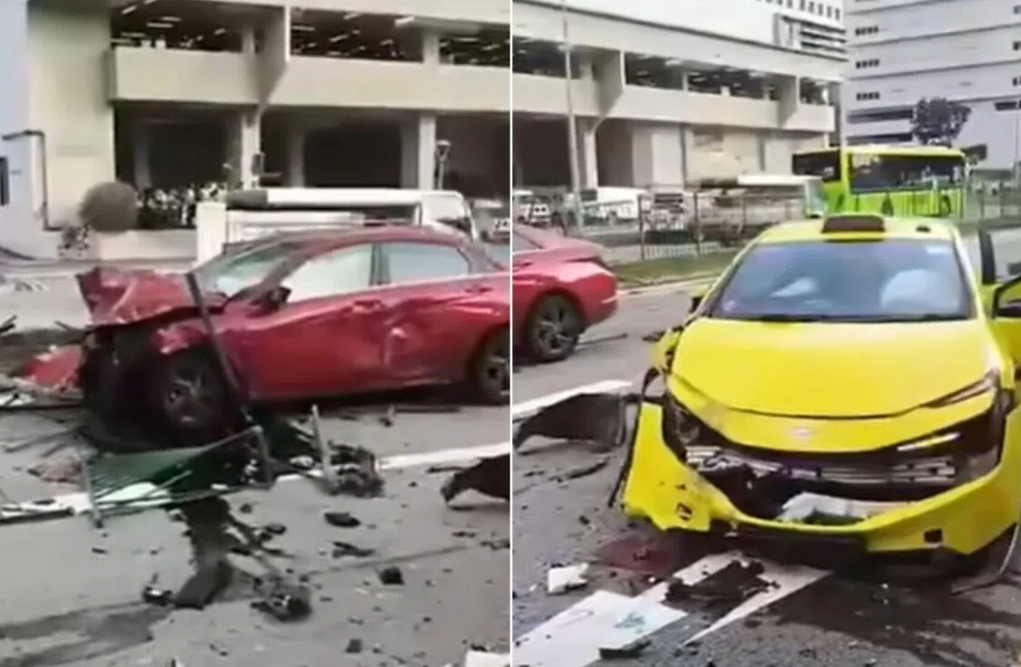
A Singapore man accused of operating a motor vehicle while impaired by methamphetamine has been formally charged following a collision in Kallang that left occupants of a taxi nursing injuries. Mohamed Firdouz Mohamed Akram, 36, appeared in court on June 19 to face a battery of traffic and criminal charges stemming from the June 17 incident, which has renewed attention on the intersection of drug abuse and road safety in the city-state.
The sequence of events unfolded in the early morning hours when Firdouz allegedly piloted his vehicle along Kallang Bahru at approximately 8am. Court documents reveal that authorities believe he had consumed Ice—the street name for methamphetamine—before getting behind the wheel. His control of the automobile deteriorated significantly during the drive, culminating in a collision with a taxi that was travelling in the vicinity. The impact proved consequential for the taxi's occupants: the driver, a 60-year-old man, sustained chest pains from the force of the impact, whilst his passenger, a 43-year-old woman, suffered tailbone injuries that required medical attention.
What compounds the seriousness of the allegations is Firdouz's apparent decision to flee the scene rather than remain to assist the injured parties or cooperate with authorities. According to police statements released on June 18, he abandoned his vehicle at the crash site and departed before law enforcement personnel could arrive and secure the area. This hit-and-run aspect transforms the incident from a traffic accident into a more deliberate evasion of responsibility, demonstrating consciousness of guilt that prosecutors will likely emphasise during subsequent court proceedings.
Police response was notably swift. Officers established Firdouz's identity through vehicle registration records and apprehended him within five hours of the initial report, demonstrating the efficiency of Singapore's law enforcement coordination systems. The arrest took on added significance when examination of his automobile revealed a cache of concerning items. Suspected drugs, drug paraphernalia, vaporising equipment, and a knuckleduster were recovered from the vehicle and entered into evidence. Court documents further indicated that during a search of a room at the Village Hotel Katong on Marine Parade Road around 1pm the same day, officers discovered two knives in his possession, broadening the charges against him considerably.
The charges facing Firdouz represent a comprehensive legal response to his alleged conduct. Beyond the drug-driving accusation, he confronts charges of operating a vehicle without a valid Class 3 licence, driving in a manner dangerous to the public, and causing injury to two persons through that dangerous operation. Additionally, the discovery of weapons has resulted in separate possession charges. This multiplicity of offences suggests prosecutors view his actions as reckless and premeditated rather than accidental, reflecting the gravity with which Singapore treats substance-impaired driving.
The legal framework governing such offences in Singapore carries substantial penalties designed to deter similar conduct. For individuals convicted of operating a motor vehicle while under the influence of controlled drugs, the courts may impose imprisonment of up to twelve months, monetary fines reaching S$10,000, or a combination of both sanctions. When the dangerous driving results in bodily injury to others, the consequences intensify: imprisonment can extend to one year alongside fines spanning from S$2,000 to S$10,000. These sentencing guidelines reflect the jurisdiction's zero-tolerance approach toward substance-impaired road use, particularly when innocent third parties sustain harm.
For Malaysian observers, this case illuminates a shared regional challenge. While Singapore maintains stricter enforcement mechanisms and higher detection rates than many neighbouring jurisdictions, methamphetamine-related traffic incidents remain problematic across Southeast Asia. The prevalence of Ice use among younger demographics, combined with the drug's stimulant properties that paradoxically encourage risky behaviour despite impairing judgment, creates an insidious public safety threat. The incident serves as a cautionary reminder of how drug consumption directly endangers not only the user but innocent bystanders sharing the road.
The weapons discovered alongside the drug paraphernalia raise additional concerns about the lifestyle context in which Firdouz operated. The combination of methamphetamine possession, vaporising equipment, knuckledusters, and concealed knives paints a picture of someone enmeshed in criminal enterprise rather than a recreational user. This distinction matters significantly in courtroom context, as it may inform both sentencing recommendations and public perception of the offender's dangerousness.
The case will return to court on July 17 for further mention, allowing the legal process to advance through Singapore's judiciary. The extended timeline typical of such proceedings means that the full implications of Firdouz's alleged actions remain to be determined. However, the trajectory already established—rapid police response, comprehensive evidence gathering, and serious charging decisions—suggests authorities view this matter as requiring firm legal action. For citizens across the region concerned about road safety and drug-related crime, the case exemplifies both the vulnerabilities in traffic systems when impaired drivers operate vehicles and the institutional capacity of Singapore's law enforcement to respond decisively.