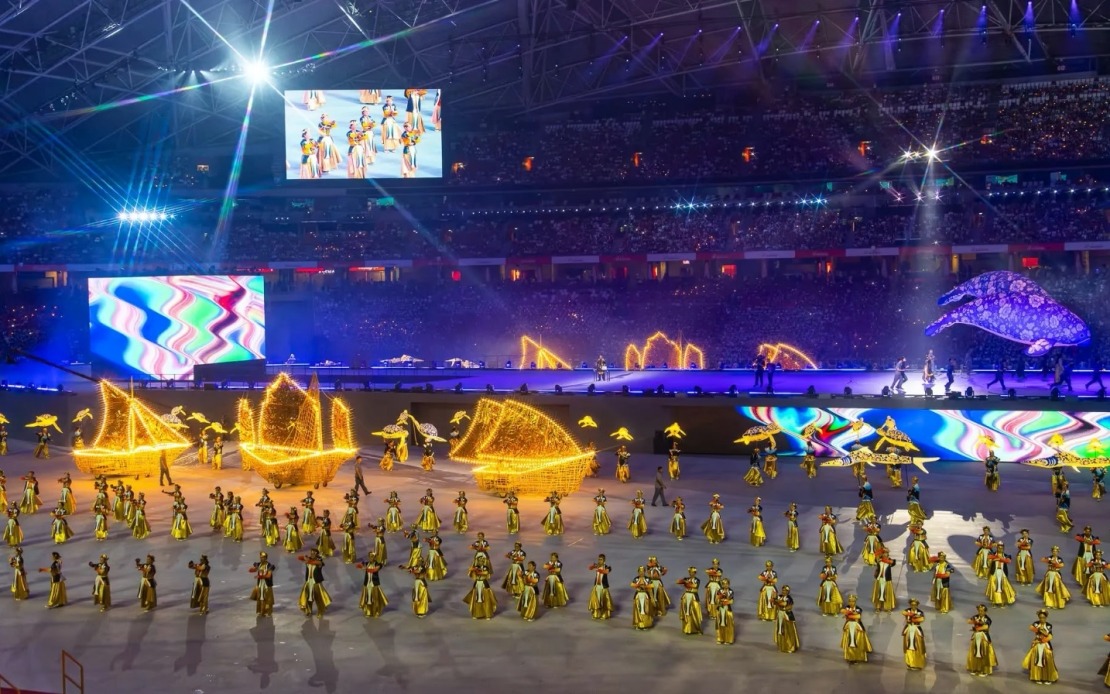
Singapore's 61st National Day celebrations on August 9 marked a symbolic milestone as the National Day Parade made its long-awaited return to the National Stadium, ending a decade-long hiatus from the iconic venue. The occasion, themed "Majulah Singapura, Go Beyond!", drew President Tharman Shanmugaratnam, Prime Minister Lawrence Wong, and Cabinet ministers alongside Members of Parliament, all gathering before some 42,000 members of the public who filled the stadium in a sea of red and white national colours. This return represented more than a logistical decision—it signalled Singapore's confidence in moving forward and reclaiming traditional spaces for national commemoration after an extended period away.
The ceremony incorporated several innovations designed to broaden participation and modernise the celebration whilst honouring tradition. For the first time in the nation's six-decade history, authorities conducted both the Presidential Gun Salute and State Flag Flypast at Kallang Basin rather than confining them to the stadium precinct. This geographical expansion fundamentally altered how Singaporeans experienced the event, allowing the celebration to extend beyond the confines of a single venue and reach tens of thousands more spectators positioned throughout the wider Kallang area. The decision reflected growing recognition that national celebrations should be inclusive and accessible to all Singaporeans, not merely those fortunate enough to secure stadium seats.
The military component of the festivities demonstrated sophisticated coordination between multiple defence and security agencies. Four 25-pounder Howitzer guns, each mounted on a Mobility 3rd Generation raft, sailed slowly around Kallang Basin, creating a distinctive visual spectacle whilst bringing the ceremonial gunfire closer to assembled crowds. The traditional 21-gun salute itself involved 151 personnel drawn from the 23rd Battalion of the Singapore Artillery and the 35th Battalion of Singapore Combat Engineers, underscoring the level of preparation and resource commitment required to execute such a ceremony flawlessly. These elements combined to create an atmosphere both solemn and celebratory, befitting a nation's moment of collective reflection and pride.
The main parade segment commenced at approximately 6 pm and carried the sub-theme "Go Beyond Self", a concept designed to encourage Singaporeans to transcend personal limitations and contribute meaningfully to society. The parade itself comprised 32 distinct contingents, drawing together more than 2,000 individual participants into a coordinated procession. The composition reflected Singapore's institutional diversity: six Guard of Honour contingents, ten contingents representing uniformed youth organisations including school cadet forces, sixteen supporting contingents drawn from various government and civil society groups, and the Singapore Armed Forces Colours Party. The Guard of Honour contingents themselves numbered just 72 personnel, yet they represented the broadest possible cross-section of Singapore's security apparatus—the Singapore Army, Republic of Singapore Navy, Republic of Singapore Air Force, newly-formalised Digital and Intelligence Service, Singapore Police Force, and Singapore Civil Defence Force.
Parallel to the parade segment ran the show segment, which provided the emotional and entertainment centrepiece of the evening. This component, built around the overarching "Go Beyond" theme, mobilised an impressive array of creative talent: 36 featured artistes and more than 2,600 performers in total created a layered narrative exploring Singaporean identity, contemporary innovation, and social cohesion. The production values reflected substantial investment in both stagecraft and human resources, with the performance serving not merely as entertainment but as a cultural statement about who Singaporeans are and who they aspire to become.
Particularly noteworthy was the show segment's explicit commitment to celebrating human diversity and inclusion. The production featured seven dancers of deliberately varied backgrounds, deliberately incorporating an autistic dancer and a dancer with Down syndrome into the main performance narrative. This programming choice carried significant symbolic weight in a Southeast Asian context where persons with disabilities are frequently marginalised or excluded from high-profile public celebrations. By positioning these performers centrally within the National Day show, Singapore's organisers communicated a powerful message: that every Singaporean, regardless of neurological difference, physical capability, or background, possesses inherent dignity and capacity to contribute meaningfully to the nation's shared future.
The return to the National Stadium itself resonated differently across Singapore's population. For younger Singaporeans and those abroad during the decade when the parade relocated to Marina Bay, the stadium venue represented something novel and exciting—a return to a more traditional, stadium-centric model of national celebration. For older Singaporeans and families with deep historical attachments to Kallang, the venue's restoration carried overtones of continuity and continuity with the nation's formative decades. The stadium, having undergone renovation and modernisation, now possessed upgraded facilities and technology whilst retaining its historical significance as a location of national importance. This negotiation between tradition and modernity, between preserving institutional memory and embracing contemporary innovation, characterised the broader approach to Singapore's 61st National Day observance.
For Malaysian observers, Singapore's National Day celebrations offer instructive lessons regarding inclusive nationalism and multi-stakeholder coordination in national ceremonies. The deliberate expansion of the celebration beyond a single venue, the structured inclusion of youth organisations and civil society contingents, and the explicit centering of persons with disabilities within the main performance all represent approaches worthy of consideration within Malaysia's own ongoing evolution of national celebrations. Singapore's experience demonstrates that patriotic sentiment need not be confined to traditional venues or elite participant categories, and that broadening access to national celebrations can strengthen rather than dilute their significance.
The coordination required to execute such a celebration—integrating armed forces ceremonial, multi-agency security arrangements, tens of thousands of spectators, and thousands of performers across multiple geographic locations—underscores the administrative sophistication and long-term planning capacity that Singapore's public institutions possess. The success of the August 9 celebration reflected not merely resources deployed, but institutional culture oriented toward excellence, public communication, and detailed coordination across sectoral boundaries. As Singapore navigates its next phase of national development, such capacities for coordinated action and inclusive institution-building will remain essential as the nation addresses challenges ranging from demographic change to technological disruption to regional geopolitical complexity.

