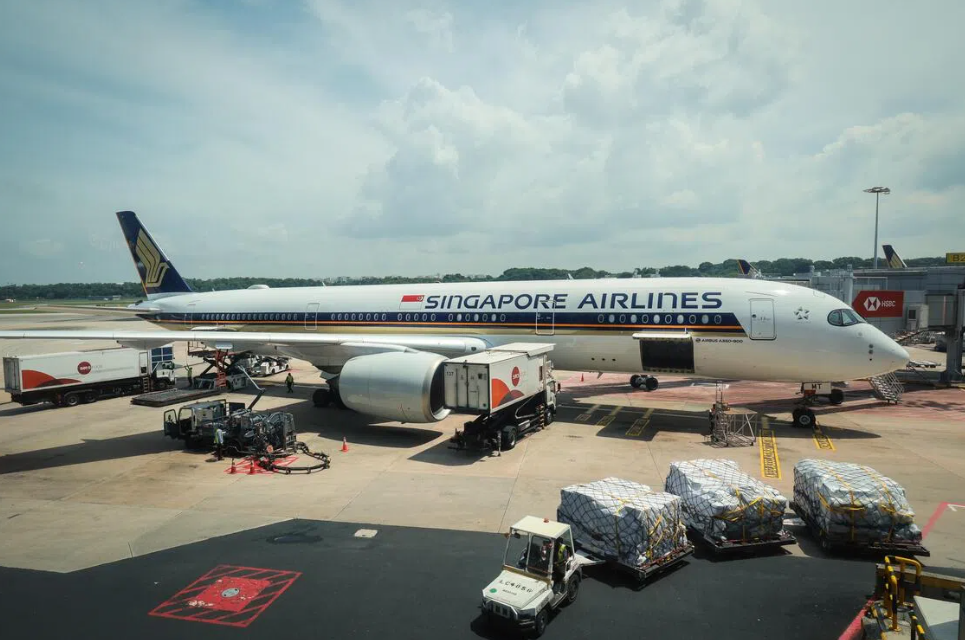
Singapore Airlines faced an operational disruption on August 12 when its New York-bound flagship service was forced to abandon its journey and return to Changi Airport just hours into what is one of the world's longest commercial aviation routes. Flight SQ22, an Airbus A350-900 ultra-long-range aircraft carrying 133 passengers and 17 crew members, initiated its return to Singapore at 3.06am on August 13 after departing the previous evening at 11.35pm, according to airline statements. The unscheduled turnaround occurred during what would normally have been the early stages of an 18-hour-plus journey covering approximately 16,700 kilometres to Newark in New Jersey.
While Singapore Airlines confirmed the occurrence of a technical issue, the airline declined to provide specifics about the nature of the problem or which aircraft systems were affected. This opacity—acknowledged by at least one passenger who took to social media to express frustration—left travellers without detailed explanations for the costly and time-consuming diversion. The lack of transparency regarding technical failures, even when quickly resolved, remains a sensitive issue in commercial aviation where passenger confidence depends partly on understanding how safety is maintained and problems are managed.
The incident highlighted the operational complexities inherent in ultra-long-range aviation. SQ22 holds particular significance in global aviation schedules as one of the longest direct commercial flights available to passengers anywhere in the world. The route demands extraordinary aircraft capability, specialised crew training, and meticulous scheduling to manage factors like fuel consumption, crew fatigue regulations, and passenger comfort over nearly a full day aloft. When such operations encounter mid-flight difficulties shortly after departure, the decision to return rather than press onward demonstrates the cautious approach modern airlines adopt toward potential safety risks.
Once back at Changi, the aircraft was towed to a remote parking facility to undergo repairs, preventing it from returning to the main terminal under its own power. This procedural step itself created operational consequences that rippled through the passenger experience. All travellers and crew members were bussed from the remote bay to the main terminal, a process that consumed additional time and created logistical challenges, particularly regarding checked baggage access—a frustration captured in the Reddit user's account of the incident.
The airline's response to the stranded passengers demonstrated the service recovery protocols that Singapore Airlines has invested in across its network. Affected customers received food vouchers whilst awaiting the deployment of a replacement aircraft, a standard provision during extended delays. More significantly, the original flight crew was unable to continue on the replacement service due to mandatory regulatory flight time limits—a critical constraint in international aviation that prevents crew fatigue from compromising safety. These limits, which Singapore Airlines did not detail publicly, form the backbone of crew scheduling systems globally and sometimes force airlines to deploy entirely fresh crews on replacement flights, adding operational complexity.
The replacement aircraft, crewed by a fresh team, departed Singapore at 5.41am on August 13 and successfully completed the journey to Newark, arriving at 12.15pm local time. This meant passengers ultimately reached their destination with a delay of several hours—a significant but not catastrophic disruption given the circumstances. The airline arranged comprehensive support including rebooking options on connecting flights for those whose original itineraries had been compromised by the schedule adjustment.
Passenger sentiment regarding Singapore Airlines' handling of the crisis tilted toward the positive, with the Reddit user acknowledging that the airline had managed the situation "incredibly well" despite the frustration over limited transparency. This reflects a broader reality in customer service: operational competence in crisis management, even when information provision falls short, can partially offset passenger dissatisfaction. The willingness to deploy replacement aircraft quickly and move stranded passengers onward demonstrates the resource availability that premium long-haul carriers maintain to minimise disruption to their flagship routes.
For the Malaysian region, this incident carries subtle implications for aviation standards and passenger expectations. Singapore Airlines operates multiple long-haul services from Changi that connect to Malaysian points and serve Malaysian expatriates and business travellers. Any disruption to SIA's schedule potentially affects onward connections for passengers from Kuala Lumpur and other Malaysian airports. Moreover, SIA's operational standards and crisis management approaches set benchmarks that influence how other regional carriers structure their own procedures and customer communication protocols during technical emergencies.
The airline's public apology framed the incident within its core operational philosophy—that passenger and crew safety invariably supersedes schedule adherence. This messaging carries weight in an industry where technical returns are occasionally misunderstood by the public as failures of maintenance or engineering. Returning mid-flight due to identified issues is fundamentally a safety mechanism working as intended, yet the absence of specific technical disclosure left passengers unable to fully appreciate this distinction.
Looking ahead, the incident underscores the ongoing technical demands of ultra-long-range operations and the necessity for aircraft like the A350-900 to perform reliably across extended sectors. Any recurring issues on this route would attract scrutiny from regulators and industry observers given the aircraft's critical role in opening new point-to-point connections that were previously impossible. For Singapore Airlines, maintaining the operational integrity of its longest routes remains essential to justifying the capital investment in ultra-long-range fleet expansion and defending its position as a global connectivity leader.

