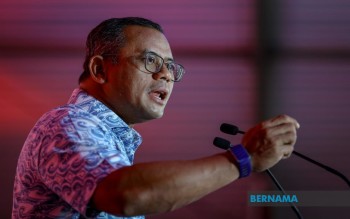
Selangor has cemented its position as Malaysia's economic engine, recording a gross domestic product of RM460.1 billion in 2025—a gain of RM28 billion over the previous year and nearly double the growth generated by any other state in the nation. The achievement marks a significant milestone for the state, which now accounts for more than one-quarter of Malaysia's total economic output. Menteri Besar Datuk Seri Amirudin Shari announced the figures citing data from the Department of Statistics Malaysia, highlighting that the state's economic contribution has grown from 26.2 per cent to 26.5 per cent of the national total.
The scale of Selangor's economic dominance becomes apparent when measured against other major centres. The state's 2025 GDP is more than 1.7 times larger than Kuala Lumpur's, which posted growth of RM13.2 billion to reach RM265.1 billion, and nearly 2.7 times the size of Johor's economy. This disparity underscores how economic activity in Malaysia has concentrated within the Klang Valley corridor and surrounding areas, a trend that has accelerated over the past decade as Selangor absorbs manufacturing relocations, logistics infrastructure, and service sector expansion. The widening gap raises important policy questions about regional economic balance and the potential for bottlenecks in the most developed areas.
What sets Selangor's performance apart is its expansion rate of 6.3 per cent, which surpassed Malaysia's overall economic growth of 5.2 per cent during the same period. This outperformance suggests that the state's economic structure is better positioned to capitalize on emerging opportunities than the national average. The growth exceeded projections made jointly by Universiti Putra Malaysia and the Selangor Research Institute, which had forecast the state's GDP would reach approximately RM455.3 billion, indicating that economic dynamism in the state has outpaced even expert predictions.
Three sectors drove Selangor's expansion, with the services segment leading the charge by contributing RM15.9 billion in additional output. Manufacturing and construction followed with RM5.3 billion and RM3.7 billion respectively, demonstrating the diversified foundation supporting the state's growth. The prominence of services reflects broader global trends towards knowledge-based and high-value-added activities, while robust construction figures point to ongoing infrastructure development and urban renewal projects across the state.
Selangor's sectoral dominance within the national economy further illustrates its centrality to Malaysia's development trajectory. The state accounts for 35.9 per cent of all construction activity nationwide—a commanding position that reflects both the intensity of building projects and the concentration of property development in the region. Manufacturing capacity has similarly concentrated in Selangor, with the state now representing 32.8 per cent of the national manufacturing sector, up from previous years. Meanwhile, services contributions have climbed to 27.1 per cent of the national total, positioning Selangor as the nucleus of Malaysia's growing service economy.
Menteri Besar Amirudin attributed much of this success to the First Selangor Plan (RS-1), a comprehensive five-year socioeconomic development blueprint spanning 2021 to 2025. Under this framework, the state's economy has expanded by 33.94 per cent—more than one-third in absolute terms—translating to an additional RM116.6 billion in economic output. When RS-1 commenced, Selangor's GDP stood at RM343.5 billion, meaning the state has added the equivalent of a medium-sized economy to its output within five years. For Malaysian policymakers and analysts, this performance suggests that strategic planning, targeted investment, and institutional coordination can materially accelerate growth trajectories.
The state administration has framed these results as a foundation rather than a destination, with Amirudin calling for continued momentum to push Selangor towards becoming Malaysia's first RM500 billion economy. This target—which would require an additional RM39.9 billion in economic output—appears achievable given current growth rates, though it would demand sustained productivity gains and new investment flows. The ambition reflects broader aspirations within the state government to maintain competitive advantage and capture emerging opportunities in sectors such as renewable energy, high-tech manufacturing, and digital services.
Invest Selangor, the state's investment promotion agency, highlighted in accompanying statements that the 2025 figure represents continuous acceleration from the RM406.1 billion recorded in 2023, making Selangor the first state to exceed the RM400 billion threshold for two consecutive years. This consistency matters because it signals that growth is not driven by one-off factors but reflects structural improvements in the state's economy. For potential investors considering Malaysia as a location, Selangor's demonstrated ability to expand faster than the national average and to sustain growth through multiple economic cycles enhances its appeal as a business destination.
The concentration of economic activity in Selangor, while economically rational and the result of agglomeration benefits and infrastructure investment, raises questions about long-term sustainability and regional equity. As the state increasingly dominates national output, pressure mounts on infrastructure, housing, and labour markets within the Klang Valley, potentially creating inefficiencies that could eventually constrain growth. Policymakers must balance Selangor's continued expansion with efforts to develop secondary economic centres elsewhere, particularly in East Malaysia and the northern peninsula.
From a Southeast Asian perspective, Selangor's growth trajectory positions Malaysia as an economically dynamic country capable of generating consistent expansion even as regional competition intensifies. The state's diversity across sectors—from manufacturing to services to construction—mirrors the economic resilience demonstrated by successful regional economies such as Singapore and Thailand's central region. This positioning strengthens Malaysia's ability to attract multinational investment and weather external economic shocks.
Looking ahead, the state administration has committed to translating economic growth into improved living standards for residents. Amirudin pledged that future policies would prioritize quality of life improvements, ensuring that the gains from economic expansion reach ordinary Selangorians through better wages, services, and opportunities. This emphasis on inclusive growth is crucial, as rapid economic expansion without corresponding improvements in household welfare can generate social tensions and political discontent.
The achievement also underscores the importance of inter-agency cooperation and public-private partnership, as Amirudin acknowledged contributions from the civil service, industry participants, and residents. In an era when many governments struggle to coordinate effectively across multiple stakeholders, Selangor's demonstrated capacity to align efforts behind clear objectives offers lessons for other states and regions pursuing accelerated development. However, maintaining this coordination while raising productivity further will require continuous institutional innovation and genuine commitment from both government and the private sector to avoid complacency as targets approach.

