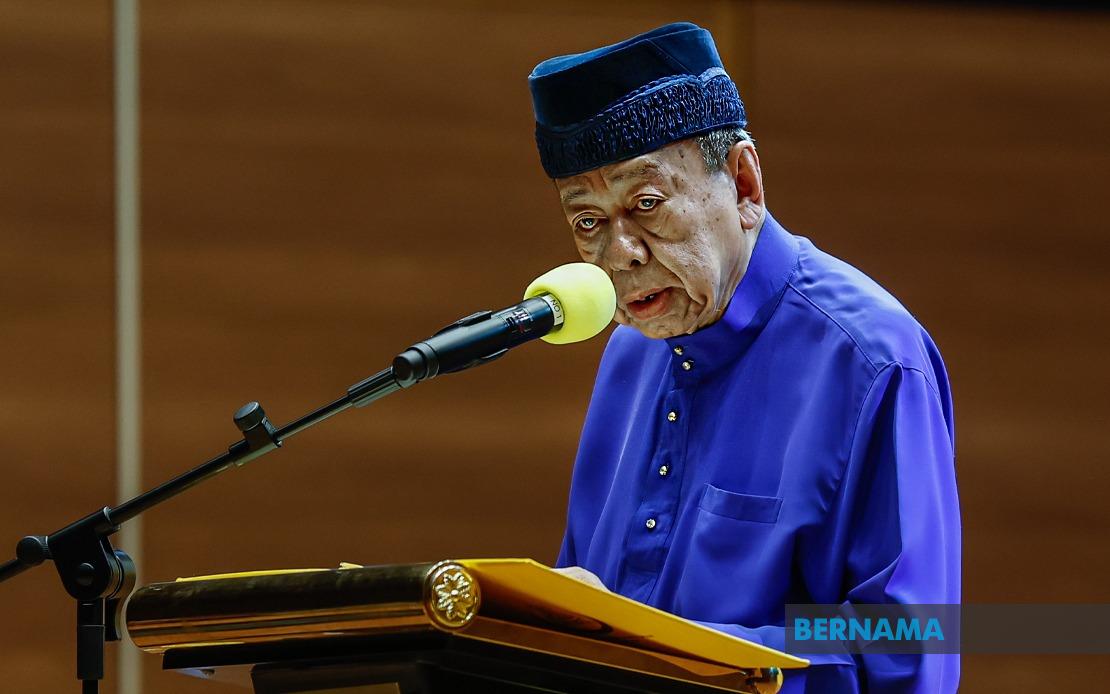
Sultan Sharafuddin Idris Shah has stressed the urgent need for Universiti Teknologi MARA to continually refresh its academic offerings in response to rapid global transformations, ensuring that graduates possess the competitive edge demanded by today's dynamic employment landscape. Speaking at the UiTM Royal Address 2026 in Shah Alam, the Selangor ruler articulated a vision that marries institutional legacy with future-ready education, framing the challenge not as a choice between tradition and progress but as an imperative to do both simultaneously.
The Sultan identified several strategic fields where UiTM must concentrate its innovation efforts: digital technology, artificial intelligence, science, engineering, medicine, finance, accounting, law, and the creative industries. These sectors, he argued, will fundamentally shape Malaysia's economic trajectory in the coming decades. His remarks carry particular weight given Malaysia's broader aspirations to position itself as a regional technology and innovation hub, competing against neighbouring countries investing heavily in these domains. The implicit message is that UiTM, as a major institution producing professionals for the Bumiputera community, cannot afford to lag behind in sectors that will define employment and wealth creation.
Critically, Sultan Sharafuddin reframed the contemporary challenge facing higher education in Malaysia. The struggle, he noted, is no longer primarily about securing university admission—a hurdle overcome in previous generations. Rather, it is about ensuring graduates possess the skills, knowledge, and confidence to thrive in increasingly complex global markets. This observation reflects a mature understanding of how educational institutions must evolve beyond access to focus on outcome quality. For Malaysian policymakers watching regional competitors strengthen their university systems, the statement underscores how institutional prestige now depends less on enrolment capacity and more on graduate employability and impact.
While affirming UiTM's historical role in nurturing the Bumiputera professional class, the Sultan pivoted toward a more ambitious economic objective. He called for UiTM to shift emphasis from producing job seekers to cultivating job creators—entrepreneurs, business owners, and industry leaders capable of establishing enterprises and driving innovation at regional and international scales. This pivot reflects contemporary economic thinking that positions university education not merely as a pathway to employment but as an incubator for entrepreneurship and wealth generation within historically underrepresented communities. For Southeast Asia broadly, where Bumiputera economic participation remains a policy priority in Malaysia, UiTM's potential role in fostering Malay and indigenous business ownership carries significant implications.
The Sultan articulated a critical concern regarding the quality of university-industry alignment. He cautioned against producing graduates equipped with credentials but lacking practical skills, language proficiency, analytical thinking, and sector-specific competencies valued by employers. This disconnect between academic training and industrial demand is not unique to UiTM but represents a challenge across Malaysian and regional universities. His intervention suggests royal impatience with the traditional academic model that prioritizes theoretical knowledge over applied capabilities. The call for every UiTM student to master at least two foreign languages signals recognition that in a globalizing economy, linguistic capacity directly correlates with career mobility and earning potential.
Underpinning the Sultan's remarks is an important constitutional dimension that merits careful examination. He detailed how UiTM's foundational mandate derives not from mere administrative policy but from Article 153 of the Federal Constitution and the Universiti Teknologi MARA Act 1976. Specifically, Section 1A and Article 153(8A) provide constitutional authorization for reserving educational places for Malays and Bumiputera. By anchoring UiTM's mission in constitutional law rather than political discretion, the Sultan invested the institution with a degree of institutional permanence and legitimacy that transcends electoral cycles or temporary policy shifts. This framing has significant implications for debates about meritocracy and educational access in Malaysia, as it positions UiTM not as a preference amenable to casual revision but as a constitutionally sanctioned instrument of social policy.
The Sultan's treatment of this constitutional foundation suggests an implicit response to periodic critiques of UiTM's Bumiputera-focused mandate. He characterized the institution as addressing a historical gap—the educational and socioeconomic disparity affecting Malays and indigenous communities. By framing UiTM's purpose as responsive to ongoing structural inequalities rather than as historical artifact, he suggested the institution's founding rationale remains valid as long as measurable disparities persist. This reasoning allows for institutional adaptation and modernization without abandoning core mission, a nuanced position that avoids both defensive entrenchment and capitulation to competing demands.
Critically, the Sultan clarified that defending UiTM's constitutional mandate does not necessitate denying educational opportunities to other Malaysian communities. Malaysia's diversified higher education sector already serves all citizens. This statement acknowledges the pluralistic reality of Malaysian society whilst maintaining that UiTM occupies a distinct institutional niche. The articulation matters for Malaysian cohesion, as it positions Bumiputera empowerment through UiTM not as zero-sum competition for educational resources but as targeted remediation within a broader system accessible to all. For Malaysian readers and policymakers, this nuance matters because it frames institutional specialization as complementary to, rather than contradictory with, inclusive national development.
The Sultan's emphasis on UiTM's track record of producing national leaders and corporate figures adds an empirical dimension to his argument. By citing measurable outcomes—prominent professionals, successful entrepreneurs, and influential figures across sectors—he demonstrated that constitutional mandate and institutional excellence are not opposing forces but mutually reinforcing. UiTM's demonstrable success in elevating Bumiputera participation in professional and leadership ranks validates the institution's approach and provides a foundation for confident expansion into emerging fields. This evidence-based framing carries weight in contemporary policy discourse, where outcomes and impact metrics increasingly shape institutional strategy.
Looking forward, the Sultan's address implies that UiTM faces a dual imperative: deepen its original mission whilst simultaneously broadening its intellectual and entrepreneurial scope. This requires strategic investment in emerging fields, strengthened partnerships with industry, faculty development in cutting-edge domains, and curriculum redesign that integrates applied skills with theoretical knowledge. For a university system in Malaysia competing for regional prominence, the challenge is simultaneously maintaining institutional identity whilst pursuing world-class standards in innovation and research. The Sultan's endorsement of this dual path provides political and cultural legitimacy for UiTM to pursue ambitious modernization without abandonment of its foundational commitments.
The implications extend beyond UiTM to broader questions about how Malaysia's higher education sector should evolve. As Southeast Asian economies race to build innovation ecosystems and compete in technology-driven sectors, universities like UiTM occupy strategic positions. Their capacity to produce not merely credentialed professionals but innovative thinkers and entrepreneurial leaders will significantly influence Malaysia's regional competitiveness. The Sultan's call for UiTM to produce economic owners rather than merely economic participants reflects understanding that institutional missions must align with national development aspirations. For Malaysian stakeholders invested in inclusive, sustainable economic growth, UiTM's trajectory matters considerably.

