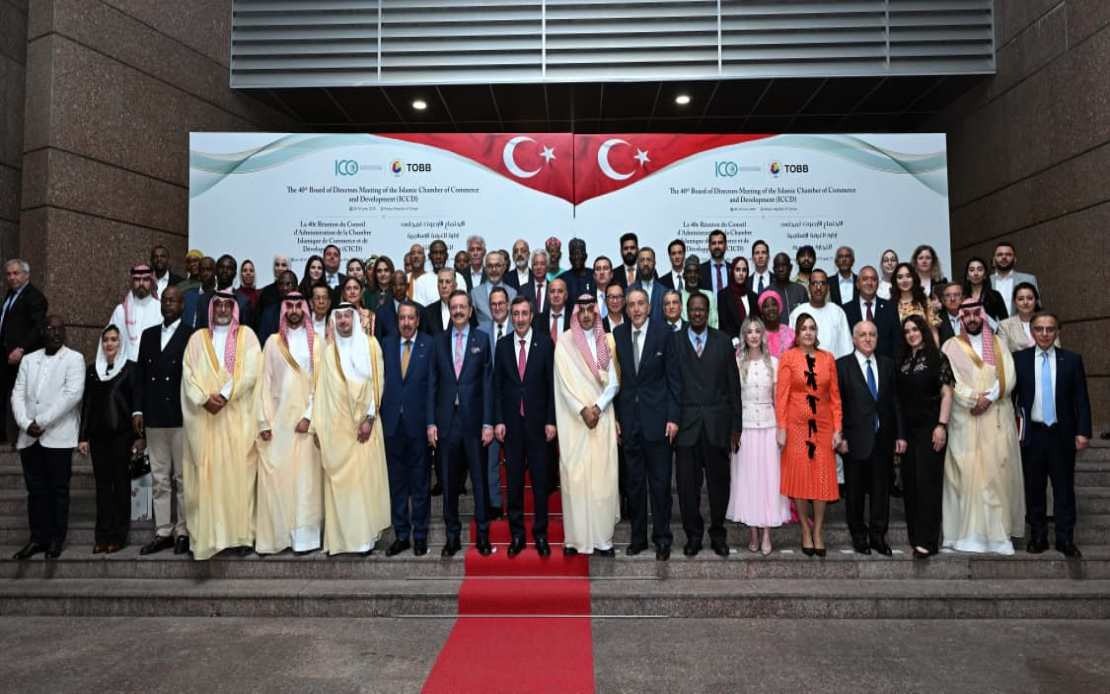
The Kingdom of Saudi Arabia has renewed its commitment to fostering closer economic partnerships with Muslim-majority nations, with particular emphasis on emerging markets like Malaysia and Indonesia. The call came from Abdullah Saleh Kamel, chairman of the Federation of Saudi Chambers and president of the Islamic Chamber of Commerce and Development, during high-level meetings held recently in Ankara, Turkiye. The remarks underscore Saudi Arabia's strategic focus on building stronger regional economic networks that transcend traditional bilateral arrangements.
Kamel's intervention at the 40th ICCD Board of Directors Meeting and the 72nd Finance Committee Meeting reflects a broader Saudi initiative to position itself as a leading force in promoting intra-Islamic commerce and investment. The Federation of Saudi Chambers' participation at these meetings represents the Kingdom's broader commitment to leveraging its economic influence as one of the world's largest energy exporters to benefit the wider Islamic business community. This strategic engagement signals that Riyadh views strengthened ties with other Muslim-majority economies as integral to advancing shared prosperity and regional stability.
Malaysia and Indonesia feature prominently in Saudi Arabia's economic vision for the Islamic world, according to the statement released during the meetings. Both Southeast Asian nations represent significant opportunities for cross-border investment, business expansion, and commercial partnerships. The emphasis on these two countries reflects recognition of their substantial markets, growing consumer bases, and increasingly sophisticated financial systems. For Malaysia specifically, the attention underscores its status as a regional economic hub with considerable influence over ASEAN trade dynamics and Islamic finance leadership through its established Islamic banking sector.
The ICCD's focus on private-sector expansion addresses a critical gap in many developing Islamic economies. Youth entrepreneurship has become a cornerstone concern across the Muslim world, where demographic trends show large young populations entering the workforce annually. By championing business creation and supporting emerging entrepreneurs, the organization aims to channelize youthful energy toward productive economic activity rather than allowing underemployment or migration to undermine regional development. For Malaysia, which has invested heavily in digital entrepreneurship and startup ecosystems, this alignment with ICCD priorities creates opportunities for knowledge exchange and venture capital flows.
Food security and sustainable agriculture emerged as interconnected priorities in the discussions. These sectors represent vulnerabilities across many Islamic nations, including Malaysia, which relies significantly on agricultural imports despite having arable land and expertise. The ICCD's emphasis on linking agricultural development with sustainability reflects growing recognition that climate change, population pressures, and resource constraints demand innovative approaches to food production. Regional cooperation on agricultural technology, best practices, and supply chain integration could yield substantial benefits for member economies while reducing dependency on non-Muslim suppliers for essential commodities.
Regional trade connectivity forms another pillar of the Saudi-led initiative. Currently, intra-Islamic trade remains substantially lower than trade flows between Muslim and non-Muslim nations, representing an untapped opportunity for economic diversification. Strengthening trading networks among Islamic countries, particularly between the Middle East and Southeast Asia, could redirect capital flows, reduce transaction costs, and create more resilient regional supply chains. For Malaysia, positioned geographically between the Indian Ocean and South China Sea, enhanced connectivity with Gulf states and other Muslim economies could amplify its role as a regional trading crossroads.
The ICCD's broader agenda encompasses institutional strengthening and organizational development to support these ambitious economic integration goals. During the Ankara meetings, the Board of Directors reviewed various mechanisms for enhancing the chamber's operational effectiveness and expanding its capacity to facilitate cross-border commerce. These discussions included assessment of ongoing projects and programmes designed to deepen economic cooperation among member states, demonstrating that the organization recognizes the need for concrete mechanisms rather than merely rhetorical commitments.
Looking toward 2027, the ICCD is preparing for its golden jubilee celebration, marking fifty years of operation. This milestone carries symbolic and practical significance, as the organization plans to assess its achievements while charting directions for its next phase. The proximity of this anniversary provides a timeframe for implementing new initiatives aimed at accelerating economic integration. For Malaysia and other progressive Islamic economies, this planning horizon offers opportunities to shape the ICCD's agenda toward priorities aligned with their development strategies.
Saudi Arabia's leadership within the ICCD reflects its broader geopolitical positioning as the Islamic world's largest economy and de facto leader. The Kingdom has deployed its considerable resources toward religious soft power and economic influence throughout the Muslim world, and these efforts extend naturally into commercial and trade domains. By championing economic cooperation frameworks, Saudi Arabia strengthens its regional influence while simultaneously positioning itself as a champion of Islamic development and prosperity. This dual purpose—advancing genuine economic integration while consolidating political influence—characterizes much of contemporary Saudi foreign policy.
For Malaysia, the Saudi initiative carries particular relevance given the country's existing strengths in Islamic finance and trade. Malaysian Islamic banks, takaful providers, and sukuk markets represent sophisticated financial infrastructure that could facilitate larger volumes of investment and capital flows with Gulf and other Muslim economies. The emphasis on private-sector leadership resonates with Malaysia's own development model, which relies heavily on business-led growth and entrepreneurial dynamism. Closer alignment with ICCD priorities could accelerate Malaysian companies' expansion into Middle Eastern and North African markets while attracting Gulf capital toward Malaysian ventures.
The discussions in Ankara also signal recognition that economic cooperation among Islamic nations requires sustained institutional commitment rather than occasional diplomatic gestures. By establishing regular forum meetings, implementing specific programmes, and tracking progress on measurable objectives, the ICCD attempts to transform aspirational rhetoric into tangible outcomes. For Malaysia, participation in these mechanisms provides both a platform for advocating national interests and access to information networks and business opportunities within the Islamic world. The practical benefits of membership in such organizations often exceed their visibility in mainstream media coverage.
Looking forward, the success of this Saudi-led initiative will depend on translating ambitious statements into concrete trade agreements, investment flows, and institutional arrangements. The business sectors of Malaysia, Indonesia, Saudi Arabia, and other participating nations must perceive genuine advantages from deepened cooperation. Tariff reductions, streamlined regulations, and financing mechanisms specifically designed to support intra-Islamic trade will be necessary to move beyond declarations. The coming months will reveal whether the enthusiasm expressed in Ankara translates into meaningful actions that reshape economic relationships across the Islamic world.

