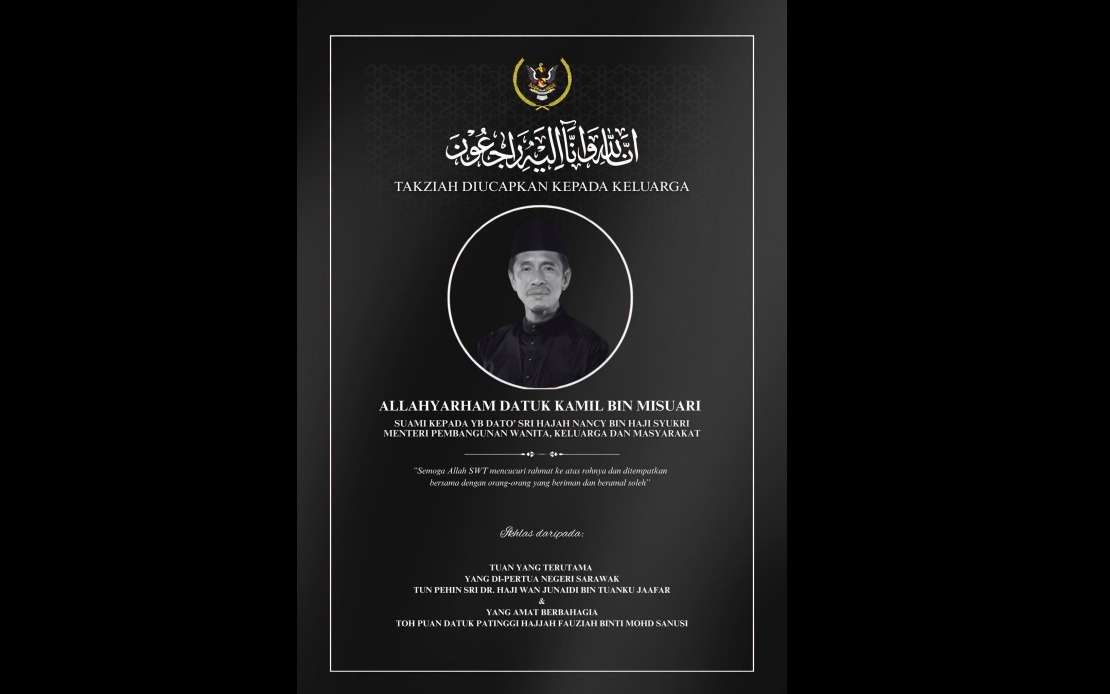
Tun Dr Wan Junaidi Tuanku Jaafar, the Yang Dipertua Negeri Sarawak, has conveyed his sympathies to Women, Family and Community Development Minister Datuk Seri Nancy Shukri following the passing of her husband, Datuk Kamil Misuari. The senior minister died at a medical facility in Kuala Lumpur on June 18, marking the end of a marriage that had endured nearly four decades and produced three children.
Through a formal statement released by Astana Sarawak, the state's highest official and his wife, Toh Puan Fauziah Mohd Sanusi, articulated their deepest sympathies during this period of bereavement. The message conveyed not merely formal acknowledgement of the loss but also spiritual sentiments, with prayers offered for the deceased's soul to receive divine blessings and for his deeds to be favourably regarded in the afterlife.
Beyond the expression of grief, the statement underscored the importance of familial resilience during such difficult times. Tun Wan Junaidi and Toh Puan voiced their hopes that Nancy and her extended family would find the emotional fortitude necessary to navigate the challenging weeks ahead. The invocation of patience and inner strength reflects traditional Malaysian values surrounding communal support during periods of loss.
Datuk Kamil Misuari was 65 years old when he succumbed to his illness. His union with Nancy, solemnized in 1985, had spanned nearly four decades of married life. The couple's partnership was marked by the arrival of their three offspring, all of whom now face the sudden absence of their father. The circumstances surrounding Kamil's death, while medically tended in one of Malaysia's capital city hospitals, underscore the swift and often unexpected nature of health crises that can affect families across the nation.
Arrangements have been made to transport Datuk Kamil's remains to Sarawak, reflecting the family's deep connections to the East Malaysian state. The funeral proceedings will culminate at the Samariang Muslim Cemetery in Kuching, where final rites according to Islamic tradition will be observed. This repatriation to Sarawak carries significance, as it indicates the family's enduring ties to their home state despite Nancy's prominent position in federal government.
Nancy Shukri's role as Women, Family and Community Development Minister places her among Malaysia's significant political figures, charged with policy matters affecting millions of citizens. Her portfolio encompasses crucial areas including family welfare, women's empowerment, and community cohesion. The loss of her spouse during her tenure in this demanding ministerial position adds a personal dimension to the public responsibilities she carries, a reality that many senior government figures must navigate when personal tragedy intersects with professional obligation.
The expression of condolences from Sarawak's highest state official carries particular weight given the diplomatic protocols that govern such gestures within Malaysia's federal structure. Tun Wan Junaidi's involvement in acknowledging the loss demonstrates how matters of genuine human suffering transcend political and administrative boundaries, bringing together leaders across different tiers of government in moments of genuine compassion.
In the Malaysian context, where Islam remains the predominant faith and Islamic burial practices are widely observed, the planned interment at Samariang Muslim Cemetery aligns with established religious and cultural protocols. The timely notification of arrangements allows for both family members and colleagues to pay their respects in accordance with Islamic traditions, which typically emphasize swift burial and community participation in funeral rites.
For those familiar with Malaysia's political landscape, Nancy Shukri's trajectory has been marked by her advocacy for women's issues and family-oriented policies. This personal tragedy, while profoundly private in nature, occurs at a juncture when her ministerial responsibilities demand continued focus on portfolio matters affecting vulnerable populations. The resilience demonstrated by public figures during such periods often becomes part of their broader narrative within Malaysian political discourse.
The death of Datuk Kamil represents another reminder of the unpredictability of health outcomes despite medical advances available in major urban centres. His passing after an apparent hospitalization in Kuala Lumpur underscores that serious illness can strike individuals across all socioeconomic backgrounds and professional standings. For the Shukri family and their extended network, the coming weeks will be characterized by the rituals and routines of mourning, providing structure amid grief.

