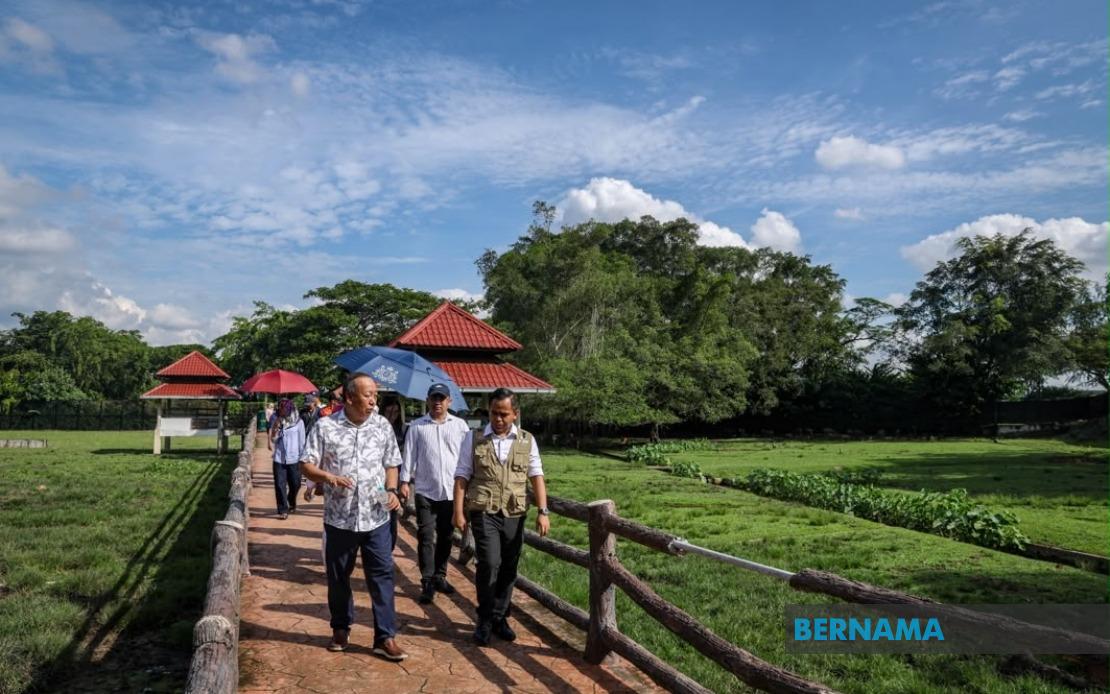
The Sabah chapter of UMNO is preparing to activate its organisational machinery in support of Barisan Nasional's push for victory in the Johor state election, marking a significant instance of inter-state party coordination ahead of polling day on July 11. Datuk Jafry Ariffin, chairman of Sabah UMNO's liaison committee, disclosed that the party has been assigned responsibility for bolstering BN efforts within the Pasir Gudang parliamentary constituency, with particular emphasis on the Permas and Johor Jaya state assembly divisions where substantial concentrations of Sabahan-registered voters reside.
The scale of Sabah UMNO's deployment reflects tangible demographic realities on the ground. Electoral records indicate approximately 3,000 voters originally from Sabah are currently domiciled and registered in Permas, whilst a further 2,000 maintain registration in Johor Jaya. This voter base represents a meaningful constituency within these divisions and underscores why UMNO's national leadership has strategically leveraged its state branches to maximise outreach among diaspora populations. Such cross-state mobilisation strategies have become standard practice in Malaysian electoral campaigns, enabling parties to activate support networks beyond their primary territorial strongholds.
Jafry, who concurrently serves as Sabah's Minister of Tourism, Culture and Environment, stressed that this assignment builds upon established operational familiarity. The Sabah chapter executed comparable responsibilities during the 2022 Johor state election campaign, meaning party operatives and local coordinators already possess institutional knowledge of voter demographics, logistical arrangements, and community engagement pathways within these constituencies. This institutional memory reduces the learning curve and allows for more sophisticated campaign targeting based on past performance data and on-ground insights.
The groundwork has already commenced in preliminary form, according to Jafry's statements made during a visit to the Johor Zoo. Sabah UMNO personnel have begun low-key organising activities designed to establish presence and renew connections within the Sabahan migrant community. However, the party leadership has deliberately calibrated the intensity of these efforts, recognising that more aggressive campaigning operations should commence following the formal nomination process rather than consuming valuable resources during the pre-nomination period.
The Election Commission has scheduled June 27 as nomination day, allowing approximately two weeks for intensive electioneering before voters head to the polls on July 11. This compressed timeline places premium value on parties' ability to mobilise support quickly and efficiently once candidates are officially registered. Sabah UMNO's strategic sequencing—building momentum gradually before nomination, then accelerating after candidates are formally declared—reflects pragmatic campaign management logic designed to maintain voter engagement throughout the formal campaign window without premature fatigue.
Understanding the broader electoral landscape provides essential context for this deploymentdecision. The Johor State Legislative Assembly comprises 56 seats across multiple constituencies. Prior to the legislative body's dissolution on June 1, Barisan Nasional held commanding control with 40 seats, significantly outnumbering Pakatan Harapan's 12-seat bloc, Perikatan Nasional's three representatives, and MUDA's single assemblyperson. The mathematical advantage BN enjoys heading into the election contests suggests the party is favoured to retain power, yet tight competition in specific constituencies means every electoral advantage—including targeted mobilisation of diaspora voter communities—potentially influences final outcomes.
For Malaysian readers and observers, this development illustrates several important dimensions of contemporary Malaysian politics. First, it demonstrates how national coalition frameworks enable state-level party organisations to coordinate horizontally across geographical boundaries in service of shared electoral objectives. Barisan Nasional functions not merely as a loose confederation but as an integrated campaign apparatus capable of deploying resources strategically wherever marginal seats demand additional firepower.
Second, the Johor election itself carries significance beyond the state's boundaries. Electoral outcomes in economically substantial and electorally competitive states frequently influence national political momentum. A decisive BN victory would reinforce the coalition's recovery trajectory following the 2022 general election results, while any gains by opposition coalitions would suggest persisting voter ambivalence toward BN leadership. Sabah UMNO's assistance thus carries implications extending beyond Johor's immediate constituency contests.
Third, this campaign mobilisation highlights the practical realities of Malaysian migration patterns and electoral geography. Sabahans and Sarawakians working in Peninsular Malaysia create transnational voter pools that parties have learned to systematically organise. Such diaspora communities often maintain cultural and political identities linked to their home states whilst residing in different constituencies, creating opportunities for targeted messaging that acknowledges their continued connections to East Malaysia alongside their current voting interests.
The experience Sabah UMNO accumulated during the 2022 campaign will be methodically applied to maximise effectiveness of messaging and voter engagement strategies. Party organisers will likely emphasise issues resonating particularly with Sabahan diaspora communities—economic opportunities, representation, connectivity between states—whilst simultaneously reinforcing broader Barisan Nasional narratives about stability, governance experience, and developmental capacity.
As the election approaches, the intensity of such coordination efforts will intensify. Other BN component parties likely maintain parallel mobilisation strategies targeting their respective community bases within Johor, creating a comprehensive campaign apparatus designed to activate every identifiable voter segment. For observers tracking Malaysian electoral trends, Sabah UMNO's involvement in Johor campaigning represents a microcosm of how major coalitions operationalise their organisational advantages to pursue electoral dominance in competitive state contests.