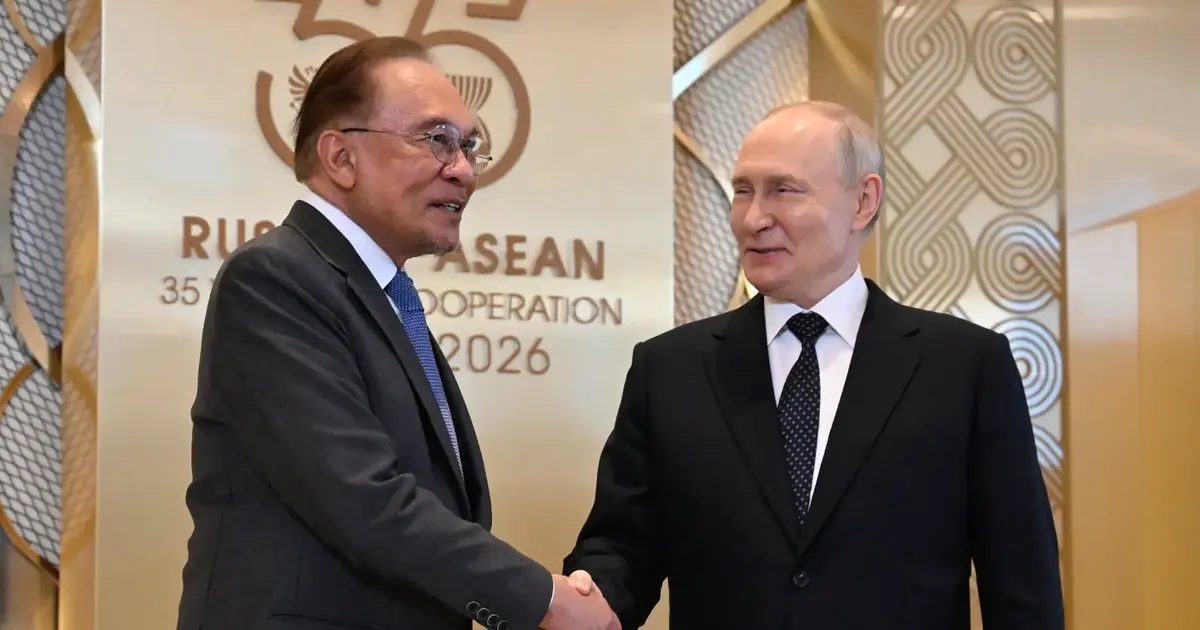
Prime Minister Anwar Ibrahim has announced that Russian President Vladimir Putin has committed to supplying Malaysia with reliable oil and gas over a 20-year horizon, a strategic pledge that addresses the country's long-term energy security needs. The assurance comes at a time when Malaysia, as a resource-dependent economy, seeks to diversify and stabilise its energy procurement channels amidst global market volatility and geopolitical tensions affecting traditional suppliers.
The commitment reflects deepening bilateral ties between Kuala Lumpur and Moscow in the energy sector, a relationship that has gained particular importance given Malaysia's position as both a significant oil and gas producer and consumer. While Malaysia ranks among the world's major liquefied natural gas exporters, domestic consumption demands have grown substantially, necessitating supplementary imports to meet industrial and residential needs. A formalised two-decade supply arrangement with Russia would provide the predictability required for long-term economic planning and infrastructure development.
Beyond the energy commitment, Anwar's diplomatic engagement extends across Central Asia, with his visit to Turkmenistan forming part of a broader strategy to strengthen Malaysia's commercial foothold in emerging markets. Turkmenistan, sitting atop vast hydrocarbon reserves, represents both a potential supplier relationship and a gateway to regional connectivity initiatives that could benefit Malaysian businesses seeking access to markets beyond the immediate Southeast Asian sphere.
The Prime Minister's emphasis on expanding Malaysian exports to major Asian economies—specifically China, Japan, and South Korea—underscores a calculated economic diversification strategy. These three nations collectively represent some of the world's largest consumer markets, and their appetite for Malaysian commodities, manufactured goods, and services remains robust. China in particular has become Malaysia's primary trading partner, while Japan and South Korea maintain significant investments in Malaysian manufacturing and technology sectors.
Geographically positioning Malaysia as a reliable supplier to these economic powerhouses carries strategic weight in a region increasingly competitive for trade access. The dynamics of regional trade have shifted considerably, with companies and governments seeking to de-risk supply chains and establish stable partnerships following pandemic-related disruptions and recent trade tensions. Malaysia's geographic location along critical shipping routes and its established trade infrastructure position it advantageously to serve these markets.
The energy security dimension warrants particular scrutiny for Malaysian policymakers. Securing 20-year supply contracts represents a hedge against potential price volatility and geopolitical disruptions that could constrain access to energy resources. Russia's substantial hydrocarbon reserves and proven capacity to maintain export operations under international sanctions make it a strategically valuable partner, despite Western restrictions on trading relationships with Moscow.
For Malaysia's industrial base and electricity generation capacity, guaranteed energy supplies translate into lower production costs and enhanced competitiveness. Manufacturing sectors that are energy-intensive—including petrochemicals, refining, and heavy industries—benefit substantially from predictable fuel costs. The broader manufacturing ecosystem, which employs hundreds of thousands across the country, depends on stable energy availability to maintain production schedules and meet export commitments.
The timing of these discussions carries weight within Malaysia's broader foreign policy framework. As a non-aligned nation with historically pragmatic diplomatic positioning, Malaysia has cultivated relationships across multiple geopolitical blocs. The engagement with Russia occurs amid ASEAN's efforts to maintain unity and non-aligned principles while regional powers compete for influence. Malaysia's approach demonstrates the delicate balance required when managing great power dynamics while prioritising national economic interests.
Turning attention to Central Asia reflects recognition that economic opportunities extend beyond the Southeast Asian region. The Russian-backed Eurasian Economic Union and ongoing Chinese Belt and Road Initiative projects have reshaped Central Asian connectivity and trade flows. Malaysian entrepreneurs and exporters increasingly view these markets as expansion opportunities, particularly as regional integration deepens and transportation infrastructure improves.
The export focus on China, Japan, and South Korea demonstrates clear prioritisation of advanced economies with sophisticated import requirements and substantial purchasing power. Malaysian palm oil, rubber, electronics, and processed agricultural products find ready markets in these nations. Korea and Japan particularly value Malaysian suppliers for electronics components and intermediate goods that feed into their own manufacturing ecosystems.
From an energy independence perspective, diversifying suppliers protects Malaysia against over-reliance on any single source or region. While Middle Eastern suppliers have historically dominated regional energy markets, developing relationships with Russia and maintaining connections with Central Asian producers hedges against supply disruptions or price leverage by concentrated supplier groups. This strategic diversification benefits Malaysian consumers through reduced vulnerability to external shocks.
The diplomatic mission ultimately reflects Malaysia's pragmatic approach to international relations, where economic advancement takes precedence over ideological considerations. By securing long-term energy supplies while simultaneously pursuing expanded trade relationships with major Asian economies, Anwar's government positions Malaysia as a nation serious about sustainable growth and strategic hedging against future uncertainties.
Looking forward, these arrangements may catalyse further economic cooperation across multiple sectors. Energy partnerships often lead to technology transfer, workforce development initiatives, and cross-border investment opportunities. The true measure of success will emerge over subsequent years as Malaysia executes these agreements and translates diplomatic achievements into tangible benefits for its economy and citizens.

