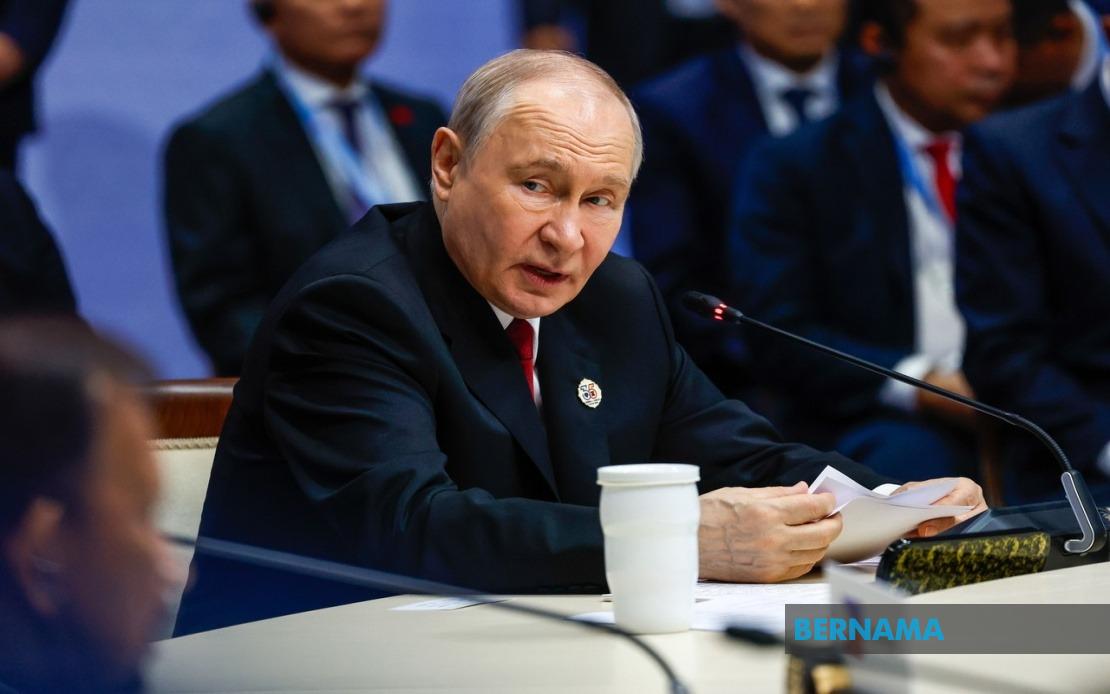
At a commemorative summit convened in Kazan, Russian President Vladimir Putin underscored the depth and breadth of Moscow's three-and-a-half-decade engagement with Southeast Asia, characterising the relationship as a stabilising counterbalance to mounting geopolitical instability throughout the Asia-Pacific region. The gathering, which brought together regional leaders including Malaysian Prime Minister Datuk Seri Anwar Ibrahim and Philippine President Ferdinand Marcos Jr in his capacity as current ASEAN Chair, served to formalise and celebrate a partnership that has evolved substantially since its inception.
The trajectory of Russia-ASEAN relations reflects a measured but consistent deepening of ties across multiple dimensions. When Moscow formally established diplomatic channels with the Association in 1991 in Kuala Lumpur, it marked the beginning of engagement that would gradually expand in scope and ambition. By 1996, Russia secured full Dialogue Partner status within ASEAN's complex architecture of external relationships, a designation that granted it a voice in regional deliberations whilst acknowledging its strategic interests in the Southeast Asian sphere. The relationship reached its current apex in 2018 when both sides formalised a Strategic Partnership framework, signalling mutual commitment to cooperation extending far beyond traditional diplomatic niceties.
Putin articulated the institutional scaffolding underpinning this partnership, describing an extensive lattice of legal agreements, contractual obligations, and operational mechanisms that enable substantive collaboration. These frameworks facilitate interaction across sectors as diverse as energy infrastructure, agricultural production, digital innovation, scientific research, tourism development, and educational exchange. The Russian leader stressed that this diversified portfolio of engagement reflects genuine alignment of interests rather than transactional convenience, grounded in shared adherence to international law and reciprocal benefit.
The geopolitical context surrounding this summit carries particular significance for Malaysia and the broader Southeast Asian region. As global powers navigate fractious international relations and economic disruptions intensify, smaller and medium-sized nations increasingly value partnerships that do not demand exclusive alignment with any single bloc. Russia's cultivation of ASEAN ties through cultural exchange, technological cooperation, and energy partnerships offers Southeast Asian governments alternative avenues for engagement and diversification beyond traditional Western-dominated frameworks. This approach resonates with ASEAN's longstanding commitment to strategic autonomy and non-aligned positioning.
Trade and investment dimensions of the partnership warrant particular attention from Malaysian stakeholders. Although Russia-ASEAN commerce remains modest compared to flows from other major trading partners, Moscow's strengths in specific sectors such as energy production, agricultural technology, and advanced manufacturing create genuine complementarities with Southeast Asian requirements. For Malaysia specifically, Russian expertise in hydrocarbons, aerospace engineering, and dual-use technologies presents avenues for industrial collaboration that could enhance national technological capabilities whilst generating employment opportunities.
Energy security emerged as a focal point during summit discussions, reflecting broader regional preoccupations with supply chain resilience in fuel markets. Russia's established role as a major hydrocarbon exporter and its possession of advanced oil and gas extraction methodologies position it as a consequential partner for Southeast Asian nations navigating the complex transition toward renewable energy whilst managing near-term fossil fuel dependencies. Discussions around food security similarly underscore practical intersections: Russia and Ukraine's outsized influence on global grain markets makes Russian agricultural cooperation strategically valuable for import-dependent Southeast Asian economies confronting volatile commodity pricing.
The emphasis on digital transformation and technological development signals recognition that contemporary strategic partnerships must address emerging domains beyond traditional security concerns. Russian capabilities in satellite communications, cybersecurity frameworks, and artificial intelligence research offer potential vectors for technological transfer and capacity-building initiatives that could accelerate Southeast Asian digital development. For Malaysia, positioning itself as a regional technology hub, such collaborations could yield valuable knowledge inputs and advanced technological partnerships.
Educational and scientific exchanges represent another substantive pillar of the relationship frequently overlooked in security-focused analyses. Russian universities maintain competitive advantages in mathematics, physics, engineering disciplines, and applied research methodologies that attract Southeast Asian students and researchers. These academic linkages generate soft power dividends whilst fostering people-to-people connections that transcend governmental relationships and build grassroots constituencies favouring continued bilateral engagement.
The timing of this commemorative summit reflects strategic calculation regarding regional dynamics. As the United States and China intensify their competitive positioning throughout Asia-Pacific, and as Western sanctions regimes constrain Russian participation in traditional international institutions, Moscow has deliberately intensified engagement with ASEAN as a mechanism for maintaining diplomatic relevance and cultivating strategic alternatives. From ASEAN's perspective, maintaining substantive relationships with Russia serves the long-standing doctrine of engaging all major powers whilst retaining freedom of manoeuvre in responding to regional challenges.
However, the relationship navigates inherent complexities stemming from differing perspectives on regional security frameworks and international law interpretations. Several ASEAN members maintain complicated historical relationships with Russia and harbour concerns regarding Moscow's approach to territorial disputes and intervention in neighbouring states. These sensitivities require careful diplomatic management to preserve partnership benefits whilst respecting member states' individual strategic preferences.
Looking forward, the summit's agenda encompassed forward-looking discussions on partnership expansion rather than merely commemorating historical achievements. Participants identified mutual interests in renewable energy infrastructure, space technology collaboration, and cross-regional supply chain integration as growth areas warranting expanded institutional attention. The establishment of additional working groups and technical committees signals intention to operationalise partnership rhetoric through concrete organisational capacity.
For Malaysian policymakers, the Russia-ASEAN partnership trajectory demonstrates the persistent utility of diversified external relationships in navigating multipolar international systems. As regional economic integration accelerates and geopolitical competition intensifies, maintaining partnerships across ideological and strategic divides enhances national resilience whilst creating opportunities for technology absorption, market access, and diplomatic influence multiplication.
The Kazan summit ultimately reaffirmed that despite international turbulence and shifting global alignments, Russia and ASEAN find sufficient overlapping interests and shared perspectives to sustain meaningful cooperation spanning three decades. Whether this partnership deepens further depends substantially on Russia's capacity to navigate Western sanctions pressures, ASEAN members' ability to balance competing external partnerships, and both sides' commitment to transcending Cold War-era suspicions in favour of pragmatic collaboration addressing contemporary regional and global challenges.

