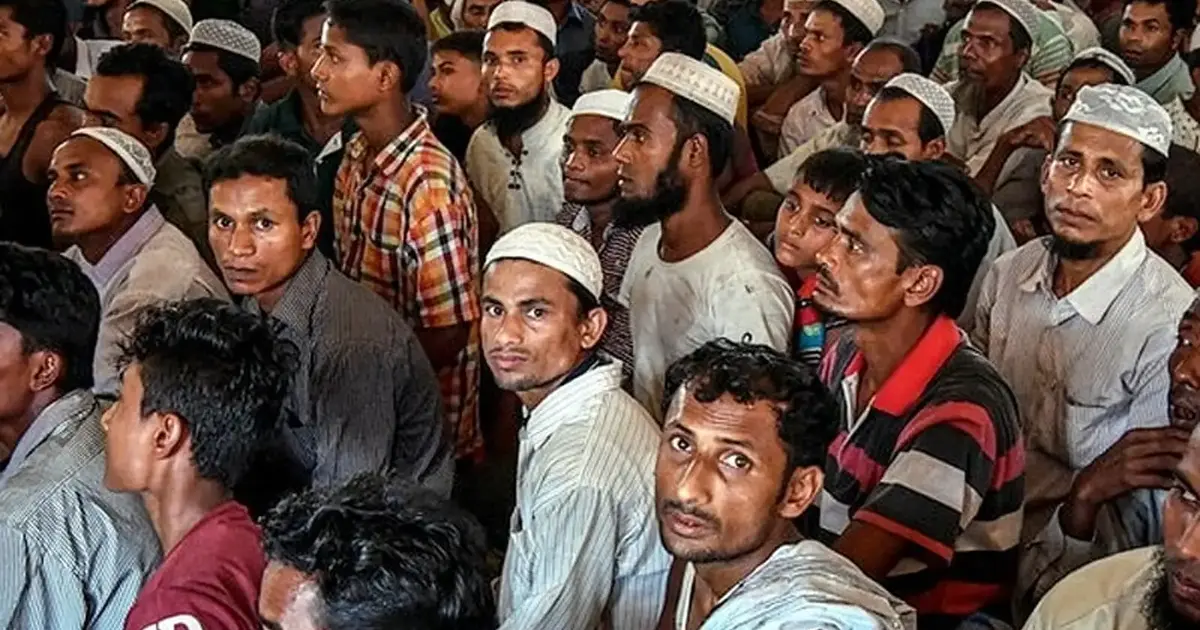
The Rohingya Ulama Council has moved to dismiss claims that members of the Rohingya community are actively pursuing Malaysian citizenship, with leadership characterising such allegations as deliberately manufactured falsehoods designed to inflame public sentiment against the refugee population. The denial comes amid ongoing tensions surrounding the status and integration of Rohingya populations across Southeast Asia, where Malaysia hosts one of the largest communities of stateless refugees from Myanmar.
Rahimullah Hussain, chairman of the Rohingya Ulama Council, has been emphatic in repudiating the citizenship-seeking narrative, arguing that such accusations lack factual foundation and serve primarily to generate animosity toward an already vulnerable population. The council's position underscores the precarious position occupied by Rohingya communities in the region, caught between humanitarian concerns and host-nation sensitivities regarding immigration and citizenship frameworks. His statement suggests that the council views the allegations as part of a broader pattern of mischaracterisation that has historically dogged the stateless minority.
The timing of these allegations reflects deeper anxieties within Malaysian society regarding refugee populations and demographic change. Malaysia, despite not being a signatory to the 1951 Refugee Convention, has become a significant hub for displaced persons fleeing persecution in Myanmar and other regional conflicts. The nation's approach to refugee management remains contentious, balancing humanitarian obligations with domestic political pressures and resource constraints. Against this backdrop, unfounded claims about citizenship aspirations can rapidly gain traction and contribute to deteriorating community relations.
The Rohingya Ulama Council's intervention suggests an organised effort within the community to counter misinformation and shape public discourse. As a religious and cultural representative body, the council occupies a unique position to communicate community positions directly to both Malaysian society and policymakers. The decision to publicly deny these allegations indicates that the community's leadership has assessed the threat posed by such narratives as sufficiently significant to warrant a direct response, rather than allowing claims to circulate unchallenged.
From a regional perspective, the dynamics surrounding Rohingya communities in Malaysia reflect broader challenges facing Southeast Asian nations grappling with large stateless populations. The Myanmar military's 2017 operations in Rakhine State created a humanitarian crisis that displaced nearly a million individuals, with significant numbers eventually reaching Malaysia, Bangladesh, and other regional countries. Malaysia's handling of this influx has variously drawn praise for humanitarian considerations and criticism from those concerned about social cohesion and resource allocation.
The distinction between seeking citizenship and advocating for permanent residency or enhanced legal status represents an important nuance often lost in public discourse. Most Rohingya communities lack formal pathways toward citizenship in their host countries, yet many pursue mechanisms for improved security and access to services. The council's denial may be particularly focused on refuting claims of formal citizenship applications rather than dismissing all aspirations for enhanced legal standing. This distinction matters considerably for understanding the actual positions and priorities of displaced communities.
Historically, accusations targeting refugee and migrant communities have often preceded episodes of discrimination or violence. The council's proactive response appears designed to prevent such a progression by immediately delegitimising the foundation upon which such accusations rest. By framing these claims as deliberately fabricated rather than simply inaccurate, the council is making a more forceful claim about intent—suggesting that those propagating such narratives are consciously attempting to generate conflict rather than expressing genuine concerns.
The role of Malaysia in the regional refugee landscape cannot be understated. With an estimated 180,000 Rohingya living in the country, many in urban areas like Kuala Lumpur and Selangor, the community has become woven into the social and economic fabric in measurable ways. Suspicions about citizenship-seeking behaviour can affect employment prospects, housing access, and community relations, making the council's denial significant beyond its immediate rhetorical impact.
Moving forward, the sustainability of Malaysia's approach to Rohingya populations will likely depend on continued dialogue between community leadership, civil society organisations, and government authorities. The council's statement represents one voice in an ongoing conversation about integration, security, and humanitarian responsibility that will continue to shape regional responses to statelessness. Whether such interventions can effectively counter misinformation campaigns will be tested as these communities continue navigating their uncertain legal status and long-term futures in Southeast Asia.