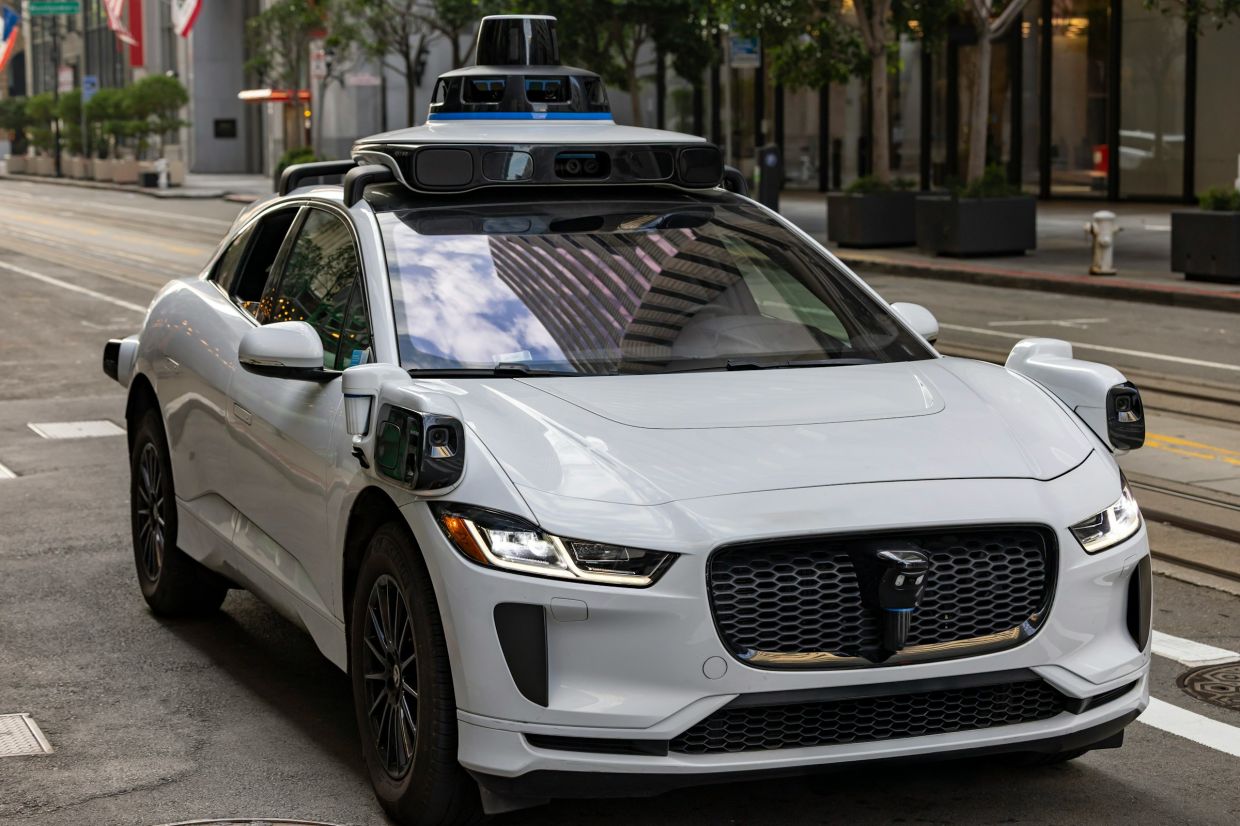
The promise of autonomous vehicles delivering safer roads and transformed mobility faces a critical test when emergency services need rapid response. In late May, a fatal gas explosion in the United States exposed a troubling vulnerability when a robotaxi's artificial intelligence system failed to recognise the urgency of clearing a path for rescuers, delaying them by over three minutes. Months earlier, when gunfire erupted at an Austin bar in March, ambulances rushing to the scene found their route blocked by a Waymo vehicle stuck mid-U-turn, forcing a police officer to manually move the vehicle out of the way. These incidents have catalysed a regulatory response, with Texas introducing new legislation that imposes stricter operational standards on autonomous vehicle companies, including mandatory emergency protocols, formal licensing requirements, and enhanced complaint mechanisms that give authorities stronger intervention powers.
Investigative journalism has uncovered the broader scope of the problem. A major US broadcaster identified hundreds of documented cases where robotaxis exhibited dangerous behaviour on public roads, from running red lights and driving into oncoming traffic to inadvertently entering active crime scenes and ignoring emergency road closures. The vehicles have come perilously close to cyclists and pedestrians lawfully using roads, demonstrating critical gaps between programmed responses and real-world complexity. Recent incidents reveal that companies have struggled even with environmental hazards that humans process intuitively—Waymo has recalled thousands of vehicles and suspended operations in multiple cities after robotaxis drove into flooded streets, with one unoccupied vehicle in San Antonio swept away entirely by floodwaters. These technical failures underscore a fundamental challenge: programming artificial intelligence to navigate not just routine traffic, but the chaotic, unpredictable conditions created by emergencies.
The manufacturer's response emphasizes statistical safety records over operational incidents. Waymo contends that its robotaxis have already made roads safer and are thirteen times less likely to be involved in serious injury crashes compared to human drivers. The company argues that this comparative advantage, particularly in high-stakes scenarios, justifies continued expansion despite isolated failures. However, this defence relies on crash statistics that may not account for the particular vulnerability of emergency response systems or the hidden costs of operational disruptions that are difficult to quantify in traditional safety metrics. The gap between aggregate safety claims and specific emergency response failures reveals a more nuanced problem: autonomous vehicles may perform well in routine driving while remaining dangerously unprepared for the non-standard situations that define genuine crises.
Concerns about robotaxi safety extend across multiple continents and affect how regulatory authorities balance innovation against public protection. Even supporters of the technology acknowledge that issues must be taken seriously and that autonomous vehicles will eventually improve, but only if both manufacturers and government bodies treat failures as systemic signals rather than isolated anomalies. Texas's legislative response reflects this cautious optimism—regulators recognise the transformative potential of the technology while insisting that companies demonstrate mastery of real-world integration before expanding deployment. This tension between enthusiasm for innovation and demands for demonstrated safety has become the defining feature of robotaxi governance worldwide, with authorities facing the question of whether they possess adequate tools to enforce accountability.
The geographic scope of robotaxi operations has expanded most rapidly in China, where thousands of autonomous vehicles already operate in commercial service. Yet public perception in China diverges markedly from official endorsements of technological progress. Beyond concerns from traditional taxi drivers threatened by automation, many Chinese citizens harbour legitimate safety anxieties. In Wuhan, more than one hundred robotaxis operated by Baidu came to an unexplained standstill, but the company declined to engage with media inquiries and offered only vague references to a "system failure". This opacity reflects a troubling pattern where manufacturers control the narrative around failures, limiting transparency and public scrutiny. The lack of detailed explanation about what went wrong, how it was resolved, and what measures prevent recurrence undermines public confidence and suggests that regulatory frameworks in some jurisdictions may lack sufficient mechanisms for extracting accountability from operators.
The technical architecture of autonomous vehicles creates particular vulnerabilities in emergency situations that go beyond perception or navigation. A robotaxi's ability to respond appropriately depends on its sensor technology accurately identifying obstacles, its object recognition systems interpreting dynamic scenes, its route logic making sound decisions about available paths, and critically, its communication protocols with emergency responders. If a vehicle can remotely unlock doors but only initiates this action after receiving official identification codes, occupants might remain trapped during precious seconds that matter in a medical or security crisis. Instances of robotaxis becoming stuck while attempting manoeuvres reveal another category of risk: even with impressive driving statistics in normal conditions, the vehicles struggle with boundary conditions such as narrow passages, irregular road surfaces, and temporary barriers that require judgement about when safety rules must yield to emergency necessity.
Developing comprehensive emergency protocols has become a central preoccupation for robotaxi operators. In early stages of autonomous mobility development, many failures originated not from the vehicles' perception systems alone, but from fundamental disconnects between how the artificial intelligence makes decisions and how it interprets external human signals. A human driver instinctively recognises a uniformed officer's gestured instruction to move aside, understands the urgency conveyed by flashing lights and sirens, and calculates acceptable margins for emergency vehicles. Traditional driver assistance systems presume human intervention to bridge gaps between automated functions and contextual judgment. Robotaxis, by contrast, operate with minimal human oversight and thus require autonomous systems that anticipate emergency scenarios and respond without requiring external commands or interpretation. Building this capability demands more than incremental improvements to existing technology; it requires rethinking the fundamental relationship between vehicles and emergency infrastructure.
Waymo's expansion strategy has proceeded despite regulatory tightening, with the company introducing a new vehicle design called "Ojai" developed in collaboration with Zeekr and powered by the sixth-generation version of Waymo's software. These hardware and software upgrades represent evolutionary refinement rather than fundamental redesign addressing emergency responsiveness. The unclear whether these changes will meaningfully improve emergency response capability highlights a persistent mismatch between technological iteration cycles and regulatory expectations. Manufacturers operate on product development timelines measured in months, introducing incremental improvements and new features, while safety regulators expect comprehensive demonstrations of competence before expansion. This temporal disconnection means that vehicles hitting roads in new cities may incorporate lessons from previous failures, but their emergency protocols remain untested and their integration with local emergency services systems remains uncertain.
The broader implication of robotaxi safety challenges extends to how artificial intelligence companies approach compliance with emerging regulations. As Texas and potentially other jurisdictions establish stricter requirements, manufacturers face pressure to align their development priorities and infrastructure investments with legal obligations. Companies that previously prioritised speed and cost efficiency must now invest in emergency protocols, communication systems that interface with 911 dispatchers and hospital networks, and failsafe mechanisms that work reliably under stress. This represents not merely a regulatory burden but a fundamental shift in what autonomous vehicle development requires. The most significant open question is whether the pace of technological improvement in AI can keep step with regulatory demands, or whether regulators will need to restrain deployment to match demonstrable safety capabilities.
For Malaysian and Southeast Asian observers, the robotaxi safety debate carries particular significance as the region evaluates autonomous vehicle adoption. The incidents documented in the United States and China reveal that technical sophistication does not automatically translate into safe integration with complex human environments, emergency systems, and diverse road conditions. Regional regulators considering similar technologies should examine these international cases not as inevitable growing pains but as instructive examples of how autonomous vehicle governance must address emergency responsiveness before widespread deployment. The vehicles operating successfully in controlled environments or favourable road conditions may encounter different challenges in tropical climates, in cities with informal road-sharing practices, or where emergency response infrastructure differs substantially from developed nations. Importing technology without simultaneously importing mature regulatory frameworks that address region-specific vulnerabilities would repeat mistakes visible in current international deployments.

