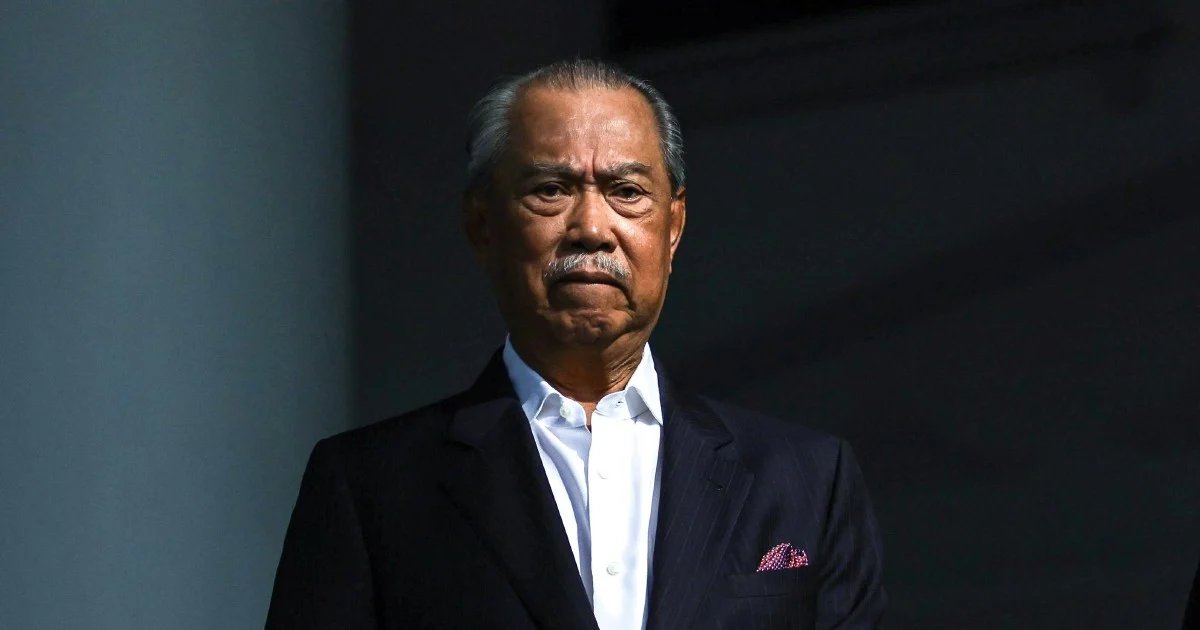
A court decision has kept RM195 million in bank accounts belonging to Bersatu locked and inaccessible, representing a significant financial blow to the Perikatan Nasional coalition partner and complicating the party's operational capacity ahead of the next general election cycle.
The freeze on these funds stems from an ongoing legal dispute that has pitted party factions against one another, with competing claims over the ownership and control of the monetary reserves. The ruling underscores deepening internal divisions within the party that has served as a major player in Malaysian politics since its formation in 2016 by Mahathir Mohamad following his departure from the United Malays National Organisation, or UMNO.
Bersatu's financial predicament carries implications beyond the party itself. As a key component of the Perikatan Nasional coalition that governs at the federal level, the party's weakened financial position could affect its capacity to mobilise resources for electoral campaigns, conduct party operations, and maintain its organisational infrastructure across the country. This matters significantly in Malaysia's highly competitive political landscape, where campaign financing remains a crucial element of electoral success.
The blocked funds represent a substantial portion of the party's reserves, making the court decision consequential for Bersatu's strategic flexibility. Party officials have likely considered these resources essential for strengthening their position within the coalition and competing effectively against rival parties during federal or state-level electoral contests. The inability to access these funds constrains their options for recruitment drives, grassroots engagement programmes, and communication campaigns.
Internal party factionalism has marked Bersatu's trajectory since its inception. The conflict underlying the current account freeze reflects broader tensions within the organisation regarding leadership, direction, and resource allocation. These disputes have previously manifested in public disagreements between senior figures, defections to competing parties, and competing power centres seeking influence over party machinery and decision-making processes.
The court's decision to maintain the freeze suggests that judicial scrutiny of the underlying claims has not resolved the dispute in favour of any single faction seeking unfettered access to the accounts. This procedural outcome indicates that the merits of the competing claims remain contested, with the legal system taking a cautious approach by preserving the status quo rather than enabling one party to the dispute to assume full control of the contested assets.
For Malaysian observers monitoring political developments, the frozen accounts highlight vulnerabilities within coalition arrangements that depend on multiple parties with distinct organisational interests and internal dynamics. Coalition stability rests partly on ensuring that member parties maintain sufficient operational capacity and resource access to sustain their electoral machinery and policy advocacy. Financial constraints on Bersatu could theoretically create tensions within Perikatan Nasional if the party's reduced capacity affects coalition-level coordination or campaign effectiveness.
The situation also raises questions about governance and financial accountability within Malaysian political parties more broadly. The legal mechanisms that have resulted in the account freeze suggest that courts remain willing to intervene in party-related financial disputes when substantive legal questions are raised about proprietary rights and asset control. This judicial involvement reflects evolving expectations regarding transparency and accountability in how political organisations manage their finances.
Bersatu has publicly indicated its intention to challenge or seek modifications to the account freeze, signalling that the party views the current situation as temporary and ultimately reversible through continued legal proceedings. The party's legal strategy likely involves presenting arguments that one faction or leadership configuration has legitimate claim to the funds and should therefore retain exclusive access.
The broader political economy of Malaysian politics suggests that parties maintain multiple funding sources beyond these institutional accounts, including individual donations, corporate contributions, and state resources where the party holds electoral positions. Nevertheless, the frozen accounts represent critical reserves that provide financial flexibility and independence from daily fundraising requirements.
Looking ahead, the resolution of this dispute could take considerable time, as Malaysian court proceedings involving contested assets and competing claims typically progress through multiple judicial stages. During this period, Bersatu will need to adapt its operational and campaign planning to reflect the reality of reduced liquid reserves, potentially affecting its strategic choices within the coalition and its capacity to respond to political developments requiring rapid financial mobilisation.
The case underscores how internal party disputes and financial conflicts can have consequences extending beyond individual organisations to affect broader political alignments and electoral dynamics. As Malaysia moves toward future electoral contests, the outcome of Bersatu's financial dispute will bear watching as one indicator of the party's stability and its capacity to function effectively as a coalition partner.

