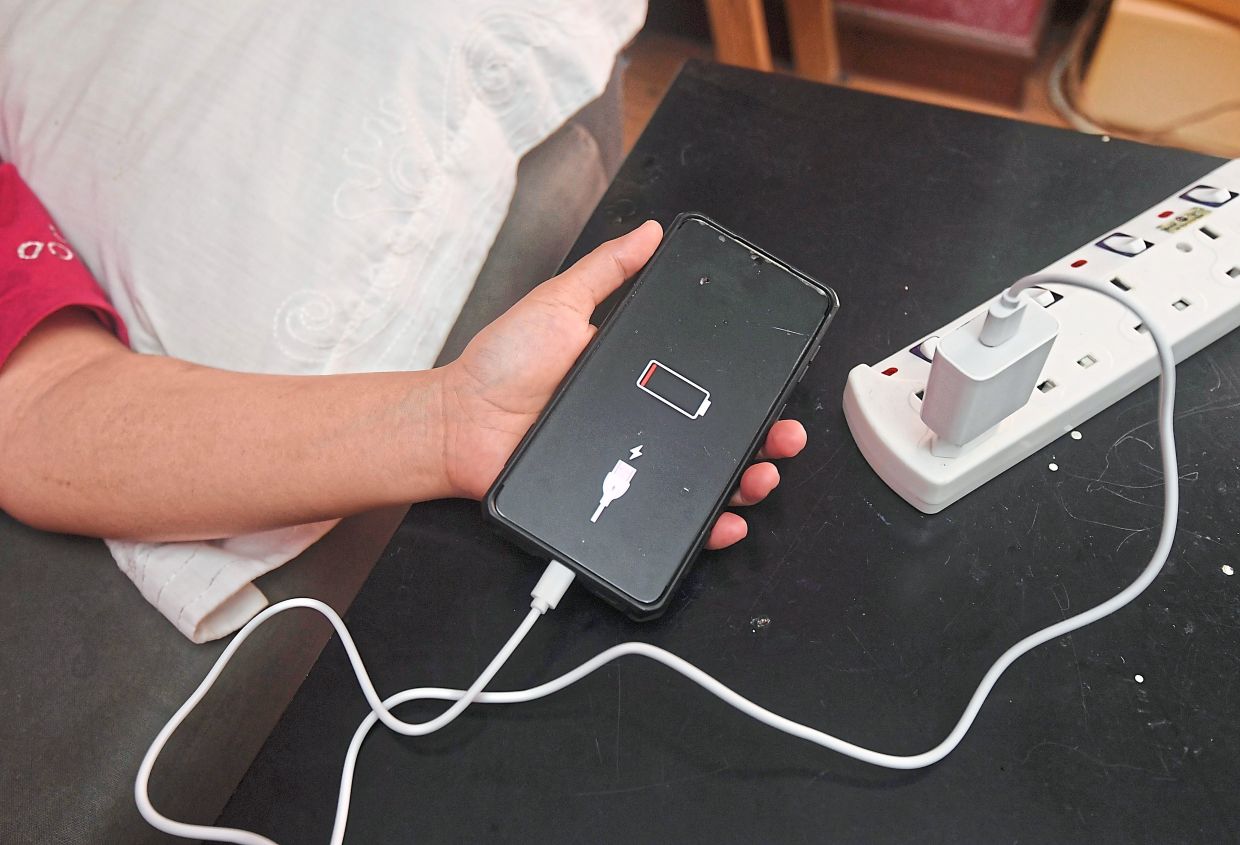
Malaysia's fire department has sounded a fresh alarm over the dangers of careless device charging, revealing that unsafe electrical practices have destroyed millions of ringgit in property and possessions over the past three years. Between 2023 and 2025, the Department of Fire and Rescue Malaysia (JBPM) documented 59 fire incidents directly linked to faulty charging habits, resulting in cumulative losses of RM14.2 million across the country. Notably, no deaths were recorded during this period, though the financial toll underscores a persistent blind spot in household fire safety awareness.
The geographical distribution of these incidents exposes a troubling concentration of risk in certain regions. Sarawak bore the brunt of the problem, accounting for approximately RM9.7 million in losses across just 11 cases—a figure that suggests each incident there caused substantially more damage than the national average. Kelantan followed with 17 documented cases totalling RM1.14 million, while Sabah recorded three incidents resulting in RM806,800 in destruction. This pattern points to regional variations in fire prevention infrastructure, building standards, or perhaps public awareness campaigns that may be less effective in some areas than others.
The remaining affected states painted a picture of scattered but significant risk. Selangor, despite its urban character and presumably better fire safety infrastructure, experienced five cases costing RM661,040. Penang reported nine incidents with RM537,125 in losses, while Johor, Putrajaya, Melaka, Terengganu and Perak collectively accounted for the remainder. Notably, six states—Kedah, Negri Sembilan, Pahang, Perlis, Kuala Lumpur and Labuan—reported no device-charging-related fires during the three-year window, suggesting that either better safety practices prevail in these areas or that reporting mechanisms may differ.
When assessing the true magnitude of these incidents, JBPM emphasises that financial loss alone provides an incomplete picture of fire hazard complexity. The department's investigators stress that each case demands individualised attention, with difficulty levels determined not by headline figures but by investigative requirements. Factors including the physical location of the ignition source, the specific technology involved, the condition of remaining evidence after the blaze, hazards present at the scene, and the technical forensics required to determine root causes all influence how comprehensively a case can be resolved.
Some of the most challenging investigations have involved incidents where the scale of destruction left little physical evidence to examine, or where technical analysis demanded expertise spanning multiple engineering disciplines. The department notes that a fire causing RM100,000 in losses might pose greater investigative challenges than one causing RM500,000 if the latter leaves clearer evidence trails. This reality highlights why preventing fires through awareness is far more cost-effective than investigating them after they occur.
The charging practices identified by JBPM as most hazardous reflect a troubling mixture of convenience-seeking and cost-cutting that pervades Malaysian households. Leaving mobile phones, laptops and other gadgets plugged in overnight without supervision remains rampant despite clear risks, as does the widespread use of uncertified chargers and cables sourced through informal channels. Perhaps most dangerous is the habit of charging devices on soft surfaces—beds, sofas, cushions and blankets—where heat dissipation is compromised and flammable materials surround the charging apparatus.
The investigation data also identifies secondary risk factors that compound the primary problem of unsafe charging. Overloaded power strips juggling multiple high-draw devices, degraded batteries showing swelling or discolouration, devices emitting burning smells, and visibly damaged charging cables all signal elevated fire potential. Yet many Malaysians continue using such equipment, either unaware of the danger signals or dismissive of the risk in hopes that problems will resolve themselves. This normalisation of household electrical hazard represents a significant barrier to fire prevention.
Behind these unsafe practices lies a consumer culture that privileges affordability over safety standards. JBPM has observed that many users consciously select cheaper chargers and cables despite understanding the quality trade-off, reasoning that the cost savings justify the increased risk. This calculation fundamentally misunderstands the true cost of a house fire, which extends beyond the immediate property damage to encompass trauma, displacement, potential injury and cascading losses. An inexpensive counterfeit charger costing RM20 may seem economical until it ignites a fire destroying RM200,000 in home contents and leaving a family homeless.
The absence of SIRIM certification and other recognised safety standards on charging equipment represents a critical vulnerability. Malaysia's regulatory frameworks establish these certifications to ensure that electrical devices meet minimum safety thresholds and have undergone rigorous testing. Yet significant volumes of uncertified equipment—often imported informally or sold through unscrupulous retailers—circulate through the market, undercutting legitimate products while introducing genuine fire hazards into homes. Consumers frequently cannot distinguish certified from non-certified products, leaving them vulnerable to purchasing dangerous equipment.
JBPM's response strategy recognises that enforcement and investigation alone cannot solve this problem. The department is intensifying public education initiatives, conducting preventive outreach in communities, and partnering with other agencies to embed fire safety messaging into everyday discourse. These efforts aim to shift consumer behaviour away from dangerous shortcuts and toward conscientious charging practices that have become second nature in more fire-safety-aware societies. Such campaigns require sustained investment and cultural reinforcement to overcome deeply ingrained habits.
For Malaysian households, the practical implications are straightforward but demanding of discipline. Devices should never charge overnight unattended or on soft furnishings. Every charger and cable should bear SIRIM certification or equivalent safety approval from recognised bodies. Any device exhibiting warning signs—battery swelling, excessive heat, odours, or physical damage—should be removed from service immediately rather than used until failure occurs. Power strips should carry loads appropriate to their rated capacity, and damaged electrical infrastructure should be replaced promptly rather than tolerated.
The RM14.2 million in accumulated losses over three years represents not merely an economic toll but a preventable tragedy born of negligence and poor consumer choices. As Malaysian households become increasingly dependent on electronic devices requiring constant charging, the stakes of maintaining safety discipline only rise. The fire department's detailed investigation work provides evidence that most of these incidents were entirely avoidable had users adopted straightforward precautions and invested marginally more in certified equipment. Whether Malaysians heed this warning remains to be seen in the coming years' incident statistics.

