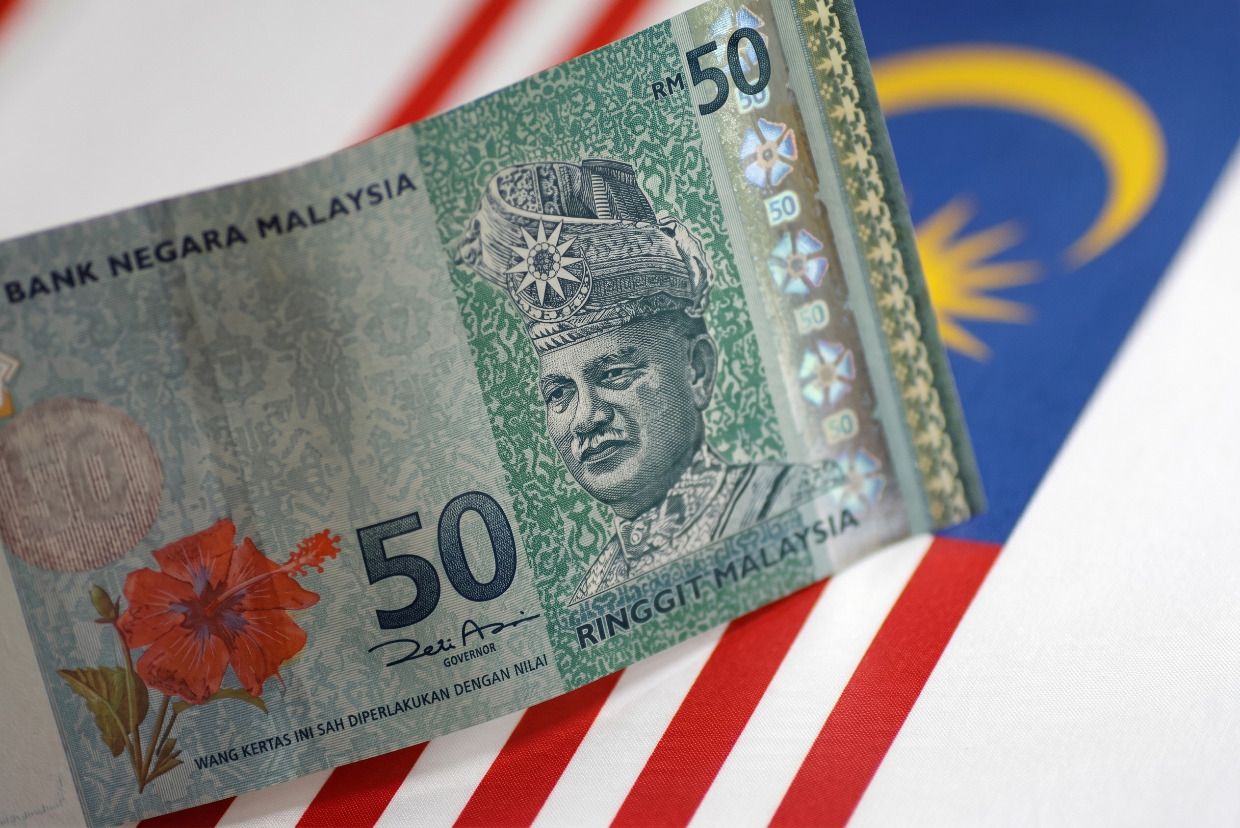
Malaysia's currency is set to stage a meaningful recovery in the second half of the year after stumbling through the first six months as the region's lagging performer, with forecasters pointing to a combination of targeted policy measures and underlying economic strength as the primary drivers of renewed buying interest. Bank Negara Malaysia's intensified push to attract foreign-exchange inflows, announced in late June, has already begun shifting sentiment in the ringgit's favour, reversing months of depreciation pressure and signalling a potential turning point for the embattled unit.
Analysts tracking the currency have grown increasingly optimistic about the ringgit's trajectory over the remainder of 2025, with major financial institutions offering predictions that suggest substantial appreciation from current levels. Royal Bank of Canada's Singapore-based strategists have pencilled in an end-of-year target of 3.95 ringgit per US dollar, representing a notable strengthening from recent quotations, while Australia & New Zealand Banking Group's assessment extends even further, forecasting the currency could touch 3.80 by December—a level not seen since 2015. These projections reflect a fundamental shift in how investors and currency specialists are evaluating Malaysia's medium-term prospects, moving away from the pessimism that dominated earlier in the year.
The immediate price action has already vindicated this constructive stance. Following Bank Negara Malaysia's June 24 announcement, the ringgit has outpaced all major Asian currencies, demonstrating that market participants are responding positively to the central bank's policy signals. The currency closed last Friday with a 0.2 per cent gain at 4.0722 against the dollar, marking the continuation of a reversal that began shortly after the policy commitment. This momentum suggests that foreign exchange traders are positioning themselves ahead of further appreciation, a self-reinforcing dynamic that could accelerate the ringgit's ascent if the supporting fundamentals remain intact.
The economic backdrop underpinning the currency recovery is genuinely robust. Malaysia's trade surplus has surged to unprecedented levels, with May's merchandise exports expanding 45 per cent year-on-year and generating a record monthly trade surplus of 40 billion ringgit ($9.8 billion). This exceptional performance reflects several converging factors that are unlikely to evaporate quickly. The global artificial intelligence investment boom has positioned Malaysia as a critical hub for data centre infrastructure, while the nation's electrical and electronics sector continues to capture strong demand from international buyers upgrading their technology capabilities. These structural tailwinds suggest the trade surplus may remain healthy rather than prove a temporary anomaly.
Bank Negara Malaysia's policy approach targets a specific transmission mechanism: encouraging Malaysian companies with overseas earnings to repatriate and convert those funds into ringgit. This is distinct from passive hope that inflows will materialise on their own merit. By creating financial incentives and streamlined procedures for converting foreign-currency deposits held by businesses, the central bank is attempting to plug a leakage in the domestic currency supply, converting a potential asset pool into active demand for ringgit. According to analysts at ANZ, foreign-currency deposits held by Malaysian businesses expanded notably during the March-to-May period, indicating a pool of convertible funds exists that could support the ringgit if policy measures successfully unlock it.
The capital markets have responded enthusiastically to improved prospects for the ringgit and Malaysian assets generally. Global institutional investors have channelled approximately $2.1 billion into Malaysian bonds through the final week of June, putting the market on track for its most substantial monthly inflow since May 2025. This represents genuine conviction from international fund managers that Malaysia offers attractive value and that currency depreciation risk is diminishing. The bond buying serves a dual purpose: it generates immediate foreign-exchange supply that can be converted at the central bank's encouragement, while simultaneously signalling international confidence in Malaysian stability and growth prospects.
Context from Malaysia's recent economic history reinforces plausibility in the current recovery narrative. Following a sharp depreciation that saw the ringgit reach its weakest level against the dollar since the 1998 Asian financial crisis, the currency mounted a vigorous rebound in 2024 after Bank Negara Malaysia implemented comparable capital-flow encouragement measures. By year-end 2024, the ringgit had emerged as the strongest-performing Asian currency, demonstrating that the policy toolkit deployed then—and now being reactivated—carries genuine efficacy. This track record suggests the current initiatives are not untested theories but rather proven mechanisms that market participants have already rewarded with strong performance.
However, the ringgit's recovery path is far from obstacle-free. The US Federal Reserve's increasingly hawkish monetary policy stance represents a persistent headwind, as higher American interest rates attract global capital toward dollar-denominated assets and make the greenback structurally more attractive. Malaysian policymakers cannot simply legislate away the power of rate differentials or ignore Federal Reserve policy shifts. Additionally, Malaysia faces a layer of domestic political uncertainty that, while manageable, bears monitoring. Upcoming state elections will serve as a barometer of support for Prime Minister Anwar Ibrahim and the ruling coalition before the next national polls, and any electoral setback or political turbulence could unsettle investor sentiment and derail the currency recovery narrative.
Despit these cautions, the weight of evidence suggests the ringgit has entered a more favourable phase. The combination of exceptional trade performance, successful capital-flow policy measures, and strong international appetite for Malaysian assets creates a convergence of factors supporting appreciation. The policy momentum from Bank Negara Malaysia demonstrates active commitment to supporting the currency, while Malaysia's positioning in the artificial intelligence infrastructure boom provides a structural economic foundation. For investors and Malaysian stakeholders monitoring the ringgit's performance, the transition from being the worst Asian performer in the first half to a potential outperformer in the second half represents not merely technical chart improvement, but reflection of genuine economic momentum and considered policy action working in tandem.

