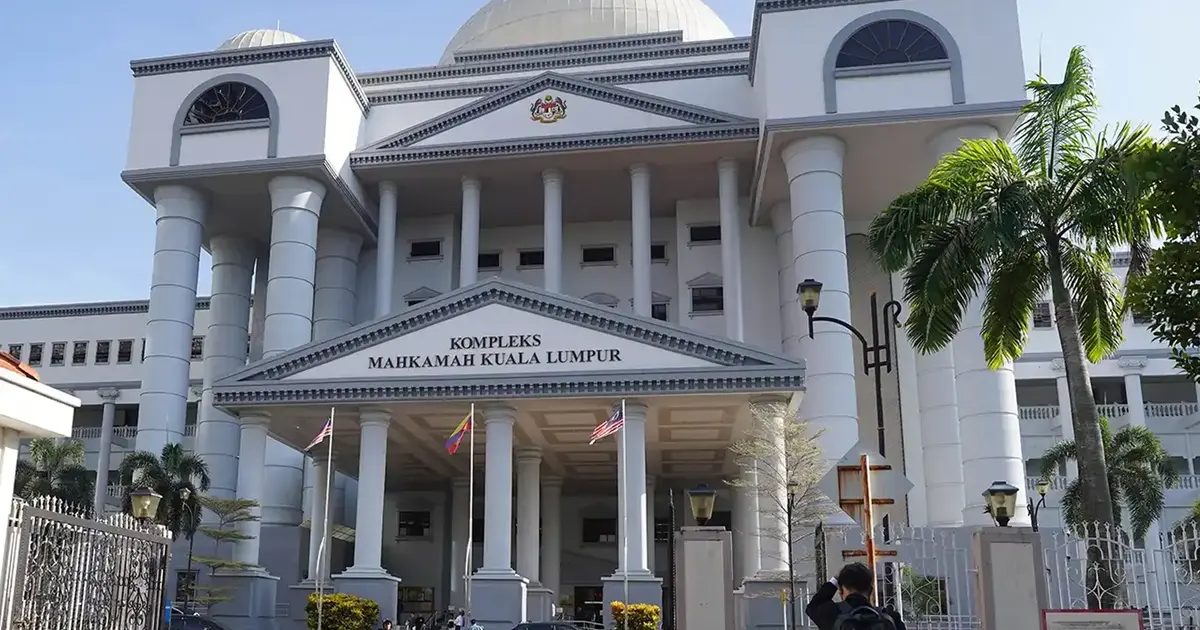
A woman in her late fifties is taking legal action against Malaysia's National Registration Department (Jabatan Pendaftaran Negara, JPN) in a case that highlights the ongoing tension between constitutional guarantees of freedom of conscience and administrative procedures governing religious identity on official documents. The mother of three is seeking a court order to quash what she describes as an unjustified administrative demand, arguing that the department has already acknowledged her religious status through previous identity card issuances.
The case centres on a fundamental question about the state's authority to determine and monitor religious affiliation on identity documents. The applicant, now 58 years old, converted out of Islam three decades ago, a life decision that has defined her personal and spiritual journey for more than a third of a century. Despite this significant passage of time, her status remains contested in administrative channels, suggesting that the mechanisms for recording and verifying religious change in Malaysia remain inconsistent and potentially arbitrary.
Crucially, the woman argues that JPN's current action contradicts its own historical practice. She points out that the department has previously issued her identity cards without objection to her stated religious status, effectively acknowledging her conversion through administrative action over many years. This argument raises questions about the consistency and legitimacy of government agencies reversing long-established positions without apparent procedural safeguards or notification to affected individuals.
Her case emerges within Malaysia's complex constitutional framework, where Article 11 of the Federal Constitution guarantees the right to profess, practise, and propagate religion. However, these freedoms are qualified by the subordinate position of Islamic law in matters affecting Muslims, and the interpretation of apostasy from Islam remains primarily the domain of Shariah courts rather than civil courts. This jurisdictional split creates practical complications for individuals who have changed their religious beliefs, particularly regarding how civil administrative systems should treat them.
The demand from JPN raises broader concerns about how government departments handle sensitive religious matters and whether adequate procedural fairness is extended to citizens undergoing such significant personal circumstances. The absence of clear, published guidelines for how identity card applications should be processed when religious status is contested leaves considerable discretion with individual officials and departments, potentially leading to inconsistent outcomes across the country.
For Malaysian citizens of other faiths, and particularly for those who have undergone religious conversion, this case carries significant practical implications. The outcome will affect how identity documents are issued and maintained, influencing access to services, employment, and social participation that depend on having valid identification. A requirement to maintain a religious designation against one's stated beliefs could affect multiple aspects of daily life and administrative interaction with government agencies.
The case also reflects demographic and social shifts in Malaysia's increasingly diverse society. While accurate statistics on religious conversion are difficult to obtain due to the sensitive nature of the subject, several high-profile cases in recent years have brought the issue into public discussion. These cases frequently involve individuals navigating conflicting pressures between personal conviction and family expectations, religious institutional authority, and civil law provisions.
Further, the situation underscores a peculiarity of Malaysia's dual legal system, where civil and Islamic courts operate in parallel with undefined boundaries. When questions arise about religious status that affect civil documentation, the interaction between these systems becomes unclear. Some individuals seeking to update their religious status on civil documents have faced obstacles, while the procedures available through Shariah courts are not always accessible or transparent to all concerned parties.
The woman's argument that JPN previously accepted her status through issued documents introduces an element of administrative estoppel to the discussion. If a government department has consistently acted in a particular manner toward an individual for decades, reversing that position without clear legal authority or procedural transparency raises fairness concerns. This principle becomes particularly important when religious matters are involved, as the stakes for the individual's dignity and rights are substantial.
Education and training of JPN personnel in handling religiously sensitive applications may also require examination as a result of this case. Whether officials have adequate guidance on how to manage situations where stated religious status differs from recorded status, or where conversions have occurred, remains unclear. Better protocols could prevent future instances where citizens are unexpectedly confronted with administrative demands that seem to contradict previous acceptance.
The case comes at a time when Malaysia faces increasing scrutiny regarding protection of fundamental rights and freedoms. International observers frequently note concerns about apostasy laws and how they intersect with individual liberty. While Malaysia's civil courts have historically been reluctant to intervene in matters considered within the Islamic legal framework, this particular dispute centres on civil administration rather than religious law, potentially creating a different avenue for judicial consideration.
Regionally, Malaysia's handling of such cases influences perceptions of religious tolerance and administrative fairness across Southeast Asia. Other countries in the region facing similar questions about managing religious identity on official documents look to Malaysian legal precedents and administrative practices. A clear, fair resolution that respects both religious identity and individual conscience could serve as a model, while an outcome that prioritises state designation over personal belief might raise concerns among rights advocates.
The court's decision will likely establish important parameters for how Malaysian administrative agencies can handle religious status on identity documents, whether previous government decisions can be retrospectively overturned, and what procedural fairness must accompany such administrative actions. Regardless of the outcome, the case highlights gaps in Malaysia's policy framework regarding religious conversion and the documentation thereof in the civil sphere.