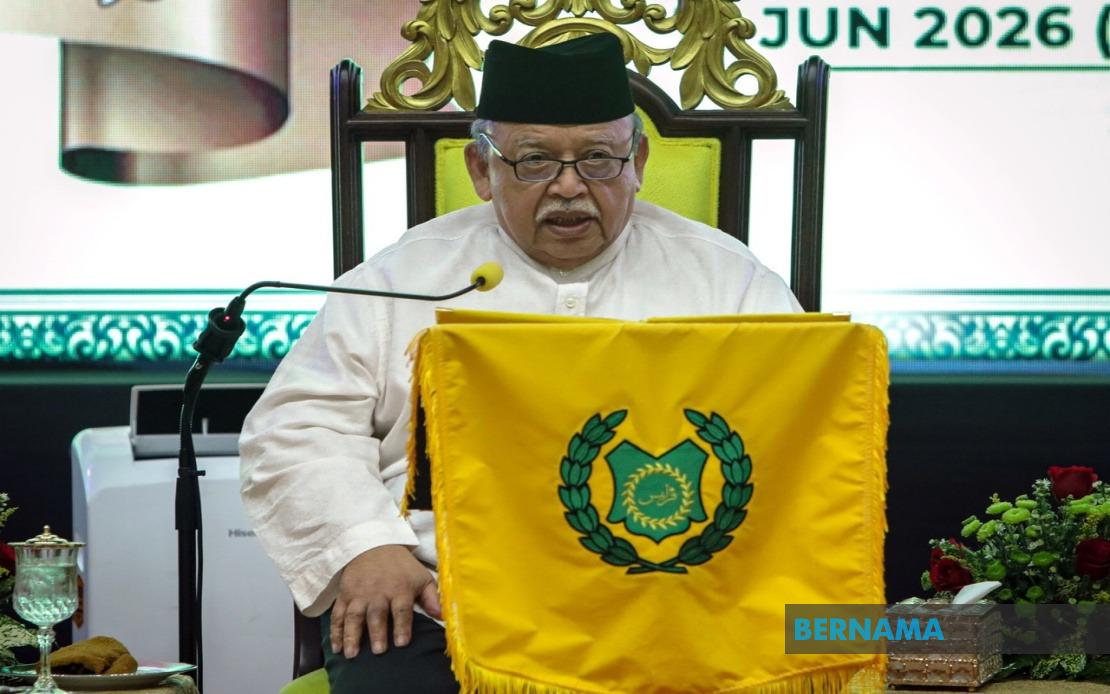
Tuanku Syed Sirajuddin Jamalullail, the Raja of Perlis, has mounted a vigorous appeal to the population to discharge their duties with genuine commitment, treat their work as a form of spiritual devotion, and decisively oppose corruption in all its manifestations. Speaking at the state-level Maal Hijrah 1448H/2026M celebration in Kangar on June 18, the Ruler articulated a vision of societal advancement grounded not merely in bricks and mortar, but in the moral and intellectual foundations that bind a community together.
The Ruler's intervention arrives at a moment when Malaysia continues grappling with public sector integrity challenges and the need to restore confidence in institutions. His emphasis on responsibility conducted with sincerity and corruption rejection carries particular resonance given ongoing efforts to strengthen governance standards across federal and state administrations. By framing these concerns through the lens of a religious occasion marking the Islamic new year, Tuanku Syed Sirajuddin positioned integrity as both a civic and spiritual imperative, bridging secular and religious domains in a manner intended to appeal across Malaysia's diverse society.
Crucially, the Ruler redefined what constitutes genuine progress for the modern Malaysian context. Rather than measuring advancement solely through construction projects, infrastructure completion, or economic output figures, he articulated a multidimensional conception of development. This framework encompasses intellectual advancement, character refinement, cultural preservation, intellectual maturity, and the maintenance of principled values within society. Such a perspective challenges prevailing development paradigms that frequently privilege rapid physical transformation and GDP growth, suggesting instead that sustainable prosperity requires parallel investments in human capital and moral consciousness.
The articulation of "true MADANI progress" carries particular significance, invoking the government's own stated philosophy of development with civilisational values. Tuanku Syed Sirajuddin positioned his remarks as clarifying and deepening this concept, ensuring it remains grounded in concrete ethical practices rather than abstract aspiration. His insistence that people should strengthen unity, pursue knowledge relentlessly, maintain courteous conduct, and execute their responsibilities with full accountability provides a practical checklist for translating MADANI principles into daily behaviour across all sectors of society.
The Ruler also concentrated significant attention on the contemporary challenges confronting Malaysia and the broader region. Technological advancement, artificial intelligence proliferation, far-reaching social transformation, and shifting global economic dynamics present complex terrain requiring active engagement rather than passive observation. His exhortation that Malaysians must become initiators of ideas, drivers of change, and architects of progress rather than mere spectators reflects recognition that Southeast Asia's competitiveness in an increasingly uncertain international environment depends upon proactive innovation and adaptive leadership at all levels.
Emphasis on understanding Islam through authentic interpretative frameworks rooted in Quranic scholarship and prophetic tradition indicates the Ruler's conviction that religious literacy remains foundational to societal cohesion. Simultaneously, his articulation of mature political culture and civilised democratic practice suggests that religious authenticity and modern governance operate as complementary rather than contradictory imperatives. This framing carries relevance for multi-religious Malaysia, where navigating religious conviction alongside inclusive governance remains an ongoing challenge.
The Ruler positioned people empowerment and self-reliance as essential traits for competitive positioning in an era of rapid change. By nurturing courageous, intelligent, and independent-minded citizens, Perlis and Malaysia broadly can strengthen their capacity to respond effectively to emerging opportunities and challenges. This developmental approach prioritises human agency and capability building alongside structural reforms, recognising that institutional effectiveness ultimately depends upon the quality of individuals operating within those frameworks.
The ceremony itself demonstrated the seriousness with which Perlis's leadership approaches these concerns, with attendance from Raja Muda Tuanku Syed Faizuddin Putra Jamalullail and Raja Puan Muda Tuanku Dr Hajah Lailatul Shahreen Akashah Khalil underscoring the institution's unified commitment to the message. Such high-level participation signals that integrity advocacy extends beyond rhetorical exercise to occupy a central place in the state administration's strategic priorities.
Recognition bestowed upon Datuk Izham Mahmud, YTSP board member, through the Perlis Tokoh Maal Hijrah award exemplified the Ruler's commitment to acknowledging individuals demonstrating exemplary contribution to community wellbeing. By honouring such figures publicly during significant religious observances, Tuanku Syed Sirajuddin reinforced that integrity and service merit visible appreciation within society, potentially inspiring emulation among others.
For Malaysian observers and policymakers, the Ruler's intervention suggests that state-level leadership increasingly recognises limitations of purely technocratic or infrastructure-focused development strategies. As the nation navigates demographic transition, technological disruption, and evolving regional geopolitics, his emphasis on character formation, ethical conduct, and intellectual advancement provides a counterbalance to narrowly economic conceptualisations of progress. Whether such high-level advocacy translates into measurable improvements in governance standards, institutional integrity, and public sector ethics remains a question for sustained monitoring.
The remarks also carry implicit messaging regarding expectations for political leadership across levels. By emphasising that progress demands knowledge, integrity, civility and unity, Tuanku Syed Sirajuddin implicitly articulated criteria by which citizens might evaluate their elected and appointed representatives. In an era of considerable political fluidity and institutional scrutiny, such public standard-setting from traditional authority figures carries particular significance for shaping public discourse and expectations.

