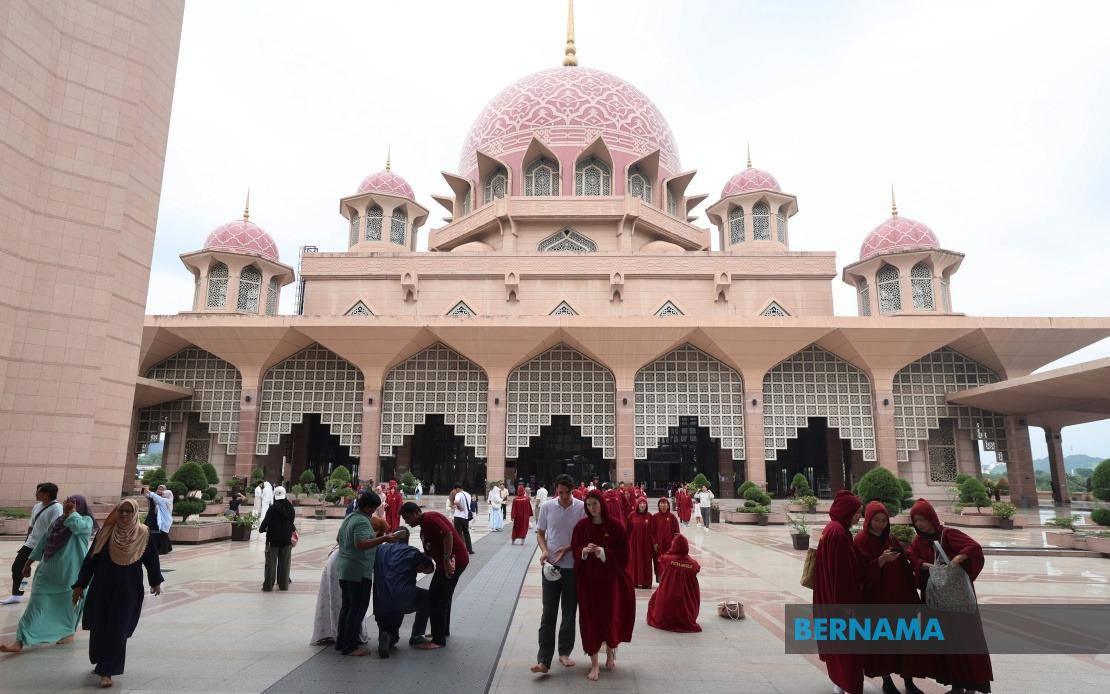
The Putra Mosque in Putrajaya will serve as the venue for Malaysia's National Maal Hijrah celebration on June 17, drawing an estimated 5,000 attendees from both domestic and international backgrounds. Sultan of Perak Sultan Nazrin Shah will officiate the significant religious observance, which commemorates the Prophet Muhammad's migration—a watershed moment that established the Islamic calendar and initiated the development of Islamic civilisation across centuries. This year's event carries particular resonance as it emphasises spiritual renewal and the transformative power of purposeful change within Muslim communities.
The guest list reflects the occasion's elevated status within Malaysia's national calendar. Deputy Prime Ministers Datuk Seri Ahmad Zahid Hamidi and Datuk Seri Fadillah Yusof will attend alongside cabinet ministers, foreign representatives, departmental heads and senior government officials. The gathering underscores how Maal Hijrah transcends purely religious observance, extending into the political and diplomatic sphere as Malaysia demonstrates its commitment to Islamic values and international relations. International presence at such events signals Malaysia's positioning as a bridge between Islamic and global communities, particularly significant in Southeast Asia where interfaith dialogue remains increasingly important.
The centrepiece of proceedings will be Sultan Nazrin Shah's royal address to the assembled guests. Following this, the ceremony will feature the presentation of the National and International Tokoh Maal Hijrah Awards, a recognition programme that identifies and celebrates exceptional individuals whose contributions have shaped Islamic thought and practice. These awards represent more than ceremonial honour; they serve to establish benchmarks for excellence within Muslim societies and acknowledge those whose intellectual rigour, moral integrity and service have advanced Islam's role in contemporary affairs.
The award criteria themselves provide insight into institutional values. Recipients must demonstrate comprehensive knowledge within their chosen disciplines, exemplary personal conduct reflecting Islamic principles, and demonstrable impact on Islam's advancement both within Malaysia and internationally. This multifaceted evaluation process suggests the organisers view Islamic progress not as narrow theological scholarship but as encompassing practical contributions across diverse fields—education, governance, science, business and social development. The awards thereby validate the Islamic teaching that excellence in any discipline constitutes a form of worship and service to faith.
The Department of Islamic Development Malaysia (JAKIM) structured this year's theme specifically to reconnect contemporary Muslim believers with the spiritual essence of the Hijrah narrative. Beyond the historical migration itself, the theme encourages reflection on how believers might similarly undertake internal and external transformations aligned with Islamic principles. This interpretive approach moves Hijrah from historical commemoration into a framework for personal and collective renewal, making the observance immediately relevant to Malaysian Muslims navigating modern challenges and opportunities.
A notable innovation this year was the introduction of the Tausiyyah @ Maal Hijrah programme, held at Putra Mosque the day before the main celebration. This sessions prioritised tadabbur—contemplative reflection on Quranic verses—encouraging participants to perceive Hijrah not merely as a historical event but as an ongoing catalyst for constructive change. By pairing Quranic recitations from distinguished qari with substantive discussion of verses' meanings and applications, organisers created space for participants to integrate spiritual inspiration with practical life guidance.
The Tausiyyah programme deliberately expanded beyond passive listening to active engagement. Participants accessed multiple layers of understanding: the aesthetic and spiritual dimensions of well-articulated Quranic recitation, the intellectual dimension through exploration of verses' meanings and wisdom, and the practical dimension through considering applications in contemporary daily contexts. This pedagogical approach reflects evolving methodologies in Islamic education, recognising that meaningful religious engagement demands intellectual participation alongside spiritual receptivity.
The celebration will extend into subsequent days through the National and International Tokoh Maal Hijrah Lecture scheduled for June 18 at the Putrajaya Islamic Complex Auditorium. This forum provides award recipients with platforms to share accumulated knowledge and experience with broader audiences. Such lectures serve multiple functions: they elevate the award recipients' status as intellectual and spiritual leaders, provide educational opportunities for attendees, and create documented records of contemporary Islamic thought available for future reference and study.
For Malaysian readers, this celebration represents how national institutions integrate religious observance with governance, education and international diplomacy. The scale of the event—with 5,000 participants and state-level participation—reflects Islam's institutional significance within Malaysia's constitutional framework and national identity. The emphasis on scholarly excellence and international recognition positions Malaysia as a participant in global Islamic discourse rather than a passive observer, particularly important as Southeast Asian Muslims increasingly influence Islamic thought and practice on the world stage.
The multi-faceted programming demonstrates sophisticated understanding of how religious commemoration can serve educational, inspirational and institutional purposes simultaneously. Rather than limiting Maal Hijrah to ceremonial observance, organisers developed a comprehensive initiative spanning reflection, recognition, dialogue and knowledge-sharing. This model potentially offers insights for other religious and cultural celebrations seeking deeper engagement and broader impact within diverse societies.

