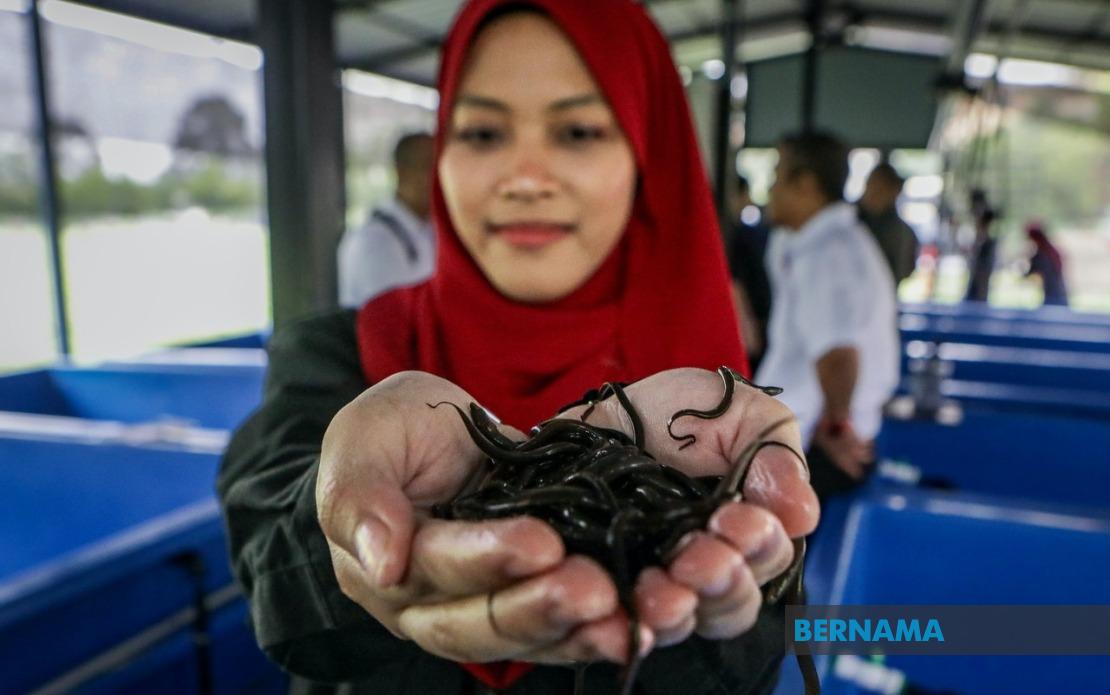
Politeknik Tuanku Syed Sirajuddin (PTSS) in Arau is demonstrating how technical education can extend far beyond the classroom walls by spearheading a commercial eel farming venture that places real economic opportunity directly into the hands of rural communities. The Projek Penternakan Belut Komersial Geran Sejati MADANI, officially launched on July 1, represents a strategic pivot in how Malaysia's vocational institutions engage with community development, moving from purely instructional roles to becoming active partners in generating sustainable livelihoods across the Perlis landscape.
At the heart of this initiative lies a fundamental shift in the mission of TVET institutions. Rather than limiting their contribution to producing employment-ready graduates, PTSS is channelling its accumulated expertise in aquaculture and agricultural management directly into grassroots economic empowerment. The institution's director Khairul Anuar Ishak articulated this broader vision, emphasising that the project transcends traditional educational boundaries by embedding real-world problem-solving and practical skill development within an active commercial framework. Students gain exposure to genuine market conditions while simultaneously equipping community members with the technical acumen needed to sustain profitable operations independently.
The structure of the initiative reflects careful planning designed to maximise long-term community ownership and self-sufficiency. Over a six-month implementation window, PTSS will shepherd all critical phases including site infrastructure development, acquisition of farming equipment and eel seedlings, comprehensive training programmes, and establishment of sound financial management practices. This phased approach ensures that when the enterprise transitions to full community control, local operators will have absorbed not merely technical knowledge but also the organisational discipline required to maintain commercial viability. The transition pathway is deliberately gradual, allowing participants to build confidence and troubleshoot operational challenges while institutional support remains accessible.
The financial commitment underscores serious government intent in diversifying rural income streams. The RM500,000 investment will be distributed across five separate community groups within Perlis under the aegis of the Prime Minister's Department's Implementation Coordination Unit (ICU JPM), with each cohort receiving 15,000 eel fingerlings. This democratised distribution model prevents economic concentration and allows neighbouring communities to develop sustainable competitive advantages by tailoring operations to local conditions and market access patterns. The involvement of Azlan Abdul Samat, director of the Perlis Federal Development Office, signalled ministerial-level backing for scaling similar initiatives regionally.
Projection figures indicate substantial income potential once farming cycles mature. Each of the five community clusters is expected to yield approximately 5,000 kilogrammes of market-ready eels following a five to six-month growth period, creating a combined regional output of 25,000 kilogrammes. These projections are not speculative; they derive from established aquaculture science and reflect realistic performance benchmarks already proven in regional eel farming operations. The scale is sufficient to meaningfully alter household income distributions across participating villages while remaining manageable for first-time operators without overwhelming technical demands.
Market access has been strategically secured through contract farming arrangements, removing the commercial uncertainty that typically jeopardises smallholder agricultural initiatives. Rather than requiring community farmers to navigate wholesale markets independently or negotiate with multiple buyers, the contractual framework guarantees predetermined purchase arrangements. This mechanism insulates producers from price volatility while allowing buyers to secure consistent supply volumes, creating mutually beneficial stability. For rural entrepreneurs often distant from urban distribution networks, such security is transformative, converting aspiration into bankable economic reality.
The project illustrates a broader Southeast Asian pattern wherein TVET institutions are repositioning themselves as regional development anchors rather than merely credential-granting facilities. This reorientation aligns with Malaysia's broader economic objectives of narrowing rural-urban disparities and building provincial resilience against sectoral economic shocks. As traditional agricultural sectors face consolidation pressures and urbanisation accelerates, emerging alternatives like aquaculture provide diversification pathways that retain economic activity and employment within rural zones. PTSS's active involvement signals institutional commitment to this agenda.
From a policy perspective, the initiative demonstrates how government grant capital can catalyse sustainable economic activity when deployed through institutional partners possessing genuine operational capacity and long-term community engagement commitments. Rather than distributing subsidies directly to individuals with uncertain follow-through capacity, channelling resources through educational institutions that maintain ongoing relationships with participant communities enhances accountability and sustainability prospects. PTSS becomes not merely a fund administrator but an active guarantor of project success, directly invested in participant achievement because institutional reputation depends upon demonstrated outcomes.
The knowledge transfer dimension deserves particular emphasis in evaluating this initiative's significance. Technical competence in eel husbandry—encompassing water quality management, feeding protocols, disease surveillance, and harvest optimisation—requires sustained learning beyond initial training workshops. PTSS's continued institutional presence ensures that troubleshooting support, updated best practice guidance, and adaptive management counsel remain accessible throughout operational phases. This ongoing relationship transforms isolated knowledge transfer events into continuous capability-building relationships, substantially improving persistence rates among participating operators.
Looking forward, the Projek Penternakan Belut Komersial framework offers a replicable template for deploying TVET institutional capacity across Malaysia's remaining underutilised regions. Success in Perlis would likely stimulate scaling discussions across other states, particularly those with established polytechnic infrastructure and accessible freshwater resources suitable for aquaculture development. Scalability discussions would necessarily address regional variations in market demand, climate conditions, and existing agricultural patterns, but the core institutional partnership model appears sufficiently robust to adapt across diverse contexts. Malaysian policymakers appear to be recognising that infrastructure development alone proves insufficient for rural prosperity; embedding technical expertise and ongoing institutional support into community enterprises produces substantially stronger outcomes.

