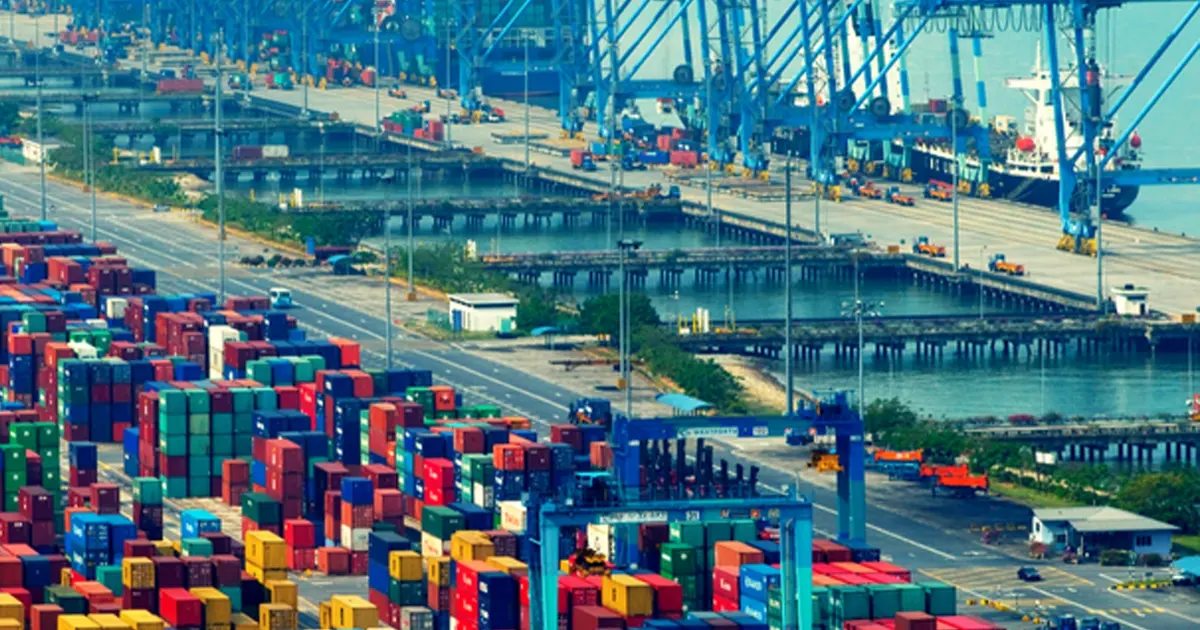
The Port Klang Free Zone has generated RM108 million in revenue as its operational reactivation drive advances to 86 per cent completion, marking tangible progress in the facility's turnaround since launching its recovery plan. Transport Minister Loke Siew Fook attributed the positive trajectory to sustained efforts over the preceding 18 months, characterising the zone's performance as a demonstration of steady and encouraging growth. This milestone comes as Malaysia's premier free trade zone continues its strategic repositioning following years of operational challenges and stakeholder concerns.
The reactivation figure of 86 per cent indicates that the majority of physical and administrative infrastructure at the Port Klang Free Zone is now operational, reversing the facility's earlier underperformance. This progress reflects coordinated action between transport authorities, port operators, and logistics stakeholders to restore confidence in the zone's viability as a competitive trade hub. The achievement carries particular significance given the zone's historical importance to Malaysia's trading architecture and its role as a gateway for regional commerce.
The RM108 million revenue performance, while representing incremental returns, demonstrates sustained commercial activity within the zone's bonded warehousing, manufacturing, and trading operations. This revenue stream supports both the facility's operational sustainability and contributes to government revenue while generating employment across the Klang Valley's logistics sector. The figures suggest that market participants retain confidence in the zone's fundamental value proposition, despite previous management setbacks and public scrutiny.
Context matters here for regional observers. The Port Klang Free Zone operates in a competitive landscape where neighbouring jurisdictions in Singapore, Thailand, and Indonesia offer established free trade ecosystems with mature infrastructure networks. Malaysia's recovery of the PKFZ therefore addresses not merely local operational concerns but positions the country more competitively within Southeast Asia's logistics hierarchy. The reactivation success offers potential momentum for broader port-adjacent infrastructure modernisation across the Klang Valley.
Minister Loke's public acknowledgement of this progress reflects transport ministry confidence in the facility's recovery trajectory. His framing of the 18-month period as marked by consistent advancement, rather than sporadic improvements, suggests systematic implementation of remedial strategies rather than reactive problem-solving. This messaging matters for international shipping operators and freight forwarders assessing reliability and operational standards within Malaysian logistics infrastructure.
The 86 per cent operational threshold warrants careful interpretation. This metric likely encompasses facility accessibility, customs clearance infrastructure readiness, warehousing capacity activation, and administrative processing capability. Reaching this level suggests most fundamental operational bottlenecks have been addressed, though the remaining 14 per cent may involve optimisation, specialised facility upgrades, or sector-specific services that enhance rather than establish baseline functionality.
Rising revenue generation carries multiplier effects throughout connected industries. Logistics companies, freight forwarders, customs brokers, and transport operators derive business opportunity from sustained PKFZ activity. Regional manufacturing enterprises with just-in-time supply chains benefit from reliable bonded warehouse and transshipment facilities. For Malaysian businesses competing in time-sensitive sectors such as automotive, electronics, and consumer goods, zone performance directly influences operational costs and delivery reliability.
The reactivation programme's success also addresses longstanding concerns from the business community regarding Malaysia's port competitiveness. International shipping lines and trading firms require operational certainty before committing container volumes and regional hub investments. Demonstrable progress at Port Klang Free Zone provides concrete evidence that Malaysian authorities are executing strategic infrastructure recovery, potentially encouraging additional foreign direct investment in warehouse operations and regional trading functions throughout the Klang district.
Looking forward, sustaining this momentum requires attention to several factors. Customs processing efficiency, cold chain and specialised storage capabilities, digital connectivity for documentation systems, and connectivity with broader Port Klang operations all influence the zone's attractiveness relative to regional competitors. The 86 per cent operational milestone represents progress, but moving toward full capability requires continuous investment in systems integration and stakeholder coordination.
For Malaysia's wider trade policy objectives, PKFZ reactivation success contributes to the country's positioning as a Southeast Asian trade facilitation hub. The zone serves regional supply chains stretching across ASEAN and beyond, connecting manufacturers in neighbouring countries with global markets. Enhanced PKFZ functionality supports Malaysia's strategic interest in deepening trade relationships across Southeast Asia while capturing logistics value-add activities that employ skilled workers and generate government revenue.
The RM108 million revenue figure provides financial clarity to stakeholders invested in the zone's future. Cost recovery and profitability remain essential for sustainable operations without indefinite government subsidy. Sustained growth trajectories will require both volume expansion and potentially service diversification, including higher-margin activities such as specialised warehousing, manufacturing services, or logistics technology hubs.
Stakeholder confidence metrics matter as much as financial performance. Shipping companies, trading enterprises, and logistics operators ultimately determine PKFZ utilisation through their operational decisions. Positive messaging from transport leadership, coupled with demonstrated infrastructure improvements and revenue generation, helps rebuild confidence among international business partners who may have previously questioned the zone's reliability and forward trajectory.

