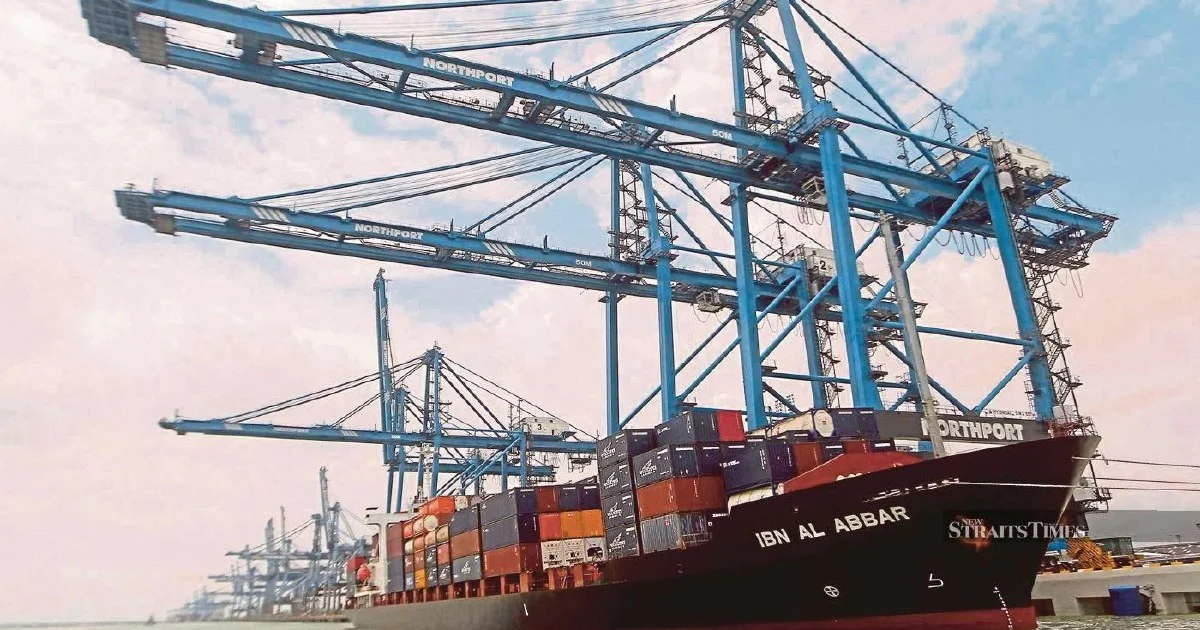
Malaysia's ambitious Port Klang 3 expansion project remains positioned to launch construction within the current calendar year, Transport Minister Anthony Loke revealed, though the initiative's timeline hinges critically on settling unresolved land access issues with the Selangor government. The port expansion has remained a priority infrastructure commitment for the nation's maritime sector, targeting the enhancement of container-handling capacity at the country's busiest harbour.
Loke's statements reflect cautious optimism regarding the project's progression, with construction mobilisation feasible once administrative obstacles are cleared between federal authorities and state-level stakeholders. The minister's framing suggests that technical and financial preparations have advanced sufficiently to enable rapid deployment of construction operations, pending bureaucratic resolution. This indicates that preliminary surveys, engineering designs, and contractor procurement likely stand in advanced stages, ready for activation upon clearance.
The land-related complications represent the primary impediment to commencement, reflecting the complex interplay of federal port development jurisdiction and state property rights that characterise major infrastructure projects in Malaysia's federal structure. Selangor's position as a co-stakeholder in determining land allocation and access rights exemplifies how state governments influence the pace of national economic initiatives. Such coordination challenges have historically delayed comparable megaprojects across Southeast Asia, where competing territorial claims and administrative boundaries create friction points.
Port Klang, located within Selangor's jurisdiction, already handles approximately 13 million TEUs (twenty-foot equivalent units) annually, making it Southeast Asia's vital transhipment hub. The proposed Port Klang 3 facility would substantially expand this infrastructure, accommodating larger container vessels and increasing annual throughput capacity. This expansion addresses mounting pressure from regional trade volumes, particularly given the economic growth trajectories of ASEAN member states and increased containerised commerce through the Strait of Malacca.
For Malaysian policymakers, Port Klang 3 represents infrastructure essential to sustaining the nation's competitive positioning in global maritime trade. Regional competitors, including Singapore's port authority and emerging facilities in southern Thailand, have aggressively expanded capacity in recent years. Without corresponding expansion at Malaysia's primary port, cargo displacement to competing jurisdictions becomes increasingly probable, threatening employment and customs revenue streams that depend on port-related activity.
The project's financial architecture likely involves substantial domestic and potentially foreign investment, making timely commencement crucial for honouring contractual obligations and maintaining investor confidence. Construction delays cascade through project timelines, escalating costs and deferred revenue generation. The minister's public commitment thus serves dual purposes: reassuring investors of commitment while signalling to Selangor authorities the federal government's priority classification for resolving outstanding issues.
Loke's pragmatic acknowledgment of land obstacles demonstrates transparency regarding project dependencies, distinguishing this statement from promotional announcements that obscure practical challenges. By explicitly conditioning commencement on Selangor resolution, he manages expectations whilst clearly identifying responsibility for any further delays. This diplomatic framing suggests negotiations are ongoing, with neither party entirely satisfied with current arrangements but both recognising mutual benefit in expedited resolution.
The broader context of Port Klang 3 includes Malaysia's strategic positioning within the Indo-Pacific maritime sphere, where enhanced container capacity strengthens the nation's attractiveness to shipping lines seeking reliable transhipment alternatives. The port's expansion aligns with Malaysia's broader economic diversification strategies, particularly the promotion of logistics and supply-chain services as value-added economic sectors. Enhanced port infrastructure facilitates industrial clustering around maritime services, potentially attracting shipping companies, freight forwarders, and containerised cargo consolidation operations.
For Southeast Asian logistics operators, Port Klang's expansion signals improved service reliability and capacity adequacy. Regional traders and manufacturers relying on Malaysian transhipment routes would benefit from expanded capacity, reduced congestion, and potentially stabilised container handling fees. The project therefore carries implications extending well beyond Malaysia's borders, affecting supply-chain efficiency across Indonesia, Thailand, Vietnam, and Brunei.
The timeline articulated by Loke—potential construction commencement this year contingent on land resolution—suggests negotiations may conclude within coming months. Whether Selangor authorities ultimately approve requisite land allocations depends on their assessment of economic benefits, environmental considerations, and consistency with state development frameworks. The minister's confidence in near-term resolution implies constructive dialogue between federal and state administrators, though political dynamics between Malaysian federal and Selangor governments occasionally complicate such negotiations.
As Malaysia pursues this expansion, the Port Klang 3 project represents a test case of inter-governmental coordination in executing substantial infrastructure initiatives. Successful resolution would demonstrate capacity for efficient administrative cooperation on projects requiring federal-state alignment. Conversely, extended delays would reinforce perceptions that institutional frameworks hamper Malaysian infrastructure development, potentially affecting investor confidence in future megaprojects.
The coming months will clarify whether Loke's optimistic timeline materialises, with land resolution serving as the critical determining factor. Construction commencement would position Malaysia's port infrastructure for meeting anticipated demand growth through the remainder of this decade, though the broader question of whether the nation can efficiently execute such projects through coordinated governance structures remains largely unanswered.