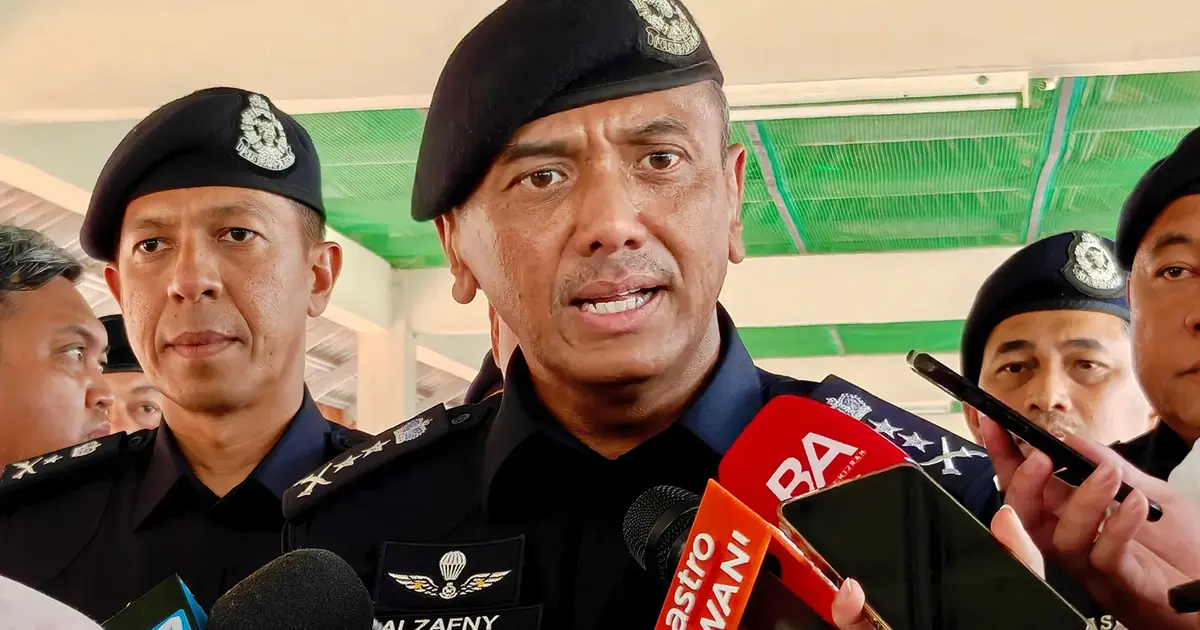
Negeri Sembilan's top law enforcement officer has confirmed that police are conducting a formal inquiry into a social media video that makes serious allegations regarding the relationship between a political party and the Negeri Sembilan palace. State police chief Alzafny Ahmad disclosed that the investigation encompasses multiple legal frameworks, suggesting the authorities view the matter as potentially breaching provisions related to electoral conduct, general criminal statutes, and digital communications regulations.
The focal point of the investigation is a TikTok video that surfaced online making claims about political party influence over the palace's operations and decision-making. The emergence of this content has triggered significant discussion within Malaysian political circles, particularly given the sensitivity surrounding the role and independence of traditional institutions. The palace holds considerable symbolic and constitutional importance within Negeri Sembilan's political system, and any suggestion of external partisan control over its functions would represent a fundamental concern about institutional integrity.
The decision to invoke election law in the investigation indicates authorities suspect the video or its claims may attempt to influence electoral conduct or expectations. In Malaysia's federal system, where states retain significant autonomy in certain matters, allegations touching on the relationship between elected governments and hereditary rulers can carry substantial political weight. Election-related offences carry considerable penalties, and investigators may be examining whether the content was designed to sway public opinion during a critical political moment or to undermine confidence in electoral processes.
The inclusion of criminal law provisions in the probe suggests police are treating the allegations themselves as potentially defamatory or as constituting other criminal wrongdoing. If the video contains false statements about specific individuals or institutions, such claims could fall under Malaysia's existing criminal statutes. The authorities' approach underscores their interpretation that the matter transcends simple political commentary and may involve actionable legal violations that warrant criminal scrutiny.
The communications law dimension of the investigation reflects Malaysia's regulatory framework governing online content and digital platforms. TikTok, as a foreign-owned platform with significant reach among Malaysian youth and the broader population, has frequently intersected with domestic legal concerns regarding misinformation, political content, and public order. Investigators may be examining whether the video's creation, distribution, or content violates provisions governing false information or inflammatory digital communication, particularly if the allegations could incite discord or undermine public confidence in state institutions.
This investigation emerges within a broader Malaysian context of scrutiny over the boundaries between political parties, government machinery, and traditional institutions. The sultanate system and the constitutional roles of rulers represent a distinctive feature of Malaysia's governance architecture, and protecting the autonomy and dignity of these institutions commands widespread political support across party lines. Palace independence is regarded as fundamental to Malaysia's federal stability and the rule of law.
The viral nature of the video highlights how social media has transformed political discourse in Southeast Asia. Short-form video platforms enable rapid dissemination of political messaging, allegations, and commentary, often outpacing traditional fact-checking or institutional responses. For Malaysian authorities, managing the intersection of free expression rights and preventing the spread of content that could destabilise institutional relationships represents an ongoing tension. The investigation reflects law enforcement attempting to distinguish between legitimate political speech and content that crosses into potentially illegal territory.
For Negeri Sembilan specifically, the controversy adds to existing political dynamics in the state. As one of Malaysia's constituent states with its own historical traditions and governance structures, Negeri Sembilan's political landscape reflects both national trends and local particularities. The palace's role in the state's constitutional framework includes important reserve powers and ceremonial functions, and clarity about the boundaries between the palace and partisan political influence carries practical significance for state administration.
The multi-pronged investigative approach adopted by Negeri Sembilan police suggests this matter is being treated with considerable seriousness rather than dismissed as routine online discourse. By invoking election, criminal, and communications law simultaneously, investigators are casting a wide net to assess potential violations under different legal regimes. This comprehensive approach may ultimately determine whether the video's creators, distributors, or others connected to its circulation face formal charges or whether the inquiry concludes with warnings or administrative action.
The outcome of this investigation will likely carry implications extending beyond Negeri Sembilan. As Malaysian society and its institutions navigate questions about political expression in the digital age, how authorities handle allegations disseminated through social media affects broader norms around online political speech. Courts and law enforcement decisions in high-profile cases involving palace-related content tend to establish precedents influencing subsequent cases and public expectations about acceptable political communication.
Observers across Malaysia and the broader Southeast Asian region will monitor how this investigation unfolds, particularly regarding the balance struck between protecting institutional integrity and preserving space for political discourse. The inquiry's trajectory and eventual resolution may offer insights into Malaysia's current institutional health and the government's priorities in managing the complex terrain where traditional authority, democratic politics, and digital communication intersect.

