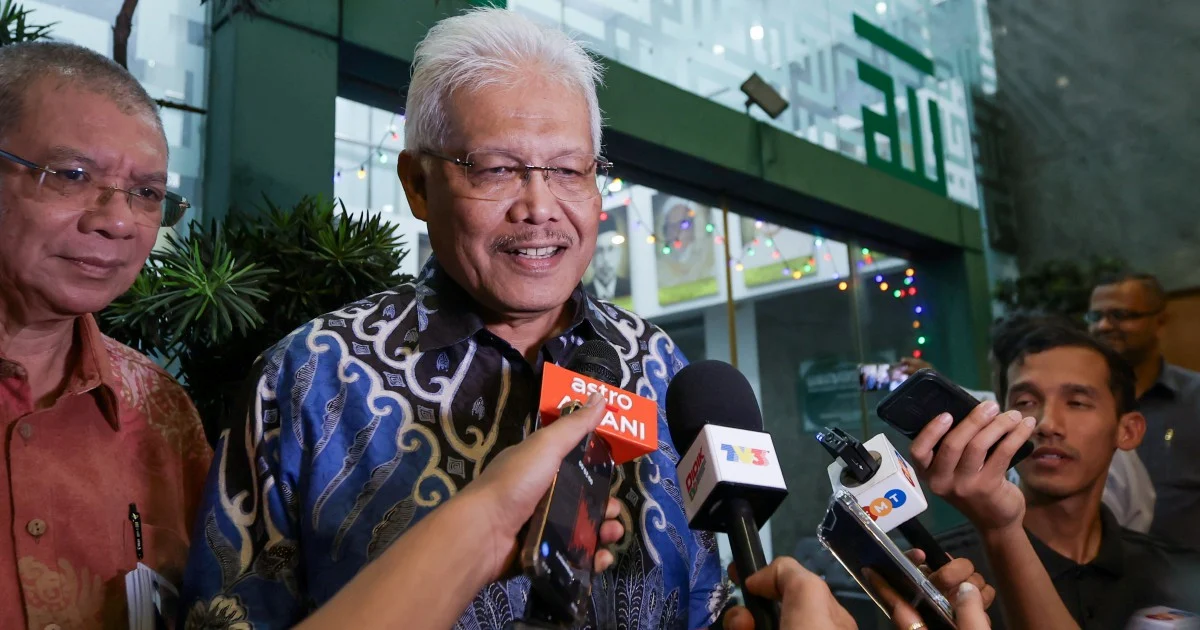
Perikatan Nasional's chief whip Datuk Seri Takiyuddin Hassan has formally submitted paperwork to the Dewan Rakyat Speaker's office confirming Datuk Seri Hamzah Zainudin's continuation in his role as opposition leader, marking an important procedural step in Malaysia's parliamentary governance structure.
The submission represents the coalition's official confirmation of leadership arrangements following recent political developments. In Malaysia's Westminster-style parliament, the opposition leader position carries constitutional significance beyond mere titular status, conferring specific parliamentary rights and responsibilities on the holder and their designated bloc.
Hamzah Zainudin, who represents Larut in Perak, has maintained a prominent political profile throughout his career, serving in various ministerial positions before the opposition leadership designation. His reappointment signals continuity in PN's parliamentary strategy and solidifies the coalition's structural position as the formal opposition to the ruling government.
The notification process, while administratively routine, holds weight in Malaysian parliamentary tradition. The Speaker's office maintains official records of opposition leadership for procedural purposes, including determining which MPs receive designated speaking time, opposition business allocation, and access to parliament's opposition resources. The formal submission ensures there is no ambiguity regarding who holds these parliamentary privileges on behalf of the opposition.
PN's position as official opposition reflects the coalition's growing parliamentary strength. Under Malaysia's federal system, opposition status extends beyond parliament into state legislatures, where PN controls multiple governments including Kedah, Kelantan, and Terengganu. This multi-level political presence has made the coalition a consequential force in national politics despite not holding federal power.
Takiyuddin Hassan's role as chief whip underpins PN's parliamentary operations, requiring coordination across the coalition's diverse membership to ensure voting discipline and strategic positioning on legislation. His submission of the notification underscores the administrative machinery supporting Malaysia's parliamentary opposition, often invisible to casual observers but essential to parliament's functioning.
The reappointment comes amid broader shifts in Malaysian politics following the 2023 general election. PN's performance in that contest substantially increased its parliamentary representation, making it a numerically significant force in the Dewan Rakyat. Hamzah's role as opposition leader has involved scrutinising government policies and proposing alternative positions on national issues ranging from economic policy to constitutional matters.
For Malaysian readers, the formal opposition leadership carries practical implications. The opposition's parliamentary questions, motions, and debate contributions shape public discourse and government accountability. Hamzah's reappointment means continuity in that scrutiny function, with a leader experienced in parliamentary procedure and policy analysis continuing to articulate opposition perspectives on government decisions.
Regionally, Malaysia's opposition dynamics reflect broader Southeast Asian patterns. Like counterparts in Thailand, Indonesia, and the Philippines, Malaysian opposition coalitions balance maintaining cohesion whilst accommodating ideological diversity among member parties. PN encompasses Islamist, Malay-nationalist, and multi-ethnic components, making leadership selection a matter of internal coalition management alongside parliamentary designation.
The notification submission also reflects institutional stability in Malaysian democracy. Despite polarised political competition, both government and opposition abide by parliamentary procedures and constitutional frameworks. The routine processing of opposition leadership notifications demonstrates that even fierce political rivalry occurs within rules-based structures, a characteristic distinguishing Malaysia from some regional counterparts experiencing institutional strain.
Looking forward, Hamzah's confirmed position as opposition leader shapes parliamentary dynamics through the current legislative session and potentially beyond. His leadership defines PN's parliamentary strategy, including which bills to support or oppose, how to frame alternative policy positions, and when to deploy parliamentary procedures such as filibustering or constitutional challenges to government initiatives.
For observers tracking Malaysian politics, the notification marks an administration detail that carries deeper significance. It formalises opposition leadership for what could be a multi-year parliamentary term, depending on when the government calls the next general election. Whether PN sustains this opposition position or transitions to government will significantly influence Malaysia's political trajectory over coming years.