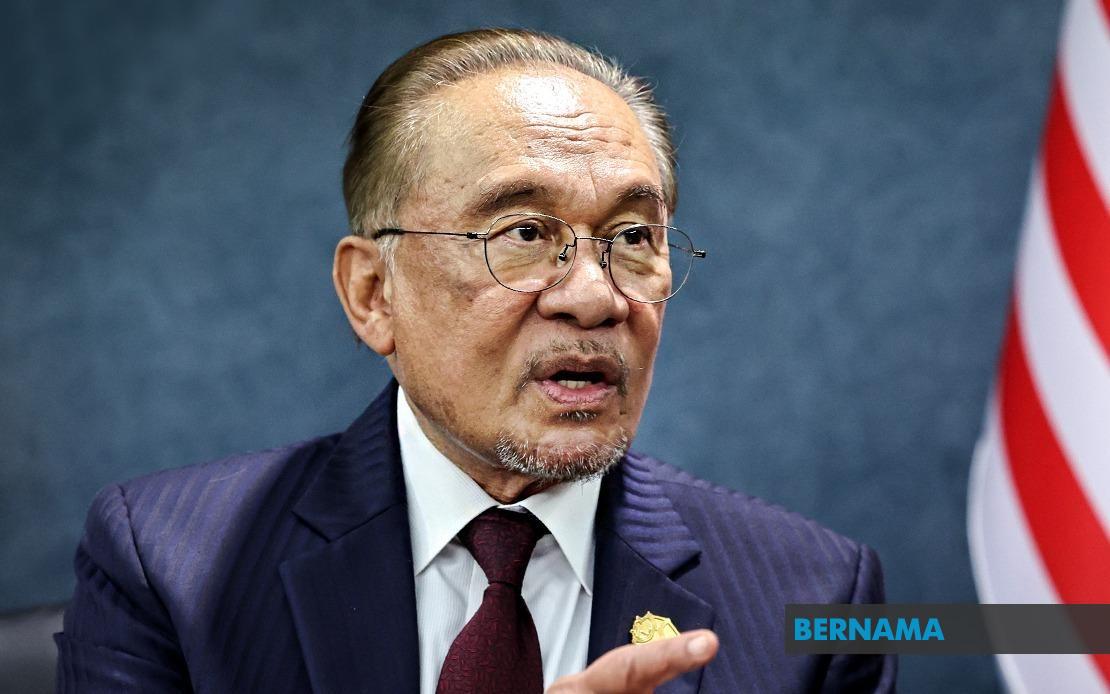
Prime Minister Datuk Seri Anwar Ibrahim is set to deliver a keynote address at the ASEAN-Russia Business Forum in Kazan, reinforcing Malaysia's commitment to strengthening economic ties between Southeast Asia and Russia. The forum, held at Kazan IT Park, represents a critical platform for dialogue between business leaders and government officials from both regions, underscoring the importance of bilateral and multilateral engagement in an increasingly complex geopolitical landscape.
The Prime Minister, who concurrently holds the Finance portfolio, will engage directly with representatives from all ASEAN member states and Russian counterparts, positioning Malaysia as an active participant in shaping the economic agenda between the two regions. His participation in the forum demonstrates Malaysia's recognition of Russia's strategic importance to Southeast Asian prosperity, despite broader international tensions that have characterised recent years.
Aside from his keynote remarks, Anwar will attend a formal gala dinner at the Tatar State Academic Theater, where he is also scheduled to have a courtesy audience with Russian President Vladimir Putin. This high-level engagement reflects the diplomatic priority both nations place on their relationship and suggests Malaysia is leveraging the summit to advance specific bilateral and regional interests at the executive level.
Kazan, the capital of Russia's Republic of Tatarstan, serves as a symbolically resonant venue for such discussions. Positioned approximately 800 kilometres east of Moscow at the convergence of the Volga and Kazanka rivers, the city of roughly 1.3 million inhabitants occupies a unique position as a cultural and commercial nexus between Europe and Asia. Often characterised as Russia's "third capital" after Moscow and St Petersburg, Kazan boasts more than a millennium of history and stands as a preeminent centre of Islamic heritage within Russia, making it an apt location for ASEAN engagement given the bloc's predominantly Muslim composition.
This year's commemoration holds particular significance, marking 35 years since ASEAN and Russia formalised their dialogue relationship in 1991. The partnership has matured considerably, with Russia achieving full ASEAN Dialogue Partner status in 1996 and seeing the relationship elevated to a Strategic Partnership in 2018. This progression reflects mutual recognition of shared interests across political-security, economic, and socio-cultural dimensions, establishing a framework for sustained engagement even amid shifting international alignments.
From an economic perspective, the ASEAN-Russia relationship demonstrated notable growth in 2024, with total bilateral trade reaching USD18.1 billion. While Russian foreign direct investment in ASEAN remains relatively modest at USD92.97 million, the trading volume indicates substantial commercial interdependence. For Malaysia specifically, Russia ranks as the country's ninth-largest trading partner among European nations, with bilateral trade valued at RM8.72 billion in 2025, illustrating the bilateral relationship's concrete economic foundation.
Malaysian exports to Russia centre on high-value manufactured goods, with electrical and electronic products, machinery, and equipment components dominating the outbound trade basket, complemented by processed food products that cater to Russian consumer preferences. Conversely, Malaysia's imports from Russia are concentrated in raw materials and energy products, including petroleum, minerals, and chemical compounds. This complementary trade pattern suggests natural economic synergies that both nations continue to exploit despite external pressures and sanctions regimes affecting Russian commerce globally.
The strategic timing of this summit, coinciding with Malaysia's active engagement in regional diplomacy, underscores the nation's balanced approach to international relations. As ASEAN navigates the complexities of great power competition, Malaysia's participation in high-level forums such as this demonstrates its commitment to maintaining diverse partnerships and avoiding excessive alignment with any single bloc. The presence of multiple ASEAN delegations in Kazan signals collective regional interest in sustaining pragmatic engagement with Russia across numerous policy domains.
Beyond trade metrics, the ASEAN-Russia partnership encompasses broader cooperation frameworks spanning security, investment, cultural exchange, and technological collaboration. For Malaysia, whose economy increasingly relies on advanced manufacturing and digital services, Russian expertise in information technology and technical fields offers potential complementarities. The presence of ministerial representation and business delegations suggests both nations are actively exploring expanded cooperation opportunities, particularly in sectors less constrained by international regulatory frameworks.
The geopolitical backdrop to this engagement cannot be overlooked. International sanctions and Western diplomatic pressure have prompted Russia to redirect its strategic focus towards Asian markets and partners willing to maintain pragmatic relations. ASEAN's traditional non-aligned posture and emphasis on consensus-building without exclusionary frameworks position the bloc attractively for Russian overtures. Malaysia, as a respected ASEAN voice and significant economic actor, plays an important role in facilitating dialogue that maintains regional stability while advancing national interests.
Looking forward, the outcomes of this summit will likely shape ASEAN-Russia cooperation trajectories across multiple sectors. Enhanced business-to-business connections forged in Kazan could facilitate investment flows, joint ventures, and technology transfer arrangements beneficial to Malaysian enterprises seeking new markets and supply chain diversification. The political dimensions, including discussions at the level of heads of government and state, will establish parameters for future engagement and signal regional positions on contested international issues.
For Malaysian stakeholders, the forum represents an opportunity to explore market access, investment protection, and sectoral partnerships with Russian counterparts in a structured diplomatic environment. As trade tensions and supply chain disruptions reshape global commerce, Malaysia's willingness to engage constructively with diverse partners, including Russia, positions the nation to capture emerging opportunities and strengthen economic resilience. The ASEAN-Russia Business Forum thus transcends ceremonial significance, serving as a practical mechanism for identifying and pursuing tangible mutual benefits.

