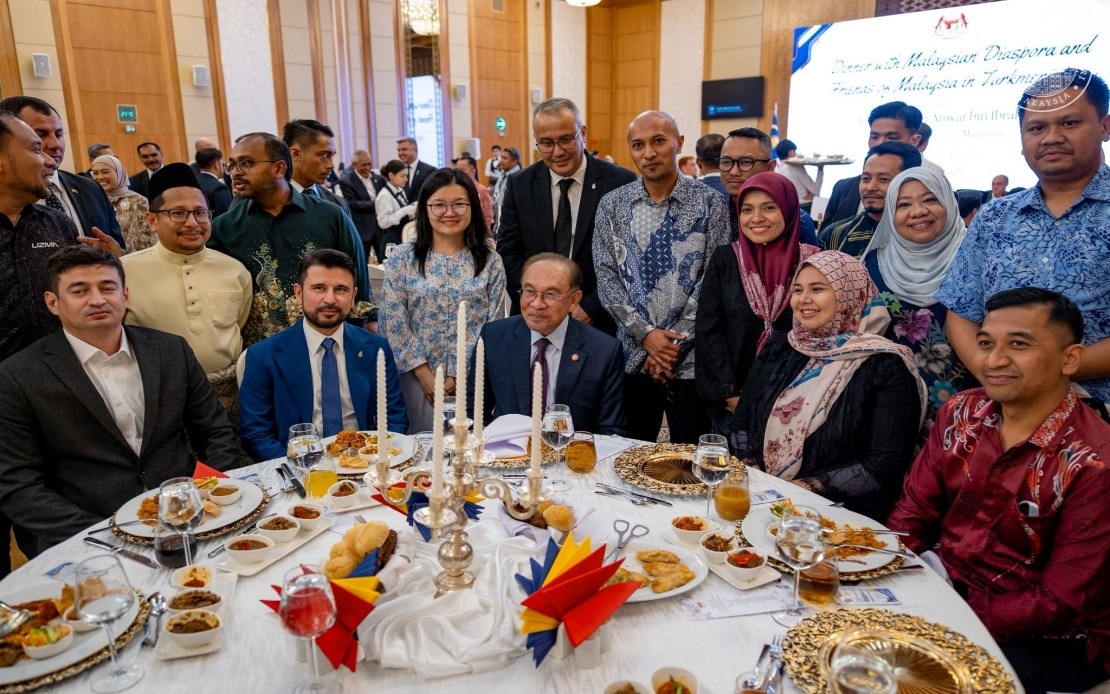
Prime Minister Datuk Seri Anwar Ibrahim has underscored the government's commitment to strengthening bonds with Malaysians living abroad, using his official visit to Turkmenistan as an occasion to engage directly with the diaspora community in Ashgabat. The encounter reflects a broader strategy by the MADANI Government to nurture relationships with Malaysian citizens scattered across the globe, recognizing their role in enhancing the nation's profile internationally.
During the meeting, Anwar encouraged members of the diaspora to remain connected with Malaysia and to keep themselves informed about the country's ongoing development initiatives. His remarks highlighted the government's recognition that Malaysians abroad serve as informal ambassadors, carrying the nation's reputation and values wherever they establish themselves. By maintaining strong ties with the homeland, these citizens can contribute meaningfully to Malaysia's standing in their respective communities and nations.
Anwar articulated his perspective on the diaspora's significance through a Facebook post, describing them as unofficial ambassadors consciously building Malaysia's positive image and expanding the country's networks. His characterization emphasizes that overseas Malaysians are not merely expatriates pursuing personal interests, but active participants in advancing the nation's diplomatic and soft power objectives. This framing elevates the status of the diaspora within national discourse and acknowledges their intangible contributions to Malaysia's international standing.
The visit to Ashgabat extends beyond the conventional focus on trade, investment, and economic cooperation, according to Anwar's explanation. Instead, the Prime Minister positioned the engagement within a broader diplomatic framework aimed at cultivating bilateral friendship, deepening mutual understanding, and identifying collaborative opportunities that serve both nations' interests. This holistic approach to bilateral relations reflects the government's effort to move beyond transactional diplomacy toward sustained, multifaceted partnerships.
Anwar's two-day official visit to Turkmenistan represents his first state visit to the Central Asian nation, occurring at the invitation of Turkmenistan President Serdar Berdimuhamedov. The invitation reciprocates Berdimuhamedov's official visit to Malaysia in December 2024, establishing a pattern of high-level diplomatic engagement between the two countries. This exchange of visits signals mutual commitment to developing the bilateral relationship and demonstrates Malaysia's willingness to deepen ties with nations in Central Asia, a region traditionally distant from Southeast Asian foreign policy considerations.
The strategic importance of Malaysia's engagement with Turkmenistan extends beyond immediate bilateral concerns. Central Asia represents an increasingly significant geopolitical and economic arena, particularly as countries seek alternative trade routes and partnerships amid shifting global dynamics. By strengthening connections with Turkmenistan and other Central Asian states, Malaysia positions itself to participate in emerging economic corridors and diversify its international partnerships beyond traditional Asian markets.
For the Malaysian diaspora in Ashgabat and similar communities throughout Central Asia, the Prime Minister's visit carries symbolic weight. It signals that the government recognizes and values their presence abroad, acknowledging that Malaysians contribute to the nation's international presence even while residing far from home. Such recognition can strengthen diaspora engagement with Malaysia, potentially encouraging investment, knowledge transfer, and cultural exchange that benefits both the individual communities and the broader nation.
The emphasis on diaspora engagement aligns with contemporary trends in Malaysian foreign policy, where governments increasingly recognize that citizens abroad represent valuable assets. These communities can facilitate business connections, provide cultural insights, and serve as bridges between Malaysia and their adopted countries. By actively cultivating these relationships, the MADANI Government demonstrates an understanding that national interests extend beyond territorial boundaries and encompass the global Malaysian population.
The timing and context of Anwar's remarks reflect awareness that maintaining diaspora connections requires intentional effort. Physical distance, changing immigration policies in host countries, and the pressures of establishing new lives abroad can attenuate connections to the homeland. Government initiatives that acknowledge diaspora communities and encourage their engagement with Malaysia's development trajectory help counteract these centrifugal forces and reinforce emotional and institutional ties to the nation.
Anwar's characterization of diaspora members as consciousness-building ambassadors introduces an aspirational dimension to overseas Malaysian identity. Rather than viewing emigration as a loss of national resources, this framing suggests that Malaysians abroad actively advance national interests through their daily interactions and professional accomplishments. Such messaging can boost morale within diaspora communities and encourage them to view themselves as extension of Malaysia's presence and influence in their respective regions.
The visit also illustrates Malaysia's diplomatic strategy of engaging with diverse regions and partners, particularly as the country navigates complex regional dynamics in Southeast Asia. By strengthening ties with Central Asian nations and maintaining engagement with diaspora communities worldwide, Malaysia cultivates a multifaceted foreign policy that reduces dependency on any single region or partnership. This geographic diversification contributes to Malaysia's strategic autonomy and provides leverage in regional negotiations.
Looking forward, the Prime Minister's emphasis on diaspora relations may signal potential policy developments regarding support for overseas Malaysians, whether through enhanced diplomatic services, investment facilitation, or cultural programming. As countries compete for diaspora engagement and investment, maintaining active relationships with citizens abroad becomes increasingly important for national competitiveness. Malaysia's explicit recognition of these communities' value during high-level diplomatic visits suggests serious commitment to developing this dimension of foreign policy.

