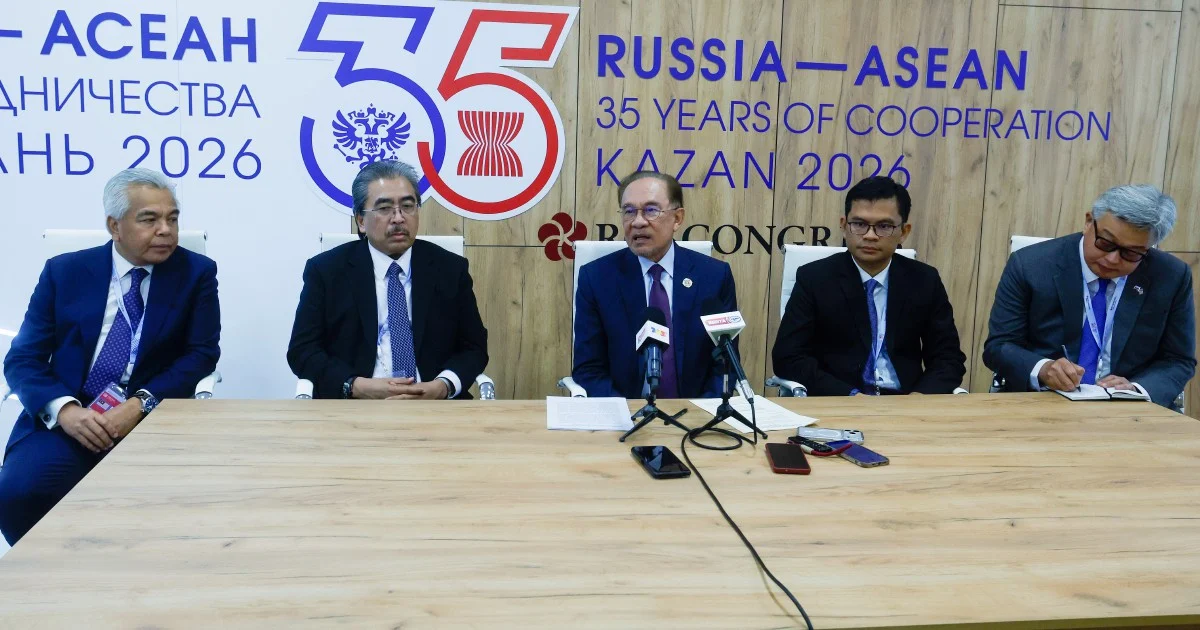
Prime Minister Datuk Seri Anwar Ibrahim has instructed the government to accelerate the implementation of visa-free travel arrangements for Russian tourists, signalling Malaysia's determination to recapture market share in the global tourism landscape amid intensifying regional competition. Speaking in Kazan during an official engagement, the PM underscored that expedited processing of this bilateral arrangement represents a cornerstone of the nation's broader tourism recovery agenda, particularly as the sector grapples with fluctuating visitor arrivals and the need to diversify revenue streams beyond traditional markets.
The move reflects Malaysia's strategic pivot towards emerging tourism markets, particularly from Russia and Eastern Europe, regions that have historically demonstrated strong spending capacity and extended stay patterns. By eliminating visa requirements, the government aims to reduce bureaucratic friction that has traditionally deterred independent travellers from these markets, who often view visa applications as time-consuming and costly. Malaysia's decision to prioritise Russian visitors aligns with global tourism trends where visa-free or simplified entry regimes have demonstrably increased visitor numbers and average expenditure per tourist.
From a geopolitical perspective, the initiative also carries broader diplomatic significance. Malaysia's cultivation of deeper ties with Russia, signalled through facilitated tourism arrangements, reflects Kuala Lumpur's balanced foreign policy approach and its commitment to maintaining robust economic relationships across diverse geopolitical spheres. As a non-aligned nation historically, Malaysia has consistently leveraged tourism and trade partnerships as vehicles for strengthening bilateral relations without compromising its strategic autonomy in international affairs.
The tourism sector remains critical to Malaysia's economic architecture, contributing substantially to foreign exchange reserves and employment creation across hospitality, transportation, and related services. Pre-pandemic, international visitor arrivals exceeded 26 million annually, with the sector generating nearly 15 percent of total tourism revenues. Recent recovery trajectories have been uneven, with arrivals from traditional markets moderating while opportunities in underexploited regions like Russia and the broader Eurasian zone present untapped potential for growth. Visa-free arrangements effectively lower the entry barrier to Malaysia's tourism market, positioning the country as a more competitive destination relative to regional peers facing similar demographic and economic challenges.
Implementation timelines for such bilateral agreements typically involve coordination between multiple government agencies, including the Ministry of Foreign Affairs, Immigration Department, and Tourism Board. The PM's directive to expedite suggests heightened priority levels and potential streamlining of interdepartmental approval processes that ordinarily extend implementation periods. This accelerated approach indicates recognition that market windows can narrow rapidly when competitors like Thailand, Indonesia, and Vietnam introduce competing visa incentives, and Malaysia must move decisively to capitalise on shifting travel patterns.
Russian outbound tourism has experienced substantial growth despite geopolitical headwinds, with citizens increasingly seeking long-haul destinations offering cultural diversity, natural attractions, and competitive pricing. Malaysia's portfolio—encompassing tropical biodiversity, Islamic heritage sites, multicultural urban experiences, and wellness tourism infrastructure—aligns well with Russian tourist preferences. The archipelago's archipelago nature, ranging from Peninsular Malaysia to East Malaysia's Sabah and Sarawak, offers differentiated experiences that appeal to repeat visitors and extended stays, bolstering per-capita spending metrics.
Regionally, Malaysia's move may catalyse competitive responses from neighbouring destinations seeking to maintain market share among Russian travellers. Thailand and Indonesia have similarly implemented or expanded visa-free arrangements with various source markets, creating an increasingly crowded competitive landscape where first-mover advantages matter significantly. Malaysia's acceleration of implementation puts pressure on competing destinations to enhance their own visa facilitation measures or risk losing market share to more expeditiously processed alternatives.
The announcement also carries domestic economic implications. Tourism-dependent provinces like Kuala Lumpur, Penang, Selangor, and Sabah stand to benefit from incremental visitor volume, stimulating accommodation, food service, and transportation sectors. Small and medium-sized tourism enterprises, particularly those operating independent hotels, tour operators, and cultural experience providers, may see expanded revenue opportunities. The multiplier effects of tourism spending ripple through retail, transportation, and hospitality supply chains, potentially generating employment and supporting community-level economic activity.
Operationally, expedited implementation demands enhanced capacity at immigration checkpoints, particularly at major airports handling international arrivals like Kuala Lumpur International Airport and secondary hubs in Penang and Kota Kinabalu. This necessitates investment in technology infrastructure, staff training, and procedural refinement to accommodate increased processing volumes without compromising security protocols. The government must balance efficiency gains with border security imperatives, ensuring visa-free arrangements do not introduce security gaps or create administrative bottlenecks.
Looking forward, the Russian visa-free initiative positions Malaysia within a broader strategic framework of tourism diversification and geographical market expansion. The government has increasingly recognised that over-reliance on limited source markets creates vulnerability to external shocks—as demonstrated during the pandemic when travel restrictions severely disrupted tourism economies. By systematically expanding visa-free arrangements with emerging markets, Malaysia builds resilience through market diversification while strengthening diplomatic relationships that extend beyond tourism into trade, investment, and cultural collaboration.
The PM's directive reflects confidence in Malaysia's ability to absorb and effectively service increased visitor volumes whilst maintaining service quality standards that sustain the destination's reputation. Success requires coordinated effort across government agencies, private sector tourism operators, and local communities who interface directly with international visitors. Achieving implementation within expedited timelines demands exceptional inter-agency coordination and private sector readiness to capitalise on the newly accessible market opportunity.