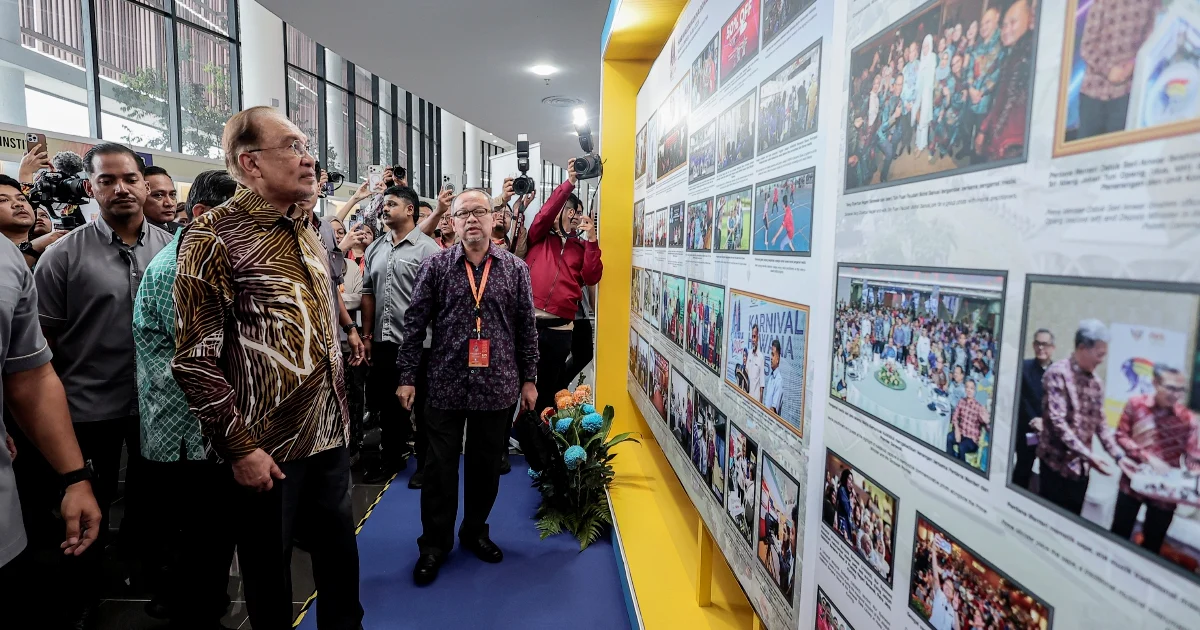
Prime Minister Datuk Seri Anwar Ibrahim has pledged RM1 million in government funding towards Tabung Kasih@Hawana 2026, an initiative designed to bolster the welfare of journalists across Malaysia. The announcement, made in Permatang Pauh, reflects the administration's broader commitment to strengthening the media sector at a time when the industry faces mounting pressures from digital disruption and economic headwinds.
The welfare fund represents a tangible expression of government recognition that journalists occupy a critical position within Malaysia's democratic infrastructure. By establishing dedicated financial support mechanisms, the administration acknowledges the precarious employment conditions many journalists face, including wage stagnation, reduced benefits, and job insecurity as traditional media revenue streams contract. Such interventions signal that policymakers view journalist welfare not merely as a labour issue but as essential to the functioning of healthy public discourse.
Hawana 2026, the broader initiative encompassing this welfare fund, appears designed as a comprehensive media transformation programme. The government's explicit commitment to ongoing support suggests this is not a one-off allocation but rather part of a longer-term strategy to reshape Malaysia's media landscape. This approach indicates recognition that sustainable media development requires structural investment rather than reactive responses to industry crises.
The context for this announcement is significant for Southeast Asian media observers. Malaysia's journalism sector has experienced considerable turbulence over recent years, marked by newsroom consolidations, advertising revenue declines, and increased pressure on editorial independence. The RM1 million allocation, while modest in isolation, demonstrates political will to address these systemic challenges. For a region grappling with the rise of disinformation and the erosion of traditional news-gathering capacity, government-backed support for journalist welfare can potentially strengthen the profession's resilience.
The timing of the announcement carries implications for Malaysia's broader democratic health. A government willing to invest in journalist welfare signals confidence in—or at least acknowledgement of—the value of professional journalism. This stands in contrast to approaches that marginalise or antagonise the media sector. Such positioning may help rebuild trust between government and media institutions, which have experienced considerable strain in Malaysia's recent political history.
The fund's structure and administration will be crucial to its effectiveness and credibility. Questions about eligibility criteria, distribution mechanisms, and governance arrangements will determine whether the initiative genuinely supports working journalists or becomes perceived as politically motivated patronage. Transparency in how the RM1 million is allocated and monitored will be essential for the fund to achieve its stated welfare objectives.
Beyond the immediate welfare dimension, this investment reflects evolving understanding about the relationship between media health and broader economic development. Across Southeast Asia, governments are increasingly recognising that quality journalism infrastructure contributes to better-informed citizenry, stronger corporate governance, and more effective public administration. Malaysia's approach here aligns with this trend while addressing sector-specific challenges that have intensified following the pandemic's acceleration of digital news consumption patterns.
The government's emphasis on media transformation initiatives speaks to recognition that the industry cannot return to previous commercial models. Traditional funding mechanisms—primarily print advertising and circulation revenue—have fundamentally weakened. Supporting journalist welfare through direct government allocation acknowledges this structural reality while attempting to preserve professional journalism capacity during a transitional period. Whether this represents a bridge to sustainable digital models or a temporary measure remains to be seen.
For Malaysian media organisations, particularly smaller outlets and regional publications, such government support could prove significant. Many struggle with retention of experienced journalists precisely because wages have fallen while operational costs have risen. Access to welfare fund resources might enable these outlets to invest in their workforce, improving reporting quality and contributing to greater media diversity. This dispersed benefit could strengthen Malaysia's overall media ecosystem rather than concentrating resources among dominant players.
The announcement also carries implications for media worker organising and collective bargaining. Historically, Southeast Asian journalists have had limited success securing workplace protections through union activity. Government-backed welfare provisions might reduce some pressure points that motivate unionisation efforts, though they could equally catalyse demands for more comprehensive protection through formal labour mechanisms. Whether welfare funds substitute for or complement broader labour reforms will shape their long-term effectiveness.
Prime Minister Anwar's explicit commitment to continuing such initiatives suggests this RM1 million allocation represents an opening position rather than a final commitment. If the government proves willing to expand welfare support based on documented need and impact assessment, the fund could become more substantial. Conversely, if this remains a one-time gesture with limited expansion, it may be perceived as symbolic rather than transformative by the journalism community.
The initiative must also be evaluated within Malaysia's broader digital economy strategy. Media transformation cannot be separated from questions about technology adoption, skills development, and new revenue model experimentation. Welfare funding that supports journalists through retraining and adaptation to digital workflows would yield greater systemic benefit than funds distributed without attention to industry evolution. How completely the government's vision integrates welfare support with technological transition will determine the programme's ultimate success.
Looking forward, the RM1 million allocation establishes a foundation for dialogue between government and media sector about sustainable models for journalism in Malaysia. Whether this foundation develops into genuine partnership or remains primarily transactional will depend on implementation decisions and willingness by both parties to address underlying structural challenges affecting the industry.