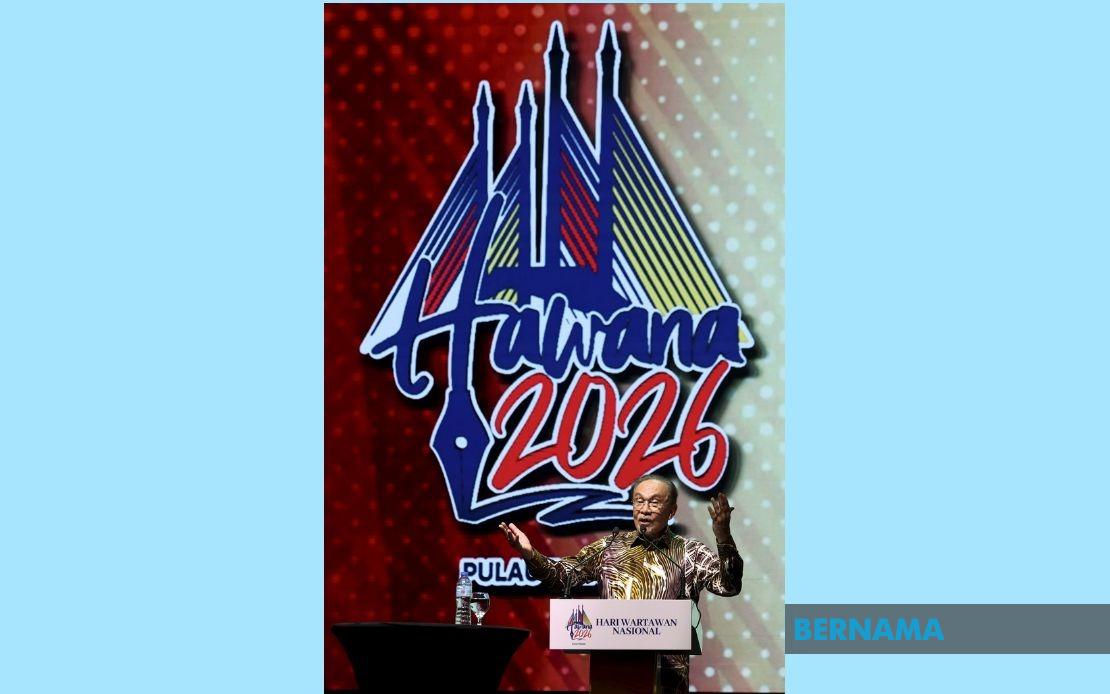
Prime Minister Datuk Seri Anwar Ibrahim has committed an additional RM1 million to Tabung Kasih@HAWANA, reinforcing the government's dedication to supporting media practitioners facing financial hardship. The announcement came at the National Journalists' Day main event in Butterworth on June 20, where Anwar, simultaneously serving as Finance Minister, stressed the importance of maintaining safety nets for those working in the journalism sector across Malaysia.
The timing of the allocation underscores a broader government strategy to strengthen the financial security of media professionals at a critical juncture for the industry. Since its establishment during the HAWANA 2023 celebrations, the fund has distributed RM2.26 million among 773 media practitioners and former journalists nationwide, demonstrating sustained demand for such assistance programmes. The fresh injection of capital signals government recognition that workplace vulnerabilities and economic pressures continue to affect journalists and media workers in ways that institutional support structures have not yet fully addressed.
Tabung Kasih@HAWANA functions as a comprehensive welfare mechanism extending beyond basic financial relief. The fund provides assistance for medical expenses, family welfare support, and other pressing needs faced by beneficiaries, acknowledging that journalists often encounter circumstances—illness, injury, family crises—that fall outside conventional employee benefits or insurance coverage. By diversifying the types of assistance available, the programme recognises the multifaceted challenges confronting media sector workers, from those facing unexpected health emergencies to those requiring support during personal or family difficulties.
The RM1 million allocation for 2026 reflects confidence that the fund's distribution mechanisms remain effective and that demand will continue throughout the year. However, the figure also raises questions about whether current resources adequately meet the underlying welfare needs across Malaysia's media landscape. With 773 beneficiaries having already accessed support, the per-person average stands at approximately RM2,924, suggesting that while individual grants provide meaningful relief, they may address symptoms rather than systemic vulnerabilities within media industry employment structures and compensation frameworks.
Penang Chief Minister Chow Kon Yeow and Communications Minister Datuk Fahmi Fadzil attended the Butterworth event, highlighting the cross-party and ministerial coordination supporting media welfare initiatives. The gathering at PICCA Convention Centre@Butterworth Arena drew over 1,000 media practitioners from Malaysia and international delegates representing Timor-Leste, Cambodia, and Laos, transforming the occasion into a regional journalism platform. This international dimension suggests growing recognition across Southeast Asia that media worker welfare constitutes a shared concern demanding collaborative approaches.
The HAWANA 2026 celebration adopted the theme "Media Integrity Strengthens Credibility," establishing a conceptual link between journalist wellbeing and output quality. The message implies that supporting media professionals materially contributes to maintaining professional standards and editorial independence. When journalists face financial stress, resource constraints, or personal hardship, their capacity to investigate thoroughly, resist commercial or political pressure, and maintain ethical standards may diminish. Consequently, welfare support represents not merely a compassionate gesture but an investment in the integrity of Malaysia's media ecosystem.
The fund's existence reflects evolving attitudes toward media worker protection in Malaysia. Historically, journalism in the country faced pressures from both regulatory frameworks and economic marginalisation, with practitioners frequently experiencing precarious employment conditions. Establishing a dedicated welfare mechanism signals acknowledgment that the state bears responsibility for ensuring media professionals can sustain their livelihoods while working in a sector of critical national importance. This represents a departure from purely market-driven approaches that historically left journalists vulnerable to exploitation or financial distress.
Regional context matters for understanding Malaysia's welfare approach. As regional media landscapes continue experiencing economic disruption from digital transformation and advertising migration online, journalists across Southeast Asia increasingly face income volatility and reduced institutional support. Malaysia's visible commitment to media worker welfare, through both this fund and high-level political participation in HAWANA, positions the country among regional peers attempting to address these structural challenges. Countries like Timor-Leste, Cambodia, and Laos sending delegates suggests interest in learning from Malaysian models, potentially influencing broader Southeast Asian approaches to media sustainability.
The participation of Bernama executives, including chairman Datuk Seri Wong Chun Wai and chief executive officer Datin Paduka Nur-ul Afida Kamaludin, emphasised the state news agency's role in advancing media welfare agendas. As Malaysia's national news agency, Bernama occupies a unique position bridging government policy and broader media sector interests. Its involvement in organising and promoting HAWANA suggests the agency views media practitioner welfare not as a peripheral concern but as central to its mission and the country's information ecosystem stability.
Looking forward, the RM1 million allocation, while tangible, invites scrutiny regarding whether current funding levels adequately address structural vulnerabilities in media employment. The fund handles individual crisis situations effectively but cannot necessarily resolve deeper issues including wage stagnation, inadequate healthcare provision, pension gaps, and the proliferation of precarious freelance arrangements. Future policy discussions might explore whether welfare supplements should expand alongside initiatives strengthening baseline employment conditions and professional protections for media workers.
The announcement also carries symbolic weight domestically, demonstrating that despite broader tensions between government and sections of the media, authorities recognise institutional obligation toward practitioner welfare. This acknowledgment helps maintain professional relationships between government and media institutions necessary for functional democracy, even amid political disagreements. By publicly supporting media worker welfare, the Prime Minister signals that competitive media-government relationships need not preclude state investment in journalism sector stability and professional standards.

