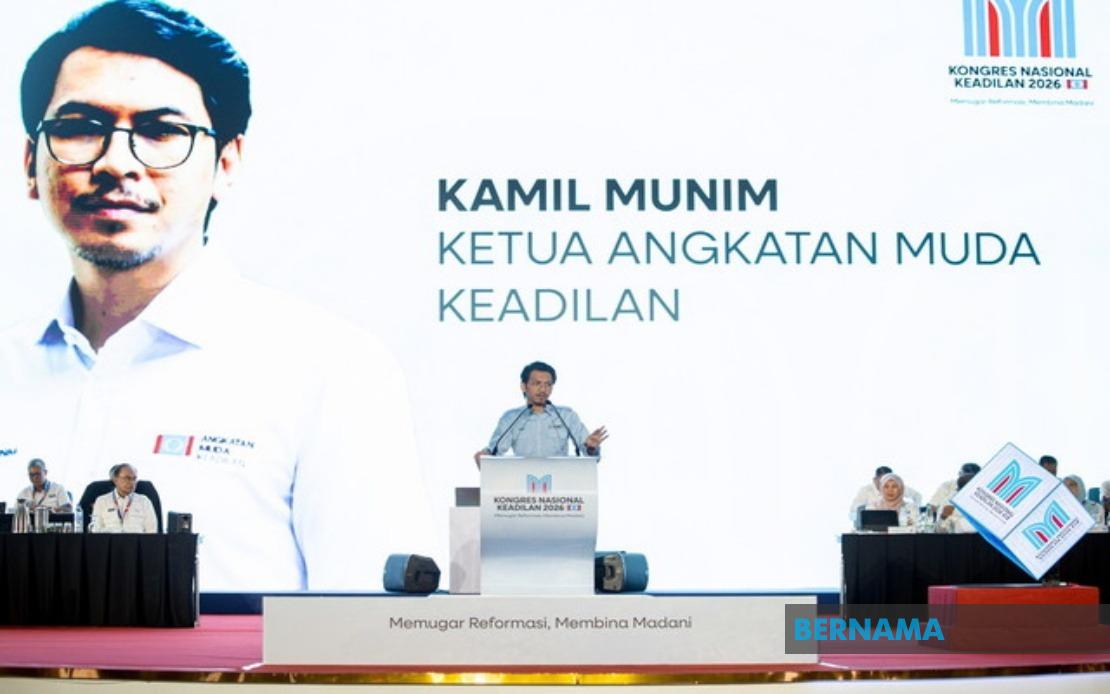
PKR Youth leadership must fundamentally reshape its approach to engage Malaysia's younger voters, according to party youth chief Muhammad Kamil Abdul Munim, who delivered his assessment during the PKR National Congress in Melaka this week. The call represents a candid acknowledgment that recent electoral performances have exposed significant weaknesses in the party's ability to connect with the demographic segment that now dominates Malaysia's voter rolls. With voters aged 45 and below comprising the single largest group of registered voters nationwide, Muhammad Kamil stressed that winning their confidence has become essential to the party's electoral fortunes in the years ahead.
The urgency of this pivot became apparent following the party's performance in the Johor and Negeri Sembilan state elections, outcomes that have prompted a broader reassessment within PKR leadership. Muhammad Kamil acknowledged that while public sentiment regarding the MADANI Government's performance has remained broadly positive, the electoral results revealed troubling gaps between the party's narrative and the concerns of ordinary Malaysians. The disconnect suggests that messaging crafted at party headquarters has failed to resonate effectively in communities where voters make their crucial decisions. This recognition marks a departure from assumptions that strong federal government performance would automatically translate into state-level success.
The party youth chief emphasized that grassroots leaders cannot afford to remain confined within administrative routines and procedural matters if the party hopes to rebuild voter trust. Instead, he urged them to deepen their understanding of community concerns through direct engagement, particularly in smaller settlements and rural localities where organizational presence tends to be thinner. Such ground-level work demands more than cursory consultations or token listening sessions; it requires sustained dialogue with residents about their anxieties regarding cost of living, employment prospects, education quality, and other bread-and-butter issues that weigh heavily on younger voters balancing family responsibilities with economic uncertainty.
Muhammad Kamil's diagnosis points to a structural problem within PKR's political organization. The party machinery, he suggested, has become too focused on administrative efficiency and formal procedures while neglecting the leadership capabilities required to truly understand and respond to public sentiment. This distinction matters significantly in a Malaysian political context where personal relationships and demonstrated commitment to local problems often determine electoral outcomes. Younger voters, in particular, tend to evaluate politicians based on concrete evidence of their willingness to tackle community issues rather than on party rhetoric or ideological positioning. The emphasis on strengthening leadership capabilities rather than simply expanding organizational reach reflects a more sophisticated understanding of what winning voters actually requires.
The recent state elections have provided what amounts to a political wake-up call for PKR, even as the party maintains substantial strength within the federal government coalition. Muhammad Kamil's candor in acknowledging gaps and shortcomings—rather than attributing results to external factors—suggests a party willing to undertake self-criticism. However, recognizing problems and addressing them represent distinct challenges. Translating this rhetorical commitment into actual changes in how party leaders conduct themselves and engage with voters will test whether PKR can genuinely adapt its strategies or whether internal resistance to change will undermine reform efforts.
Historically, PKR has positioned itself as Malaysia's reform-oriented force, pointing to its ability to engineer electoral surprises that shifted the political landscape. Muhammad Kamil invoked the party's role in denying Barisan Nasional a parliamentary two-thirds majority in 2008 and its participation in the 2018 federal government formation as evidence of the party's capacity for political disruption. These historical references carry weight in Malaysian politics, suggesting that PKR retains reserves of organizational resilience and strategic capability. Yet relying on past successes to motivate current efforts risks complacency, particularly when younger voters lack direct memory of these earlier contests and evaluate parties based on present performance rather than historical achievements.
The challenge of engaging voters aged 45 and below requires PKR to address the specific circumstances shaping their political outlook. This demographic has come of age during periods of intense political volatility, economic restructuring, and social change that differ substantially from the experiences of older cohorts. Digital communication platforms that younger voters frequent daily differ markedly from traditional channels through which PKR has conventionally organized. Economic anxieties confronting this age group—including housing affordability, student loan burdens, and career uncertainty—may not align perfectly with traditional PKR messaging around governance reform and anti-corruption. Bridging this gap demands genuine intellectual effort to understand what motivates younger voters and to develop policy responses and communications strategies tailored to their actual priorities.
The timing of Muhammad Kamil's remarks carries significance given that the next general election approaches and political parties across Malaysia begin positioning for what many anticipate will be a competitive contest. PKR's position within the federal government coalition gives it certain advantages in terms of resource access and media visibility, yet coalition participation also subjects it to criticism regarding government performance on issues affecting voters directly. The party must navigate the tension between defending the government's record while simultaneously repositioning itself to capture younger voters who may perceive limited distinction between different coalition partners. This balancing act will test PKR's strategic clarity and organizational discipline in the months leading toward the election campaign.
For Malaysia's broader political landscape, the implications of PKR's struggle to connect with younger voters extend beyond the party itself. Electoral competitiveness depends substantially on parties' capacity to engage the demographic that will increasingly determine election outcomes. If major political parties—across all coalitions—prove unable to effectively address the concerns of voters aged 45 and below, Malaysia's political system risks facing either declining electoral participation or volatile shifts as voters gravitate toward alternatives promising greater responsiveness. PKR's self-examination at its National Congress thus reflects challenges that Malaysian politics more broadly must confront regarding generational representation and political communication in an evolving electoral environment.

