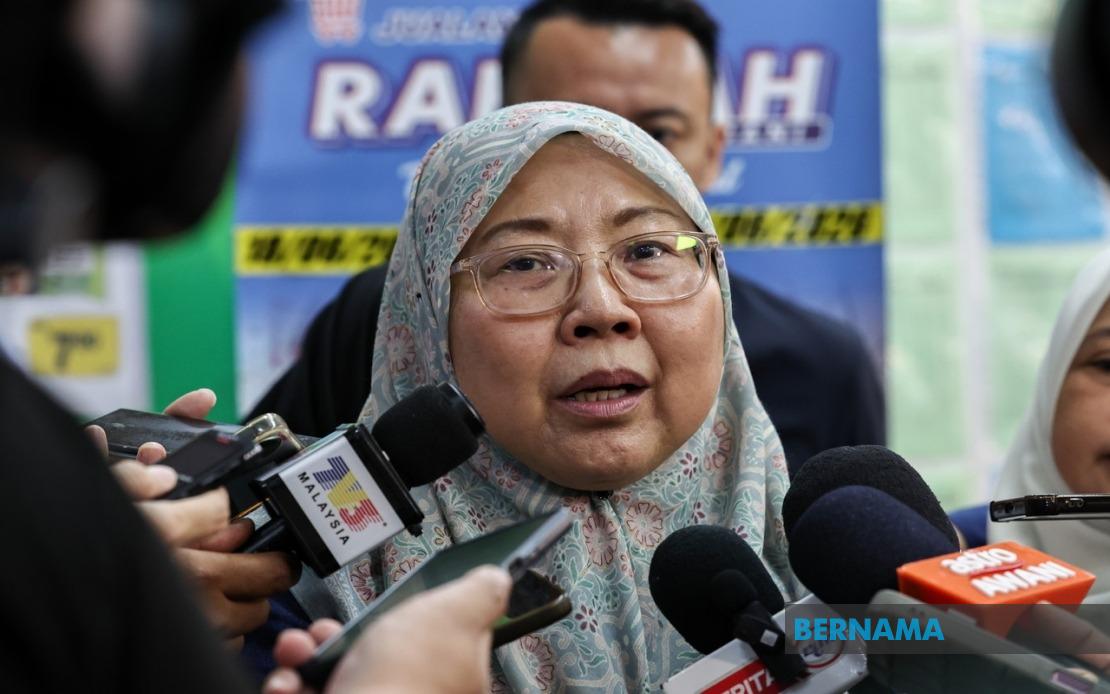
PKR's preparations for the forthcoming state elections in Johor and Negeri Sembilan have reached the final stages, with party leadership confirming that the candidate list is now 99 per cent complete. Secretary-general Datuk Dr Fuziah Salleh made the announcement during a public engagement at an economic programme event in Johor Bahru on June 19, signalling that the party's strategic positioning for these crucial electoral contests is solidifying after weeks of internal deliberation and negotiation with coalition partners.
The People's Justice Party will field candidates across 20 state constituencies in Johor and 16 seats in Negeri Sembilan, representing a carefully calculated approach to maximising parliamentary influence while maintaining coalition harmony with other Pakatan Harapan members. The party's leadership has emphasised that the final roster will balance generational representation, bringing together seasoned political operators with emerging voices from within the party's expanding membership base. Fuziah indicated that the composition would deliberately incorporate candidates from underrepresented demographics, particularly women and younger activists, though specific percentages would be disclosed only upon official announcement.
The timing of the announcement carries significance within Malaysia's broader political landscape. Both state elections represent contests where the ruling coalition faces considerable pressure from well-entrenched incumbent governments, necessitating strategic candidate selection that can appeal across diverse voter segments. In Johor, where Barisan Nasional has traditionally dominated with a commanding 40 seats before the recent dissolution of the State Legislative Assembly, PKR's participation through Pakatan Harapan offers opposition voters a consolidated alternative. Similarly, the Negeri Sembilan contest presents an opportunity for the coalition to consolidate its prior position, where Pakatan Harapan held 17 of 36 seats before the assembly was dissolved.
However, the candidate announcement process has not been entirely smooth, with internal coalition tensions surfacing around constituency allocation. A particularly contentious issue involves the Puteri Wangsa seat in Johor, where Amanah has disputed PKR's claim to the constituency. Amanah's Johor leadership argues that the seat should remain within their party's fold, contrary to PKR's assertion that the seat reverted to them following its temporary allocation to MUDA during the 2022 state election. This disagreement exemplifies the ongoing challenge of resource distribution within Pakatan Harapan, where multiple parties must balance ambitions and territorial interests while maintaining coalition cohesion.
Fuziah's characterisation of the Puteri Wangsa dispute as being elevated to "the highest level" of party leadership suggests that resolution lies beyond the technical campaign machinery, indicating that senior party presidents and alliance leaders are directly engaged in mediation. Such elevation of lower-level disputes reflects the delicate equilibrium required to maintain Pakatan Harapan's unity, particularly as coalition members compete for advantageous seat allocations. For Malaysian voters observing these internal party dynamics, such tensions may signal either the coalition's commitment to democratic internal processes or raise concerns about its capacity to present unified governance platforms to the electorate.
Separately, PKR continues to grapple with internal discipline matters, most notably concerning Subang Member of Parliament Wong Chen. Following allegations that triggered a formal disciplinary investigation, Wong Chen publicly challenged the party to proceed with sanctions or publicly explain the investigation's outcome. The case has now been formally referred to PKR's Disciplinary Board, transferring the matter from investigative to adjudicative phases. The handling of such high-profile internal discipline cases carries implications for party credibility, as both overly lenient and perceived excessive punishments could undermine confidence among members and voters regarding organisational integrity.
The electoral calendars for both states have been formally established by the Election Commission. Johor's nomination date is set for June 27, with polling scheduled for July 11—a compressed campaign period of less than three weeks that will test parties' organisational capacities and media messaging strategies. The Negeri Sembilan election follows a different timeline, with nominations due on July 18 and voting postponed until August 1, with early voting permitted on July 28. These staggered schedules reflect the logistical requirements of managing two simultaneous state election campaigns while maintaining focus on national party operations.
Before the dissolutions, the composition of both assemblies reflected the competitive political landscape across Malaysia's state capitals. The Johor State Legislative Assembly's 56 seats were distributed among Barisan Nasional (40), Pakatan Harapan (12), Perikatan Nasional (three), and MUDA (one), demonstrating Barisan Nasional's substantial dominance in the kingdom considered a traditional stronghold. The Negeri Sembilan assembly, comprising 36 seats, presented a somewhat more competitive scenario, with Pakatan Harapan holding 17 seats against Barisan Nasional's 14 and Perikatan Nasional's five, suggesting greater electoral volatility in the Minangkabau heartland.
For PKR strategically, the forthcoming elections represent an opportunity to strengthen parliamentary representation in two significant state governments where Pakatan Harapan maintains realistic prospects of competitive performances. The emphasis on candidate diversity—particularly the integration of women and younger politicians—reflects broader trends within Malaysian political parties toward more representative ticket-building, responding to voter expectations for inclusive governance and fresh perspectives on state-level development priorities. The final candidate announcement, expected within days of Fuziah's statement, will provide clearer insight into whether PKR has successfully translated these stated objectives into concrete candidature patterns.
The completion of PKR's candidate selection process follows similar announcements from other Pakatan Harapan components and sets the stage for the coalition's integrated campaign operations. With nomination periods now imminent, the focus shifts from internal party management toward public campaigning, where the carefully constructed candidate slates will be presented to voters alongside policy platforms and coalition messaging. The success of these elections will significantly influence calculations regarding Pakatan Harapan's capacity to challenge Barisan Nasional's traditional dominance across Malaysia's state political architecture.

