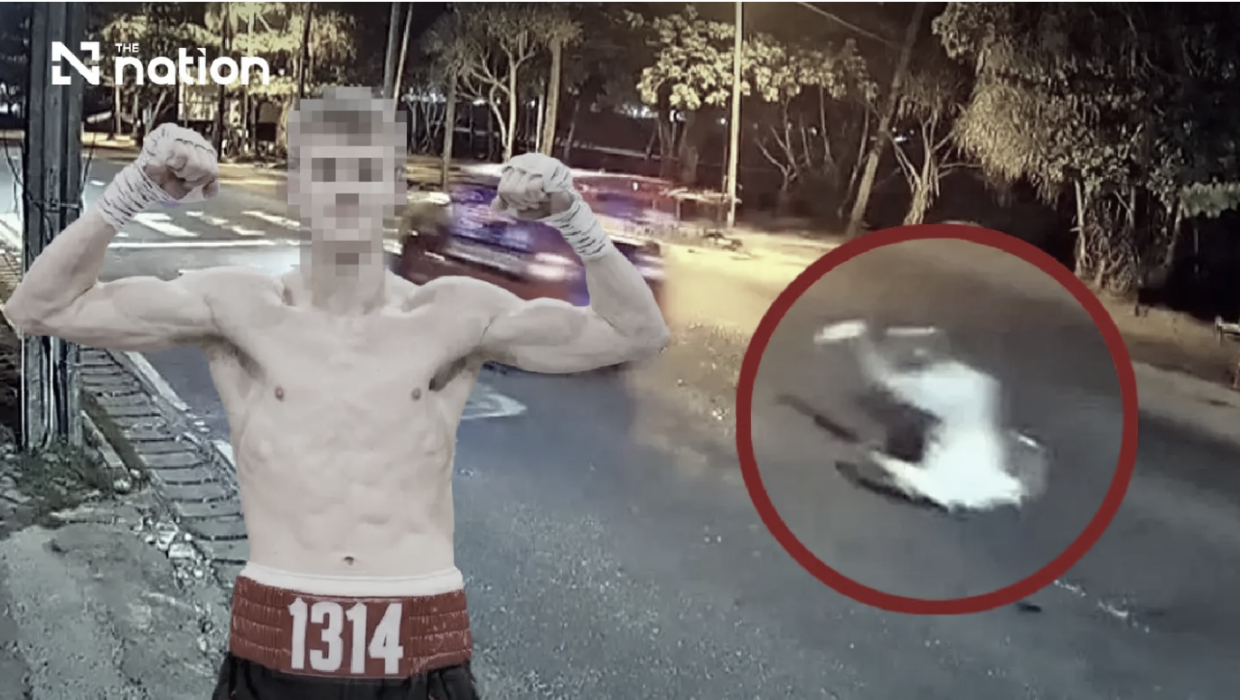
A tuk-tuk operator in Phuket faces serious criminal charges stemming from the death of Colin Cairney, a 22-year-old British tourist and boxer who sustained fatal injuries after falling from the vehicle in the Patong district. The incident, which occurred on June 14, has reignited concerns about road safety standards and passenger security in Thailand's popular tourist destinations, particularly regarding three-wheeled taxis operating in nightlife zones.
Kitphong, 34, a resident of Phatthalung province, was brought in for interrogation on June 15 following an investigation spearheaded by Pol Maj Surachat Thongyai, the investigating officer at Patong Police Station. Evidence collected by authorities definitively established that Kitphong was operating the tuk-tuk at the time of the tragedy. The charges filed against him encompass negligence resulting in death, along with separate violations for abandoning the scene and failing to report the incident to law enforcement.
According to the investigation, Kitphong's account of events reveals significant lapses in judgment and duty of care. While navigating past The Nature hotel located on Phra Barami Road—the initial destination where the two foreign passengers requested to be dropped—the driver noticed something amiss with his vehicle. Rather than pulling over immediately to investigate the problem, Kitphong continued operating the tuk-tuk for approximately two kilometres before stopping to assess the situation. Upon inspection, he discovered that his passengers, including Cairney, had vanished from the vehicle.
The sequence of events leading to the fatal fall began when Kitphong collected two foreign visitors—Cairney and a female companion—from Soi Bangla, a well-known entertainment district in Patong. Their stated destination was The Nature hotel in the Kalim Beach locality. However, upon arrival, the tourists informed Kitphong they were unable to pay the agreed fare and requested he transport them to nearby automated teller machines so they could withdraw funds. Cairney, who was significantly intoxicated at the time, accompanied the driver to three separate ATM locations in the surrounding area, but his attempts to access cash proved unsuccessful at each stop.
Facing this impasse, Kitphong made the decision to return both passengers to their original pickup location at Soi Bangla. It was during this return journey that the circumstances leading to Cairney's death unfolded. The exact mechanics of how Cairney fell from the moving vehicle remain part of the investigation, though the injury he sustained proved catastrophic. He was rushed to hospital but could not be saved, succumbing to his injuries shortly after arrival.
What has particularly inflamed the case is Kitphong's conduct immediately following the passenger's disappearance. Rather than alerting emergency services or police to report a missing passenger and potential accident, he made no attempt to raise the alarm. He only became aware through subsequent conversations that Cairney had actually fallen from the tuk-tuk and had suffered severe injuries. This failure to immediately report the incident and seek assistance constitutes a separate charge under Thai law, as drivers have a legal obligation to stop and render aid when an incident occurs involving their passengers.
The investigation revealed that the tuk-tuk itself was not owned by Kitphong but by his older brother, from whom he rented the vehicle to operate as a commercial taxi service. This arrangement, while common in Thailand's informal transport sector, raises questions about vehicle maintenance standards and driver accountability mechanisms. There is no indication that mechanical failure contributed to the passenger's fall, suggesting instead that the circumstances involved the passenger's position, the vehicle's movement, or other factors during operation.
During formal questioning, Kitphong reportedly confessed to all charges levied against him. The confession came relatively quickly in the investigative process, suggesting either the evidence against him was substantial or he recognised the severity of his legal position. Thai law treats negligence causing death as a serious matter, particularly when combined with charges of failing to provide assistance and report the incident.
The tragic circumstances of Cairney's death highlight the risks inherent in Thailand's largely unregulated three-wheeled taxi industry. Phuket, as one of Southeast Asia's premier beach destinations, attracts hundreds of thousands of international visitors annually, many of whom rely on tuk-tuks for short-distance transportation, especially in entertainment districts where drunk driving prevention is a priority. The sector operates with minimal formal regulation regarding vehicle maintenance, driver training, or passenger safety protocols, creating conditions where accidents can escalate into fatalities.
For Malaysian visitors and expatriates in Thailand, the incident serves as a cautionary tale about the risks of using informal transport networks, particularly late at night when intoxication is a factor and vehicles operate under less stringent oversight than licensed taxis or ride-sharing applications. The tragedy also underscores the importance of ensuring one has payment methods secured before boarding, as the original payment dispute that triggered the circuitous journey may have contributed to the circumstances of the accident.
Compensation negotiations are currently proceeding between Thai authorities and Cairney's uncle, who resides in Phuket province. These discussions will likely focus on civil liability, as criminal prosecution addresses only the driver's culpability under Thai law. The case will proceed through Thailand's criminal justice system, where Kitphong faces potential imprisonment given the gravity of the charges and his confession. For the broader transport industry in Phuket and similar tourist zones across Thailand, the incident may catalyse discussions about implementing stronger safety standards and accountability measures for commercial three-wheeled vehicle operators.