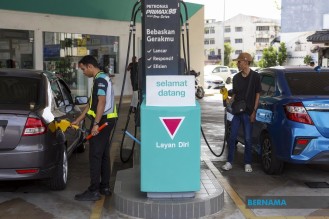
Malaysia's fuel supply situation has received reassurance from the highest levels of government, with Petronas confirming that petrol stations across its nationwide network will maintain stable and adequate fuel inventories extending into August. The statement, delivered by Datuk Seri Azalina Othman Said, the Minister in the Prime Minister's Department (Law and Institutional Reform), emerged from discussions at the National Economic Action Council's weekly meeting and directly addressed parliamentary concerns raised about energy security amid turbulent global markets.
The scale of Petronas's role in the nation's energy landscape cannot be overstated. Through its publicly listed subsidiary Petronas Dagangan Bhd, the national oil company supplies approximately 50 percent of Malaysia's domestic fuel requirements via its extensive petrol station network. This substantial market share underscores why any disruption to Petronas operations would have immediate ripple effects across transportation, commerce, and everyday consumer activities. The stability of this supply chain is therefore a matter of considerable strategic importance, particularly given external pressures affecting global energy markets.
The government's confidence in supply continuity reflects coordinated planning at the ministerial level. Rather than operating reactively to energy crises, authorities have established a dedicated Crisis Management Task Force under the auspices of MTEN, specifically mandated to address supply vulnerabilities arising from the wider geopolitical situation in West Asia. This task force operates with a comprehensive mandate that extends beyond simple monitoring to encompass active management of multiple energy security dimensions simultaneously.
The responsibilities assigned to this crisis management body reveal the sophistication of Malaysia's approach to energy resilience. Beyond tracking daily fuel, petroleum, and energy supply metrics, the task force is charged with safeguarding supply security through the coming months while simultaneously managing price stability and combating smuggling activities that could distort markets or divert resources. This multifaceted approach recognises that energy security comprises not merely physical availability of fuel but also market integrity and prevention of illicit diversion that could undermine official distribution networks.
Recognising the limitations of over-dependence on any single geographic region, Malaysian authorities have initiated efforts to diversify crude oil sourcing patterns. Current initiatives seek to secure supplies from producers outside West Asia, with particular attention to exporters in West Africa and the Americas. However, these arrangements are not determined by availability alone. Successful integration of new supply sources requires careful evaluation of crude oil grade compatibility with Malaysia's existing refinery infrastructure and assessment of commercial terms that align with national budget constraints and energy security objectives.
The parliamentary question triggering this statement, raised by Khairil Nizam Khirudin of PN–Jerantut, specifically highlighted apparent contradictions in Petronas's public communications. The oil company had previously indicated that fuel guarantees extended only through June 2026, which prompted legitimate concern about whether this represented a tightening of supply prospects. The ministerial response effectively reframed the timeline, pushing the assurance horizon forward by several additional weeks and implying enhanced confidence in supply continuity based on official corporate communications.
For Malaysian consumers and businesses, this pronouncement carries practical implications for medium-term planning. The August timeframe provides a window during which fuel prices and availability should remain predictable, allowing households and commercial operators to make investment and operational decisions without immediate energy-supply anxiety. Small and medium enterprises reliant on fuel-dependent logistics can proceed with confidence in their supply chains, at least through the specified period.
However, the August cutoff also hints at underlying uncertainty beyond that horizon. The government's felt need to establish a crisis task force and to actively diversify supply sources suggests recognition that global energy markets remain volatile and that regional conflicts continue threatening stable supply chains. The West Asia situation, referenced obliquely in the ministerial statement, encompasses ongoing tensions affecting major shipping routes through which Middle Eastern crude oil reaches Asian markets. Any escalation of those conflicts could rapidly render current supply assumptions obsolete.
Malaysia's experience with energy supply management reflects lessons learned from previous global disruptions. The nation's economy, while diversified beyond petroleum, remains significantly influenced by energy costs and availability. Manufacturing sectors, particularly those involved in export-oriented production, depend on predictable fuel costs for competitiveness. Tourism and transportation likewise rest upon stable fuel supply. The government's proactive task force approach represents institutional learning about the importance of early warning systems and contingency planning rather than reactive crisis response.
The emphasis on controlling prices and preventing smuggling indicates awareness that fuel supply challenges often manifest not as absolute shortages but as artificial scarcities created by diversion or hoarding. By maintaining systematic oversight of both supply volumes and market activities, authorities aim to ensure that whatever fuel is available reaches consumers through legitimate channels at transparent prices. This approach has proven particularly important in Southeast Asia, where cross-border smuggling has historically undermined official fuel distribution systems.
Looking forward, the situation remains inherently contingent upon factors beyond Malaysian control. Global oil prices, regional geopolitical developments, and decisions by major exporting nations will significantly influence whether the August stability window extends further or contracts. The government's establishment of the crisis task force essentially signals that planners are preparing for multiple scenarios, with fuel security protocols in place should circumstances deteriorate. For Malaysian stakeholders, this combination of near-term assurance and medium-term contingency planning represents a realistic approach to navigating uncertain energy markets in coming months.

