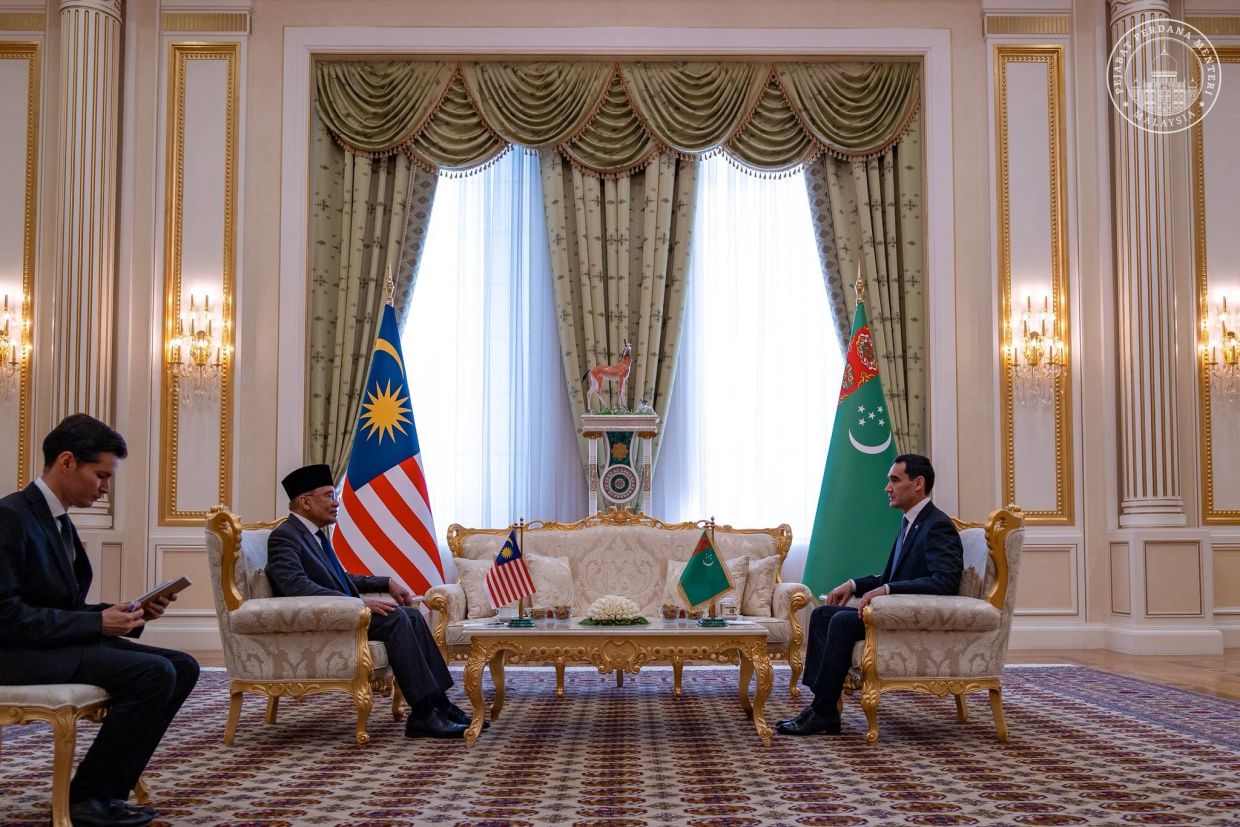
Malaysia has taken a significant step in deepening its energy partnership with Turkmenistan through a landmark strategic agreement between national oil and gas company PETRONAS and Turkmen authorities, sealed during Prime Minister Datuk Seri Anwar Ibrahim's official visit to the Central Asian nation. The signing, witnessed by President Serdar Berdimuhamedov at the Presidential Palace in Ashgabat, represents a milestone in a relationship that has weathered three decades of bilateral cooperation in the energy sector, a foundation that has consistently underpinned economic and diplomatic ties between the two nations.
The timing of this agreement underscores Malaysia's renewed commitment to leveraging its technical capabilities and expertise across diverse geographic markets, particularly within Central Asia where energy resources remain crucial to global supply dynamics. The partnership extends beyond traditional operational arrangements, serving as a platform to facilitate knowledge exchange, technical skills development, and technology transfer mechanisms that benefit both the Malaysian enterprise and Turkmenistan's energy ambitions. This multifaceted approach reflects contemporary trends in international energy partnerships, where value creation transcends simple commodity transactions and encompasses human capital development and institutional strengthening.
Turkmenistan's natural gas reserves represent one of the world's most substantial untapped energy resources, and the strategic partnership creates concrete pathways for Malaysian expertise to contribute toward developing these assets. The nation's proven gas reserves are among the largest globally, yet their commercialisation remains challenged by geographic constraints, infrastructure limitations, and market access complexities. PETRONAS's involvement in exploring and developing these resources positions Malaysia as a trusted technical partner in Turkmenistan's energy security strategy, while simultaneously opening investment and operational opportunities for the Malaysian firm within a hydrocarbon-rich region.
From Malaysia's perspective, this partnership demonstrates the government's confidence in national enterprises competing effectively on the international stage. The MADANI administration has prioritised showcasing Malaysian technical prowess and industrial capabilities as tools for economic development and strategic positioning in emerging markets. A successful PETRONAS presence in Turkmenistan serves as evidence of this capability, potentially opening doors for other Malaysian companies seeking business opportunities within Central Asia's developing economies and reinforcing Malaysia's reputation as a reliable energy sector partner.
The bilateral trade relationship has already shown positive momentum entering 2025, with Turkmenistan ranking as Malaysia's fourth-largest trading partner among Central Asian nations. The previous year saw Malaysia-Turkmenistan bilateral trade reach RM75.80 million, with Malaysian exports accounting for RM75.50 million and representing a solid 9.0 per cent year-on-year increase. These figures, while modest relative to Malaysia's global trade, indicate growing commercial engagement and suggest that the strategic energy partnership may catalyse expanded trade across sectors beyond petroleum and natural gas.
PETRONAS's financial commitment to Turkmenistan reflects the serious long-term stakes involved in this relationship. Since 1996, the company has invested a cumulative RM52.73 billion in Turkmenistan, establishing the nation as one of PETRONAS's most significant international investment destinations. This substantial capital deployment underscores the strategic importance Malaysia's energy sector places on Central Asian markets and demonstrates confidence in Turkmenistan's stability and investment environment despite geopolitical complexities surrounding the region.
The three-decade history of Malaysia-Turkmenistan energy cooperation provides a robust foundation upon which this latest partnership builds. Unlike agreements initiated between parties with limited prior relationship history, this partnership benefits from established institutional knowledge, proven operational frameworks, and developed trust relationships between key stakeholders. PETRONAS technical teams and Turkmen government bodies have navigated previous projects successfully, creating operational continuity and institutional memory that facilitates effective implementation of new initiatives.
Regionally, Malaysia's deepening involvement in Central Asia's energy sector reflects broader Southeast Asian positioning vis-à-vis Eurasian markets. As regional economies increasingly recognise that prosperity depends on diversified partnerships across geographic boundaries, Malaysia's energy sector engagement in Central Asia serves as a template for integrated regional development. The partnership demonstrates how ASEAN nations can leverage technical expertise to build influence and economic stakes in non-traditional spheres of engagement, thereby reducing dependency on traditional Western partnerships and fostering truly multipolar economic relationships.
The strategic partnership also addresses global energy security considerations. International confidence in Malaysian capabilities to develop and operate in challenging energy environments—as Turkmenistan's resource development certainly qualifies—contributes to diversifying global energy supply sources and reducing concentration risk. For Malaysia, demonstrating such capabilities strengthens the nation's strategic positioning in discussions regarding energy infrastructure development, renewable transition support, and regional stability initiatives where energy security intersects with geopolitical considerations.
Looking forward, this partnership creates potential spillover benefits for Malaysia's broader economic agenda. Technology developed through PETRONAS operations in Turkmenistan, insights regarding Central Asian market dynamics, and relationships forged through energy sector engagement can facilitate Malaysian expansion across financial services, construction, telecommunications, and agricultural sectors. Energy partnerships frequently serve as catalysts for deeper economic integration, as infrastructure development, human resource training, and institutional building create complementary opportunities for diversified economic participation.
The agreement also signals Malaysia's confidence in maintaining long-term engagement with Central Asia despite regional complexities and global energy transition pressures. Rather than retreating from hydrocarbon-focused partnerships, Malaysia continues investing in natural gas development and exploitation, balancing this conventional energy focus with investments in renewable technologies. This pragmatic approach acknowledges that global energy demand will require diverse sources for decades ahead and that transitional strategies must accommodate both fossil fuel and renewable energy development.
For Turkmenistan, the PETRONAS partnership represents validation of its energy development strategy and access to world-class technical expertise. The nation's geographic position, while advantageous for resource wealth, creates commercial disadvantages for market access. International partnerships with capable operators and experienced developers like PETRONAS provide pathways toward monetising natural gas reserves and securing revenue streams essential for economic diversification. The partnership thus serves both nations' strategic interests—Malaysia gains access to world-scale energy resources and Central Asian markets, while Turkmenistan benefits from proven operational capabilities and international market connections.
As this partnership progresses, Malaysian stakeholders should monitor developments closely for lessons applicable across Southeast Asian engagement with Central Asian markets. The success of PETRONAS in Turkmenistan may establish precedents for other Malaysian enterprises seeking regional expansion opportunities, potentially reshaping Malaysia's economic footprint across the broader Eurasian continent and positioning the nation as a preferred partner for energy development and infrastructure projects throughout Central Asia.

