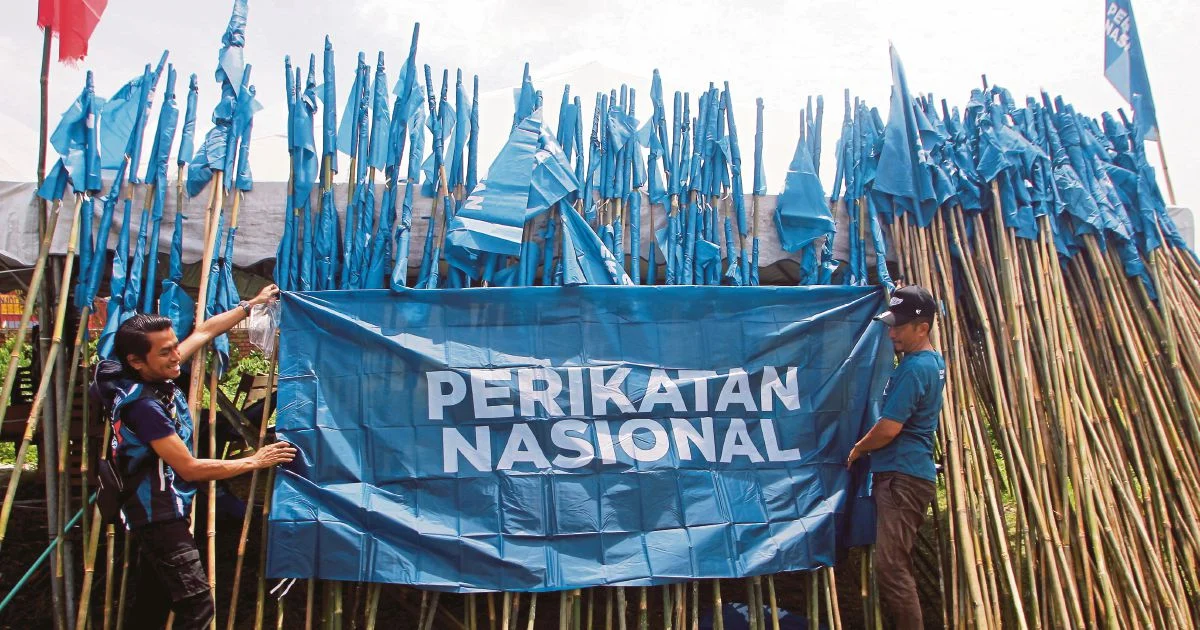
The Perikatan Nasional coalition is preparing for a critical high-level meeting scheduled for June 22 in Kota Baru, where senior party officials will attempt to resolve persistent tensions that have threatened the coalition's unity and electoral prospects. The Supreme Council gathering represents a crucial moment for the opposition alliance, as member parties grapple with fundamental questions about how to present themselves to voters and allocate campaign resources in upcoming electoral contests.
At the heart of the discussions lies the contentious matter of logo usage within the coalition. The symbol of a political movement carries enormous significance in Malaysia's electoral landscape, as it represents party identity, recognisability on ballot papers, and collective brand value. When multiple parties operate within a coalition framework, disagreements over whose logo takes prominence or how logos are deployed can reflect deeper anxieties about power distribution and public recognition. For Perikatan Nasional, whose member parties include Parti Islam Se-Malaysia (PAS), Bersatu, and other conservative-leaning organisations, consensus on visual representation has proven elusive, potentially complicating campaign mechanics and voter communication strategies.
The question of candidate endorsements constitutes the second major agenda item likely to dominate the session. In multi-party coalitions, the endorsement process determines which candidates receive official backing, coalition resources, and cross-party support mechanisms. This inherently involves difficult negotiations about which party fields candidates in which constituencies, ensuring geographic diversity and avoiding costly three-way contests where coalition votes split dangerously. Different parties within Perikatan Nasional have competing interests regarding which candidates should carry the coalition banner, and resolving these disputes before any snap election call becomes crucial for mounting an effective challenge to the current government.
The timing of this meeting reflects growing urgency within opposition ranks. Malaysia's political landscape remains fluid, with various scenarios potentially triggering electoral contests at federal or state levels. Should elections materialise before internal coherence is achieved, Perikatan Nasional risks entering the campaign weakened by unresolved tensions, allowing competitors to exploit divisions and potentially depressing turnout among coalition supporters confused by mixed messaging or disappointed by candidate selections.
For Malaysian voters and political observers, the success or failure of this June 22 session carries significant implications. A coalition that emerges unified and capable of presenting consistent campaign messaging poses a more serious electoral challenge to the current Pakatan Harapan-led government. Conversely, continued discord that spills into public view could undermine confidence in Perikatan Nasional's capacity to govern effectively if elected, reinforcing narratives that the opposition remains fractious and unreliable.
The regional dimension also warrants consideration. Southeast Asia's political dynamics increasingly intersect with coalition stability in member nations. Any perceived weakness in Malaysia's primary opposition alliance might influence calculations within the broader region, particularly given Perikatan Nasional's conservative and Islamist inclinations that resonate differently across Southeast Asian political movements compared to the centrist orientation of ruling Pakatan Harapan. Coalition coherence thus extends beyond mere domestic politics into questions of regional alignment and influence.
Historically, Malaysian opposition coalitions have struggled with sustainability. The original Pakatan Rakyat dissolved amid acrimony, while subsequent experiments in coalition-building have repeatedly faltered when fundamental disagreements over power-sharing and strategic direction proved irreconcilable. Perikatan Nasional has enjoyed more longevity than some predecessors, but the June 22 meeting suggests that persistent fault lines remain unhealed, requiring senior leadership intervention to prevent further deterioration.
The venue selection of Kota Baru, the capital of Kelantan, carries its own political weight. Kelantan remains a PAS stronghold, with the party maintaining continuous state-level governance, yet Kota Baru also functions as a significant political meeting point. Holding discussions in this location may reflect logistical convenience, respect for PAS's position within the coalition, or an attempt to anchor deliberations in territory where one coalition component maintains solid ground.
What remains unclear from available information is whether the June 22 session represents merely another discussion without binding outcomes, or whether participating parties have pre-negotiated compromises they plan to ratify at the meeting. Coalition politics frequently involves theatre where decisions are formally announced as though newly reached, when substantial agreement was actually achieved through preliminary discussions. Alternatively, the meeting could represent a genuine last-chance effort to bridge divides that have persistently resisted resolution.
The coming weeks will test whether Perikatan Nasional's leadership can demonstrate the political maturity necessary to subordinate component party interests to coalition-wide objectives. Success would position the opposition more competitively for any elections occurring within the next electoral cycle, while failure would likely trigger further defections or withdrawals that would further diminish opposition capacity to challenge incumbent governance. For Malaysia's political future and the health of its democratic competition, the stakes of this June 22 meeting extend well beyond the specific issues appearing on the agenda.

