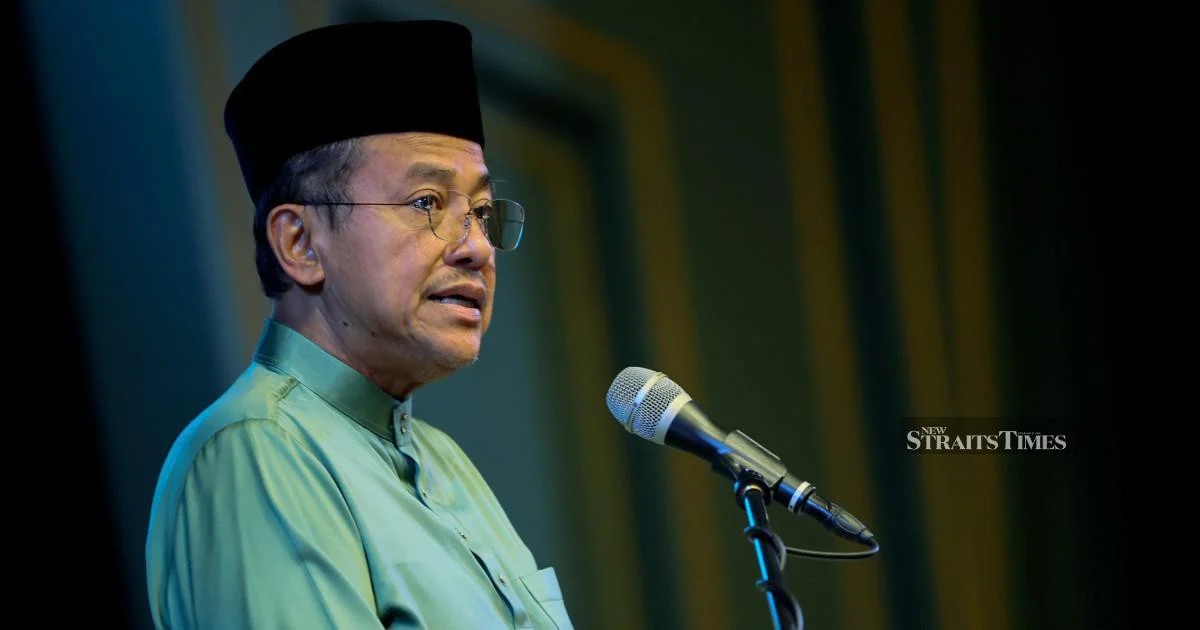
The Perikatan Nasional coalition faces a critical juncture as its top leadership prepares to examine the status and future direction of Bersatu within the broader alliance structure. Datuk Seri Dr Ahmad Samsuri Mokhtar, speaking in his capacity as Pas vice-president, signalled the importance of the upcoming gathering by confirming that coalition dynamics will take centre stage at the scheduled meeting. The deliberation underscores persistent questions about the stability of PN's internal relationships and the political sustainability of the grouping that has served as a counterweight to both federal and state government coalitions across Malaysia.
The agenda to review Bersatu's position reflects deeper currents within opposition politics that have gained momentum over recent months. Bersatu, which emerged as a significant political force following defections from Umno, has occupied an increasingly complex position within the PN framework. The party must reconcile its own organisational interests and membership base with the expectations and strategic priorities of its larger coalition partners, principally Pas and smaller aligned parties. This balancing act has proven challenging, particularly as different factions within PN have pursued divergent political strategies and electoral calculations.
Bersatu's trajectory within PN carries particular significance for Malaysian voters attempting to gauge the viability of opposition alternatives. The party under Tan Sri Muhyiddin Yassin's leadership has sought to carve out a distinct identity while remaining committed to the coalition framework. However, the coalition partnership model requires constant negotiation over seat allocation, policy direction, and leadership representation. When such tensions accumulate, formal reviews of member party status become necessary political mechanisms for either reinforcing commitment or facilitating strategic adjustments. The meeting scheduled following Dr Ahmad Samsuri's statement represents precisely this kind of institutional checkpoint.
For Malaysian readers following national political developments, the implications extend beyond internal PN calculations. The health of opposition coalitions directly influences the competitive landscape for federal and state elections. A fragmented or unstable PN weakens opposition coherence at a moment when questions about governance, economic management, and political accountability remain prominent in public discourse. Conversely, a cohesive PN capable of managing internal differences would present a more credible political alternative to voters evaluating their choices. The coalition's ability to resolve questions about member party positioning therefore carries consequences for broader democratic competition.
Regional considerations also merit attention. Southeast Asian political observers track Malaysian coalition dynamics as indicators of opposition viability across the region. Countries grappling with questions about institutional checks on executive power look to how Malaysian opposition forces organise and sustain themselves. A PN that demonstrates internal resilience and principled management of disagreements signals the possibility of viable political alternatives within competitive authoritarian environments. Conversely, coalitions that dissolve under pressure or fail to accommodate diverse interests undermine confidence in opposition capacity for governance.
The specific mechanics of tomorrow's discussion remain undisclosed, but the participants will likely address several substantive questions. These may include Bersatu's resource allocation within coalition structures, the party's role in forthcoming electoral contests at state and federal levels, and mechanisms for resolving disputes between PN members. Leadership councils in Malaysian political coalitions typically operate according to established protocols, though the stakes attached to particular agenda items determine the rigour with which debates are pursued. The decision to formally address Bersatu's position suggests the matter cannot be resolved through routine administrative channels.
Historically, Malaysian coalitions have managed internal tensions through combinations of compromise, side agreements, and occasionally through the exit of member parties. The Barisan Nasional has demonstrated surprising durability despite encompassing parties with distinct interests and demographics. Similarly, Pakatan Harapan persisted through various challenges despite internal disagreements about priority and direction. Perikatan Nasional, being the newer coalition of these major groupings, still establishes institutional norms and precedents for managing the inherent conflicts between member autonomy and collective coherence. How leadership councils handle status reviews becomes part of the coalition's developing political culture.
Pas, as the largest component of PN and the party whose vice-president made the announcement, occupies a particularly influential position in these deliberations. The party's electoral strength in several states and its organisational depth give Pas significant leverage in determining coalition outcomes. However, Pas also has incentives to maintain the PN framework as a vehicle for broader political influence than the party could exercise independently. This creates nuanced negotiating dynamics where different parties attempt to advance their interests while preserving the coalition's overall viability.
The broader context involves Malaysia's evolving political architecture following the transition away from single-party dominance. The emergence of fluid coalitions, shifting party affiliations, and negotiations over power-sharing reflects the country's democratic maturation, however contentious particular transitions may be. Citizens increasingly witness behind-the-scenes coalition management that once remained opaque. This transparency, while sometimes generating uncertainty, also allows for more informed public evaluation of political actors' commitment to institutional stability versus narrow partisan advantage. Tomorrow's PN leadership council meeting embodies these contemporary features of Malaysian political life.

