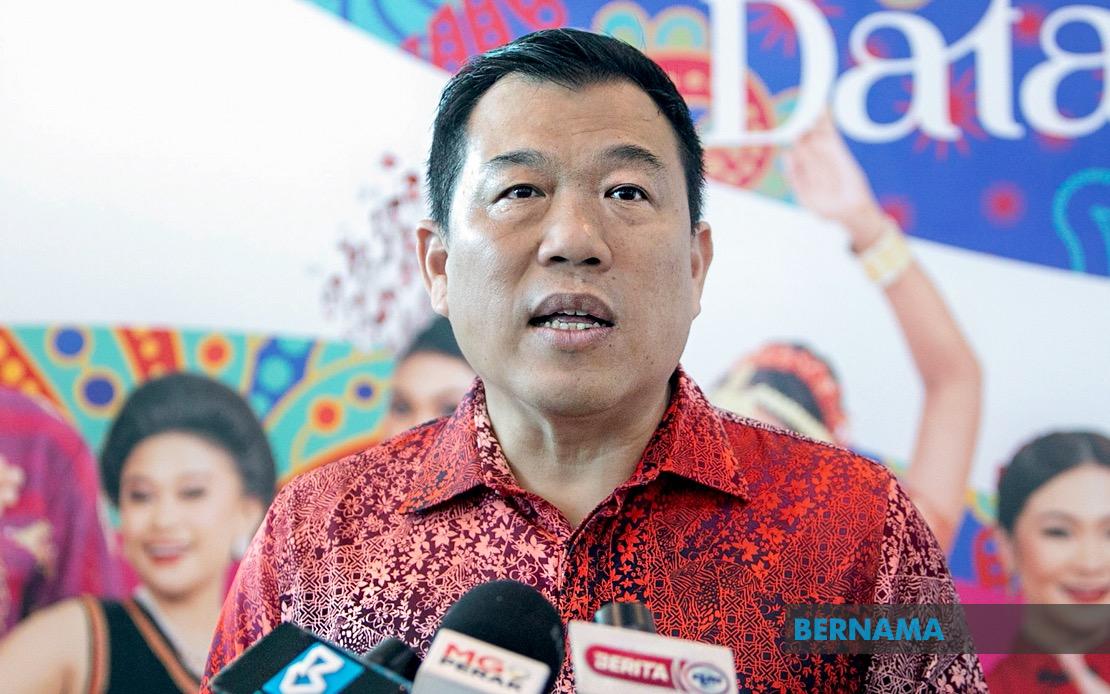
Perak's tourism sector is experiencing a tale of two markets. While the state welcomes an expanding wave of domestic travellers, international visitor numbers are retreating amid structural challenges in regional aviation connectivity. The shift underscores how Malaysia's interior states are becoming increasingly reliant on visitors from within the country even as global tourism pressures mount.
Domestic overnight arrivals to Perak climbed from 10.2 million in 2024 to 10.4 million last year, according to state Tourism, Industry, Investment and Corridor Development Committee chairman Loh Sze Yee. This modest but steady increase reflects growing confidence among Malaysian holiday-makers in exploring destinations beyond the Klang Valley and Selangor. The growth trajectory, however, masks underlying vulnerabilities in the state's capacity to attract high-spending international tourists, a demographic that typically generates significantly higher revenue per visit than domestic travellers.
The international picture paints a starkly different narrative. International tourist arrivals to Perak contracted by approximately 1.5 per cent during the period. This decline, though modest in percentage terms, signals a troubling trend for a state positioning itself as a major regional tourism hub. Loh attributed the slide to specific structural impediments, particularly the absence of scheduled airline service on the Singapore-Ipoh route. This connectivity gap represents a critical vulnerability: without direct international flights from a major regional hub like Singapore, Perak becomes a harder destination to access for foreign travellers, who often prioritise convenience and time efficiency when planning trips.
Global economic headwinds have compounded the state's challenges. The broader aviation industry downturn, exacerbated by volatile oil prices and broader economic uncertainty, has reduced travel capacity and increased operational costs for airlines serving regional routes. When combined with limited airport infrastructure investment and fewer direct international connections, Perak faces an uphill battle in reclaiming market share from established competitors like Selangor and Kuala Lumpur. Among all Malaysian destinations, Selangor dominated with 36.4 million domestic visitors last year, followed by Kuala Lumpur at 35.1 million and Perak at 23.6 million—a significant gap reflecting both the pull of metropolitan attractions and the friction costs of reaching secondary cities.
Despite these headwinds, state and federal tourism authorities are investing in long-term positioning strategies. Tourism Malaysia's selection of Ipoh as host city for the Pantai Timur Fest 2026 represents a calculated effort to reposition northern Peninsular Malaysia as a cohesive tourism destination. According to Mohd Amirul Rizal Abdul Rahim, Tourism Malaysia's director-general, the choice leverages Ipoh's strategic geography to introduce visitors to the broader East Coast region, encompassing Kelantan, Terengganu, and Pahang. This clustering approach reflects a sophisticated understanding that individual states benefit when promoted as components of larger, interconnected tourism zones.
The Pantai Timur Fest 2026 framework itself demonstrates evolving tourism marketing strategies within the region. The festival consolidates 30 exhibition booths from industry operators across three states, creating a centralised marketplace for tourism products and experiences. This model moves beyond siloed state-level promotion toward collaborative regional branding. Participating vendors span the full spectrum of the modern tourism supply chain: traditional travel agencies, mid-range and upmarket hotels, themed attractions, tourism-oriented retail and experience operators, and online travel platforms. This diversity ensures visitors encounter comprehensive offerings rather than fragmented, competing narratives.
The festival programming extends beyond transactional tourism commerce. Cultural performances, traditional craft demonstrations, and heritage food promotions ground the experience in authentic regional identity rather than generic leisure activities. These elements prove particularly compelling for domestic travellers seeking meaningful cultural engagement. Interactive activities and promotional discounts on travel packages create conversion opportunities for impulse bookings. The concurrent Visit Malaysia 2026 campaign provides macro-level marketing leverage, amplifying the message across regional and international audiences simultaneously.
For Malaysian business operators and investors monitoring regional travel trends, the Perak data illuminates important market dynamics. The domestic tourism growth trajectory, while welcome, also suggests market saturation risks in conventional leisure offerings. Higher-value international tourism requires addressing specific connectivity barriers—particularly the Singapore-Ipoh flight route gap. Without resolving this infrastructure constraint, Perak will struggle to capture affluent Southeast Asian travellers who increasingly expect seamless, direct access to secondary destinations. Airlines base route decisions on demand projections and fuel economics; state tourism authorities need to build sufficient demand signals to justify service restoration.
The international visitor decline also reflects broader competitive pressures within Southeast Asia's tourism ecosystem. Vietnam, Thailand, and Indonesia continue investing heavily in destination marketing and infrastructure, often with significant government subsidies and more favourable aviation economics. Malaysia's federal tourism strategy must reckon with this regional competition. Perak's domestic tourism strength, while positive, primarily redistributes spending within Malaysia rather than attracting new international revenue. Reversing the international decline requires coordinated investment across airport infrastructure, airline partnerships, and distinctive experiential offerings that justify the longer journey times involved in reaching Perak from major international hubs.
Looking ahead, the state's tourism trajectory depends on simultaneous attention to supply-side and demand-side challenges. On the supply side, facilitating air connectivity from Singapore and other regional departure points remains essential. On the demand side, the Pantai Timur Fest and Visit Malaysia 2026 represent necessary but insufficient interventions. Sustainable growth in international tourism requires positioning Perak not as a secondary destination accessible only from Kuala Lumpur, but as a primary destination worth the journey. The upcoming festival provides an opportunity to test whether collaborative East Coast regional branding can convert domestic visitor growth into sustained international appeal.

