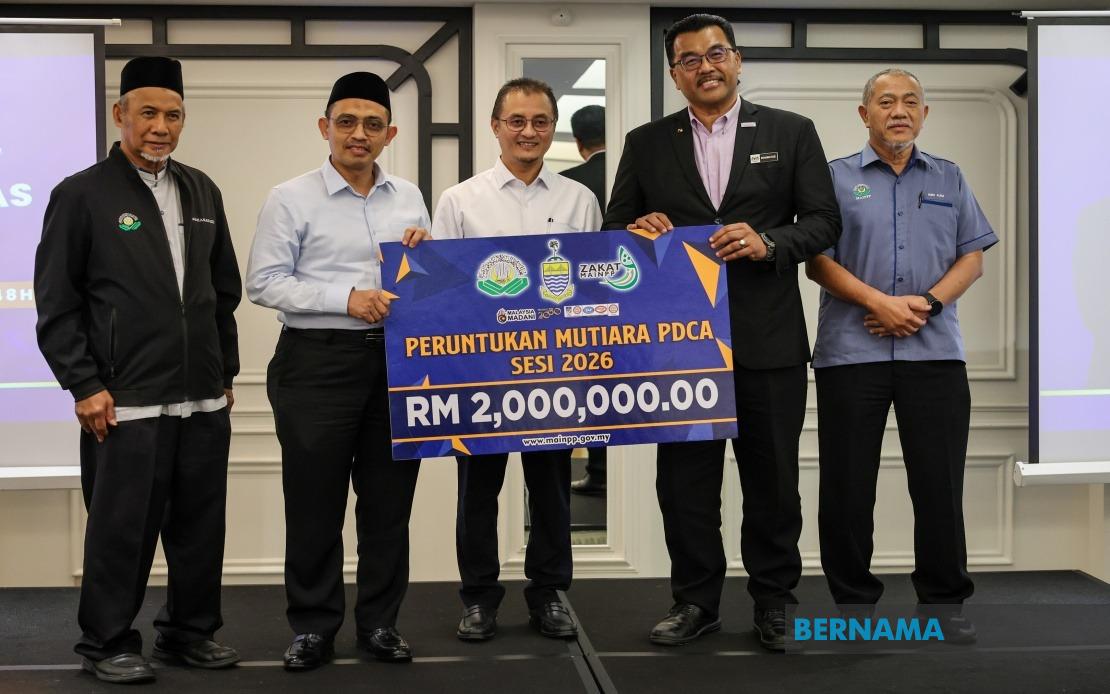
The Penang State Islamic Religious Council, MAINPP, has committed substantial funding towards educational advancement for disadvantaged Bumiputera learners, unveiling a RM2 million allocation for the Mutiara Didik Cemerlang Akademik (MPDCA) programme in 2026. According to Penang Deputy Chief Minister I Datuk Dr Mohamad Abdul Hamid, who presented the funding at a coordinating teachers' briefing in Kepala Batas, the initiative will directly benefit 7,403 pupils and students distributed across the state's educational institutions, marking a significant investment in human capital development within the Bumiputera community.
The allocated funds will support a comprehensive range of educational interventions designed to elevate academic outcomes among participating learners. These initiatives extend beyond basic tuition provision to encompass the creation and distribution of structured learning modules, the organisation of focused academic seminars, and specialised workshops aimed at teaching effective examination techniques. By diversifying its support mechanisms, MAINPP acknowledges that academic improvement requires multi-faceted approaches rather than conventional classroom instruction alone, reflecting contemporary understanding of student learning pathways and pedagogical effectiveness.
The MPDCA programme has operated continuously since its inception in 2006, representing two decades of institutional commitment to Bumiputera educational advancement. The initiative functions as a collaborative endeavour involving MAINPP, the Penang State Education Department, the Penang Bumiputera Participation Coordination Division under the Prime Minister's Department Implementation Coordination Unit, and the Penang Regional Development Authority. This inter-agency framework demonstrates how state-level religious councils can effectively partner with federal and state structures to scale educational interventions, a model potentially instructive for other Malaysian states considering similar programmes.
During the current academic year, the programme engages 698 coordinating teachers positioned within 71 primary schools and 38 secondary schools throughout Penang. This substantial teaching workforce indicates the programme's operational sophistication and its integration within mainstream educational systems rather than existing as a peripheral initiative. The participation of regular government school teachers as programme coordinators suggests that MPDCA functions not as external remedial provision but as an extension of official educational infrastructure, enhancing accessibility and institutional credibility among participating families.
The curriculum emphasis varies according to student cohort and examination requirements. For primary school learners in Year Six, the programme concentrates on four foundational subjects: Bahasa Melayu, English, Mathematics, and Science. This curricular narrowing reflects assessment priorities at that educational level, where these subjects form the basis of national standardised evaluations. Conversely, students preparing for the Sijil Pelajaran Malaysia examination access instruction across thirteen subjects, including Bahasa Melayu, History, English, Mathematics, Science, Arabic, Additional Mathematics, Physics, Chemistry, and Biology, demonstrating comprehensiveness that accommodates diverse academic trajectories and post-secondary aspirations.
Beyond general academic subjects, MPDCA also incorporates specialised religious and linguistic components for students attending government-aided religious schools. Three Integrated Dini Curriculum subjects receive instruction: Dini-Lughatul Arabiyyah Mu'asirah, Dini-As Syariah, and Dini-Usuluddin. This curricular integration reflects Malaysia's historical commitment to combined secular and religious education, recognising that many Bumiputera students attend institutions where Islamic knowledge forms an essential educational pillar. The programme's accommodation of this dimension suggests sensitivity to diverse educational contexts across Penang's school system.
Datasets maintained by the Penang State Education Department demonstrate that MPDCA has generated measurable positive impacts since 2006. Participating students have demonstrated improved academic performance and enhanced achievement outcomes compared to comparable cohorts not engaged in the programme. These empirical findings provide crucial justification for continued resource allocation, as policymakers increasingly demand evidence-based assessments of educational initiatives. The consistency of positive results across nearly two decades indicates that the programme model remains effective despite changing educational landscapes and student demographics.
Beyond MPDCA, MAINPP's broader educational commitments during the year encompass substantial additional investments. The council has allocated RM22.36 million for higher education bursaries enabling tertiary access, RM6.3 million for the Permulaan IPT scheme supporting early university engagement, RM3 million for early schooling aid benefiting younger learners, and RM3 million for school uniform assistance. These complementary initiatives suggest a comprehensive lifecycle approach to educational support, recognising that barriers to learning exist at multiple educational stages and that addressing isolated components without systemic support proves insufficient for sustainable outcomes.
Practising educators directly involved in programme implementation have offered testimonials regarding effectiveness. A Bahasa Melayu teacher from Sekolah Kebangsaan Permai Indah in Bukit Minyak explained that MPDCA learning modules develop language skills systematically across speaking, reading, and writing competencies. The teacher noted that module-based approaches help students prepare specifically for Classroom-Based Assessment requirements and formal academic examinations, translating pedagogical support into measurable assessment outcomes. This bridge between instructional methodology and formal evaluation mechanisms represents crucial programme design thinking.
Teachers at religious schools have similarly emphasised programme benefits for economically disadvantaged learners. A faculty member from Sekolah Rendah Islam Al-Masriyah Halimatun in Bukit Mertajam underscored that the programme has proven especially valuable for students from low-income households who cannot access private tuition. The respondent highlighted that modernised interactive learning approaches, incorporating quiz-based activities and updated instructional content, have enhanced student engagement and classroom participation. These qualitative observations from classroom practitioners validate the programme's theoretical design while identifying specific mechanisms through which support translates into behavioural change and improved learning outcomes.
The significance of MAINPP's investment extends beyond immediate beneficiaries to broader Malaysian educational equity considerations. Bumiputera student populations often experience educational disadvantage stemming from socioeconomic factors rather than cognitive capacity. Targeted programmes providing free tuition and structured learning support address structural barriers without imposing additional burdens on vulnerable families. As Malaysia increasingly competes in knowledge-intensive global markets, programmes maximising human potential across all demographic groups represent strategic national investments rather than mere welfare expenditure, positioning educational equity initiatives within economic development frameworks.
For Southeast Asia more broadly, Penang's MPDCA model offers instructive lessons regarding scaling educational support within developing contexts. The programme demonstrates that substantial reach—over 7,400 students annually—becomes achievable through partnerships leveraging existing institutional infrastructure rather than creating parallel systems. The emphasis on teacher training, systematised curriculum materials, and integrated collaboration between religious and secular authorities reflects sophistication in programme design that accommodates regional educational realities. Other Southeast Asian jurisdictions facing similar challenges regarding educational equity might examine MPDCA's structural approach as a potential template for localised adaptation.
Moving forward, MAINPP's commitment suggests that educational support for Bumiputera learners will remain institutionalised within Penang's development strategy. The RM2 million annual allocation and expanded beneficiary numbers indicate growing rather than diminishing state investment in this demographic. As Malaysia navigates demographic transitions and evolving labour market demands, programmes addressing foundational academic competencies among younger generations assume increasing importance. MAINPP's sustained engagement demonstrates how state-level Islamic councils can operate beyond traditional religious functions to become major educational equity actors, a role that positions them as critical institutional players in Malaysia's ongoing development trajectory.

