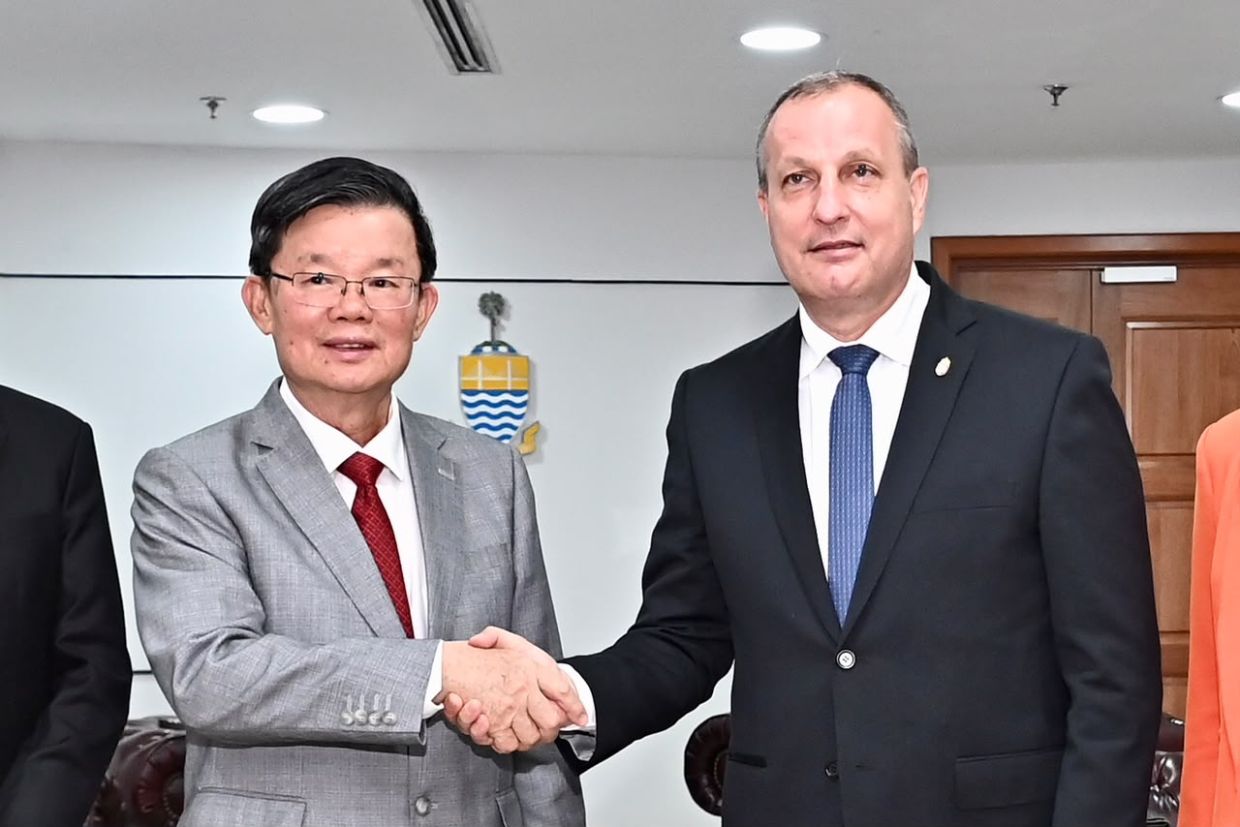
Penang's leadership has signalled an intention to substantially broaden its relationship with Hungary, identifying the Central European nation as a valuable partner for advancing shared priorities in sustainable development and cultural preservation. The initiative emerged from substantive talks between Penang Chief Minister Chow Kon Yeow and Hungarian Ambassador to Malaysia Dr Sándor Sipos, who led a delegation visiting the state to explore collaboration opportunities across multiple sectors.
Chow characterised Hungary as possessing specialised knowledge and institutional capacity that could benefit Penang's development trajectory. The chief minister highlighted that the two jurisdictions share comparable commitments to balancing economic progress with heritage protection, creating a philosophical alignment that extends beyond transactional partnerships. His remarks suggest Penang is viewing Hungary not merely as a source of expertise, but as a fellow stakeholder in the broader project of sustainable regional development.
The scope of proposed collaboration is extensive. Officials identified higher education as a priority, reflecting growing recognition that talent development and academic exchange strengthen long-term diplomatic and economic relationships. Water management and renewable energy also featured prominently in discussions, reflecting global trends toward climate resilience and resource security that hold particular relevance for Malaysia's geography and development challenges. Green technology pathways and heritage conservation rounded out the strategic priorities identified during the meeting.
For Malaysian students, the partnership offers tangible immediate benefits. Hungary's government currently allocates 40 fully funded scholarship positions annually to Malaysian applicants, representing a meaningful pathway for tertiary education and research abroad. Sipos encouraged outstanding students nationwide, particularly those in Penang, to apply for these awards. This educational exchange mechanism functions as both a practical investment in human capital and a soft-power vehicle through which Hungary strengthens ties with Southeast Asian nations during a period of intensified great-power competition for regional influence.
Parallel discussions involving state executive councillors Goh Choon Aik and Gooi Zi Sen widened the engagement beyond education into sports development and youth initiatives. Gooi specifically indicated that Penang intends to commission a formal assessment of potential disciplines suitable for bilateral sporting cooperation, suggesting the state government views athletics as an underexploited avenue for international collaboration. This approach aligns with Malaysia's broader efforts to elevate sporting standards and cultivate athletic talent through international partnerships and knowledge transfer.
The timing of this diplomatic engagement reflects shifting patterns in Penang's external engagement strategy. As a major state with significant economic capacity and international connectivity, Penang has increasingly sought partnerships beyond traditional regional partners, positioning itself as Malaysia's gateway for innovative collaboration. Hungary's Central European location, EU membership, and expertise in water technology and renewable systems make it a logical fit for a state confronting challenges around urban water security and climate adaptation.
From Hungary's perspective, deepening Malaysian engagement serves strategic interests in expanding influence within Southeast Asia and securing educational and commercial partnerships in a dynamic region. The Central European nation has historically punched above its weight diplomatically, and cultivating relationships with influential Malaysian states represents a cost-effective means of building broader regional networks and demonstrating relevance as a European partner for Asian development challenges.
The emphasis on research and development collaboration warrants particular attention. As Malaysia pursues its digital economy ambitions and green transition, access to Hungarian technological expertise—particularly in water management systems and renewable energy infrastructure—could accelerate innovation adoption in Penang's industrial sectors. Such technology transfer arrangements often yield mutual benefits, allowing Hungarian firms to pilot solutions in Southeast Asian markets while providing Malaysian industries with proven systems and technical knowledge.
Cultural and tourist dimensions of the partnership, while less commercially quantifiable than technology transfer, carry their own significance. Heritage conservation efforts require international best practice sharing, and Penang's UNESCO World Heritage status positions it as an important site where conservation methodologies can be exchanged. Similarly, promoting Penang as a destination for Hungarian tourists while encouraging Malaysian cultural institutions to engage with European audiences enhances mutual understanding and creates soft-power benefits that complement official diplomatic channels.
The partnership framework emerging from these discussions represents an evolution in how Malaysian states approach international relations. Rather than waiting for opportunities to arrive through federal channels, Penang is proactively identifying foreign partners whose expertise addresses specific development priorities. This entrepreneurial approach to international engagement, if sustained through concrete project implementation, could position Penang as a model for how Malaysian subnational units leverage their autonomy and resources to advance development objectives through strategic international cooperation.
Success will ultimately depend on translating these aspirational statements into implemented projects. Both sides acknowledged the need for concrete collaborative initiatives, suggesting officials understand that diplomatic goodwill without tangible outcomes yields diminishing returns. Whether Penang can realistically establish functioning research partnerships with Hungarian institutions, successfully scale the student scholarship programme, or develop operational sporting exchange mechanisms will determine whether this engagement becomes a genuinely transformative relationship or remains primarily ceremonial.

