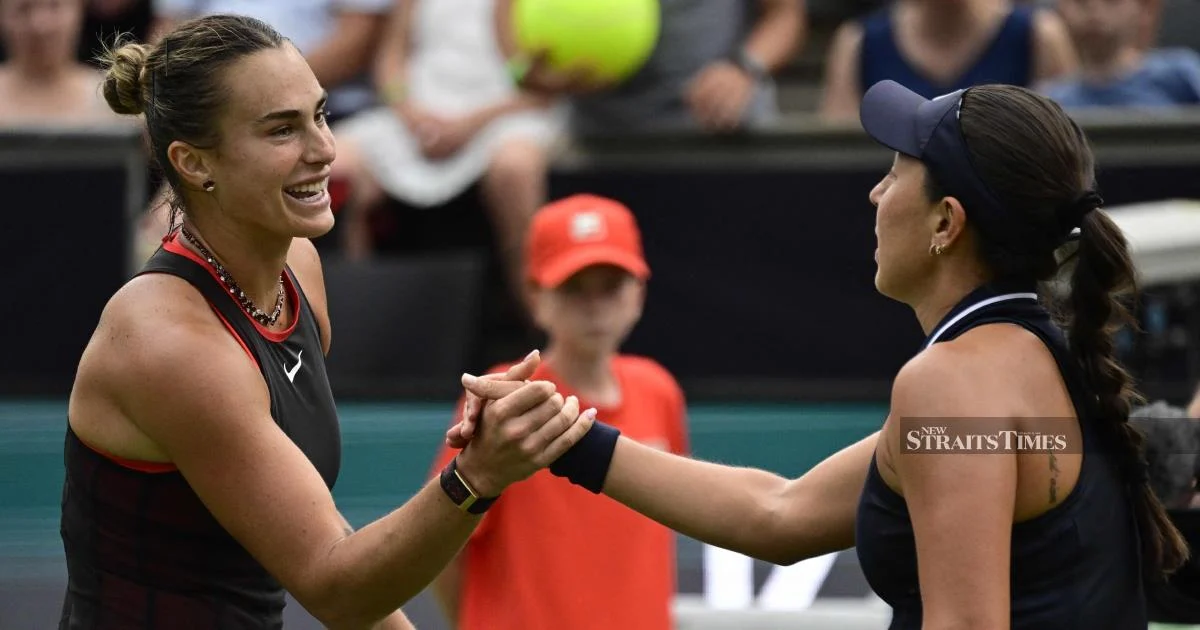
Jessica Pegula delivered a commanding performance on Berlin's grass courts, eliminating world number one Aryna Sabalenka in the semi-final with a 6-2, 6-7 (4-7), 6-0 victory. The American's win marks her second appearance in the Berlin WTA final, highlighting her resurgence as a consistent threat on the international circuit and establishing her credentials on the grass-court season.
The match showcased Pegula's tactical versatility and mental resilience, particularly her ability to adapt her game across the three sets. After dominating the opening set with aggressive baseline play and clinical finishing, Pegula faced a more determined Sabalenka in the second set. The world number one, seeking to defend her ranking and tournament credentials, pushed Pegula into a tiebreak where fine margins ultimately decided the outcome.
Sabalenka's struggle on grass surfaces has been a recurring narrative throughout her career. Despite her dominance on hard courts—particularly at the Australian Open where she has won multiple titles—the Belarusian player has not yet captured a grass-court Grand Slam or major event. This Berlin semi-final represents another missed opportunity for Sabalenka to strengthen her credentials on the surface and underscores the significant gap between clay-court and hard-court dominance versus success on grass.
Pegula's transformation into a genuine tournament contender reflects her improved consistency and mental approach to competition. The 30-year-old American has worked methodically to elevate her game, and her progression through the Berlin draw demonstrates the fruits of that labour. Her ability to close out the third set with such authority—a 6-0 demolition—suggests Pegula's confidence was building as the match progressed, a crucial psychological advantage in competitive tennis.
The grass-court surface itself played a significant role in determining the match's trajectory. Grass rewards aggressive play and punishes hesitation, characteristics that favour Pegula's serve-and-volley instincts and aggressive return game. Sabalenka, whose game relies heavily on powerful baseline exchanges and depth, found fewer opportunities to control rallies on the faster surface, where points tend to be shorter and more dependent on opening shot quality.
For Malaysian and Southeast Asian fans following women's tennis, Pegula's victory carries broader implications for the sport's competitive landscape. The result suggests that the domination by a single world number one is neither inevitable nor immutable on varying surfaces. Specialized court players remain highly relevant in modern tennis, and the different Grand Slam surfaces continue to produce genuinely unpredictable outcomes that validate the sport's diversity.
Pegula's path to the final also reflects the ongoing strength of American women in tennis, a tradition rooted in consistent development programs and competitive infrastructure. Her presence in Berlin finals and major tournaments demonstrates sustained American relevance in women's professional tennis, even as players from other regions have risen to prominence. This competitive depth benefits the sport globally, creating more dramatic matchups and higher standards across the professional circuit.
The semi-final result carries immediate consequences for the Berlin tournament's narrative. Pegula advances as a legitimate title contender with demonstrated grass-court pedigree, while her opponent in the final will face an opponent in peak form during the crucial grass season. This victory also enhances Pegula's credentials heading into the Wimbledon Championships, the sport's most prestigious event, where grass-court form translates most directly to success.
Looking ahead, Pegula's trajectory suggests she remains capable of competing with the tour's elite across multiple surfaces. Her consistency in reaching major tournament finals, coupled with improved conversion rates in high-pressure matches, indicates she has developed the mental fortitude required to contend for titles at the sport's highest level. This Berlin final appearance represents another step in what could become a career-defining season for the American champion.