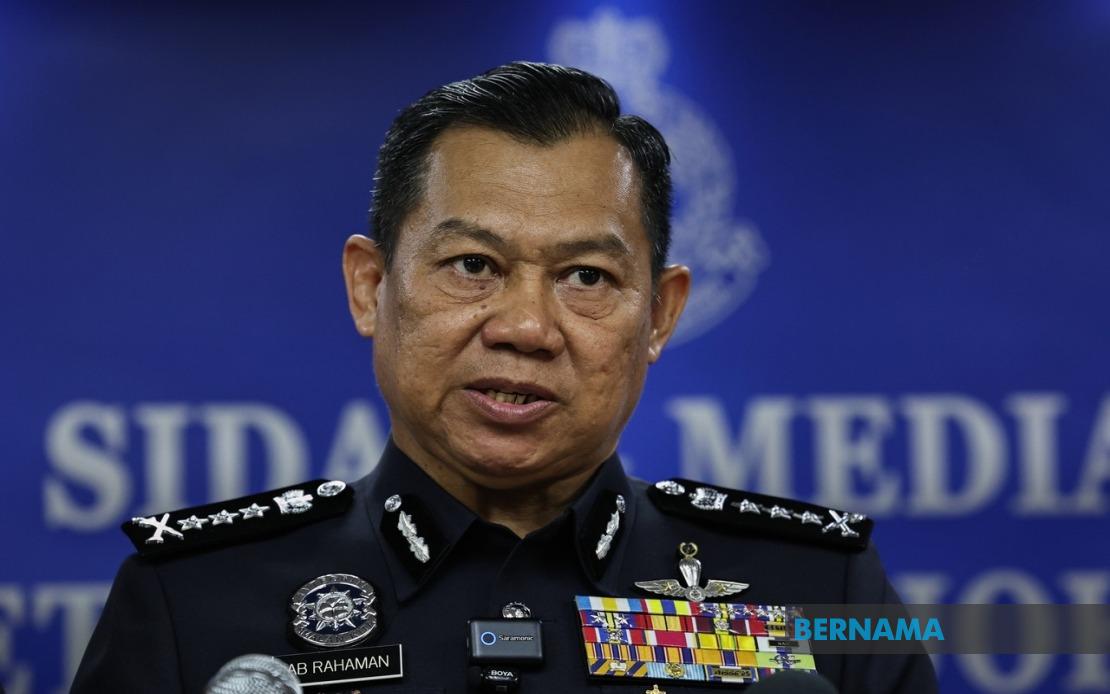
A comprehensive security operation is underway in Johor ahead of the state election, with the Royal Malaysia Police committing nearly 12,000 personnel to oversee polling operations and maintain public order. Johor Police Chief Datuk Ab Rahaman Arsad revealed the scale of the mobilisation at police headquarters in Johor Bahru, emphasising that the force remains committed to delivering a secure and orderly electoral process across the state.
The police deployment represents a significant operational undertaking, with officers and personnel distributed strategically across multiple phases aligned with the election calendar. Rather than concentrating resources at a single point, police leadership has opted for a graduated approach that allows flexibility in responding to emerging security needs as the electoral process unfolds. Datuk Ab Rahaman noted that deployment figures would be fine-tuned based on operational circumstances, suggesting that the 11,926 figure represents an initial estimate subject to revision.
Beyond standard police units, the Johor contingent has been reinforced by specialised federal assets drawn from the Internal Security and Public Order Department (KDNKA). These augmentations include 54 officers and 701 additional personnel sourced from the General Operations Force, Federal Reserve Unit, PDRM Air Unit, and Marine Police Force. The involvement of multiple force branches reflects the comprehensive nature of election security planning, which extends beyond ground-level crowd management to encompass aerial surveillance and waterborne patrols.
The General Operations Force contribution signals readiness for more complex scenarios. As a paramilitary unit traditionally deployed in counterinsurgency and internal security operations, its inclusion suggests police anticipate potential flashpoints requiring specialist training and equipment. The Federal Reserve Unit similarly carries experience in high-risk interventions, indicating that planners have identified possible escalation pathways that warrant specialised response capacity.
Marine Police Force involvement carries particular significance for Johor, which encompasses extensive coastal territory and numerous waterways. Election-day operations in archipelagic or riverside constituencies may require waterborne security measures to prevent unauthorised movement and ensure candidate protection. The PDRM Air Unit similarly addresses the geographic complexity of Johor, enabling rapid response deployment across dispersed polling locations.
For Malaysian electoral observers, this deployment scale reflects broader trends in election security planning. As electoral cycles have become more intense and polarisation more pronounced, security agencies have increasingly adopted multi-phased approaches that allow graduated escalation and de-escalation of personnel deployment. This adaptive framework contrasts with earlier practises of heavy upfront deployment, instead calibrating presence to match real-time security assessments.
The five-phase deployment structure warrants closer examination. Typically, such phasing encompasses pre-election positioning, nomination-day security, campaign-period monitoring, polling-day operations, and post-election consolidation. Each phase carries distinct security imperatives: early phases focus on preventing disruptions to candidate nomination processes, middle phases concentrate on managing campaign activities and rallies, while later phases emphasise ballot integrity and result tabulation security.
From a Southeast Asian perspective, the Malaysian police deployment demonstrates how regional democracies operationalise electoral security without resort to excessive militarisation. The involvement of specialised federal units provides augmented capability while maintaining police authority over operations. This approach contrasts with some neighbouring jurisdictions where military involvement in election security has proven controversial.
The coordination between state-level police contingents and federal support systems also reflects institutional maturation within Malaysian law enforcement. Rather than operating in silos, agencies communicate clearly about resource requirements and tactical objectives. Datuk Ab Rahaman's transparent communication with media about deployment scales and adjustment mechanisms serves public interest in understanding how election security is managed.
For political parties contesting the election, this deployment scale carries implications. The visible presence of significant police resources can influence campaign behaviour and voter engagement levels. Parties must factor this enhanced security environment into their campaign planning, recognising that movement restrictions during certain operational phases may affect rally scheduling and grassroots mobilisation activities.
The inclusion of air and marine units reflects lessons learned from previous Malaysian elections and regional experience with maritime security challenges. Johor's strategic location along critical shipping lanes and its proximity to Singapore means waterborne security receives elevated priority. The pre-emptive deployment of marine assets demonstrates proactive planning rather than reactive crisis response.
Public confidence in election conduct depends substantially on perceived security effectiveness. By publicly announcing deployment numbers and organisational structures, police leadership provides transparency that may reassure voters about their safety during polling. Simultaneously, visible police presence can deter potential troublemakers from attempting disruptions, thereby reducing actual incidents through deterrent effect.
The mobilisation underscores the resource intensity of modern elections in complex democracies. Malaysia's experience managing Johor's election security illustrates why election commissions globally work increasingly closely with security agencies during electoral planning phases. The 11,926-personnel figure, while substantial, represents considered calculation rather than arbitrary escalation, grounded in geographical realities and operational experience.

