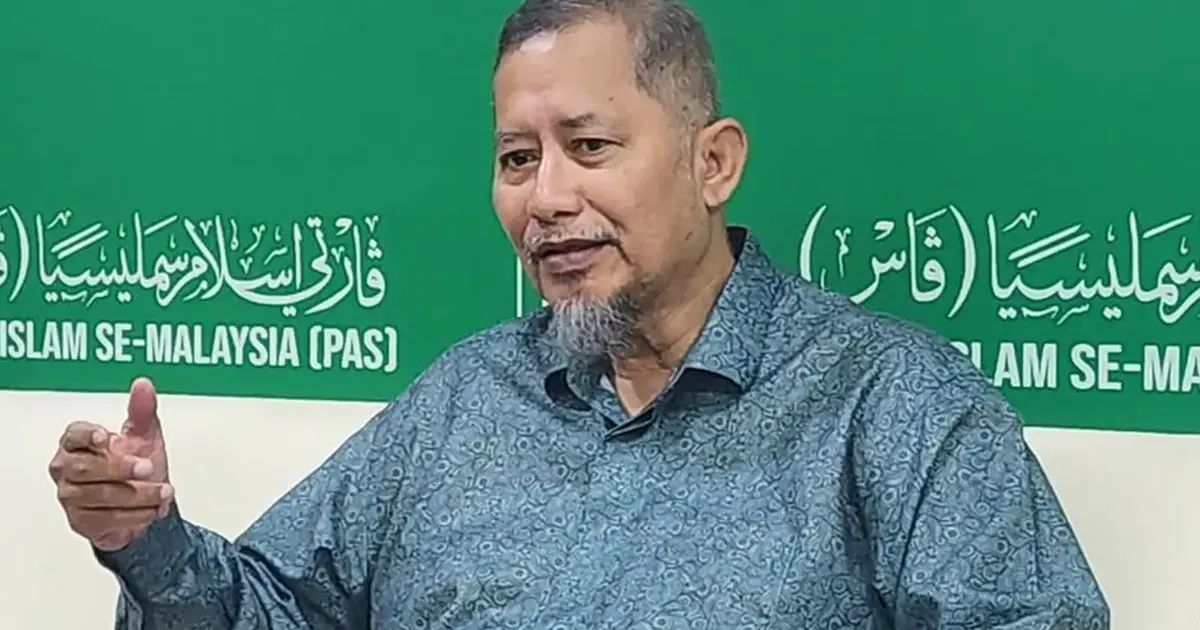
The political landscape across Malaysia's heartland could shift dramatically should PAS and Bersatu, two major components of the Perikatan Nasional coalition, find themselves in direct competition at the ballot box. PAS treasurer Iskandar Abdul Samad has publicly declared that his party possesses sufficient electoral strength to defeat Bersatu should the two allies ever contest against each other in a head-to-head battle.
Iskandar's assertion reflects underlying confidence within PAS about its grassroots mobilisation capacity and voter loyalty, particularly among constituencies where Islamic-oriented politics carries significant weight. The treasurer's remarks suggest that PAS maintains a competitive edge that extends beyond merely defensive positioning, potentially signalling deeper factional tensions within the broader Perikatan Nasional coalition that has fundamentally reshaped Malaysian politics since 2018.
The statement carries particular weight given the historical trajectory of both parties. PAS has consistently maintained strongholds in rural Malay-Muslim constituencies across the northern states and parts of Pahang, leveraging decades of organisational presence and ideological consistency. Bersatu, by contrast, represents a comparatively newer entrant to Malay-Muslim electoral politics, having pivoted from UMNO during Mahathir Mohamad's 2018 comeback bid and gaining prominence through its alignment with anti-corruption narratives that resonated during that period.
The treasurer's confidence appears anchored in the assertion that Perikatan Nasional supporters would naturally gravitate towards PAS if forced to choose between the two parties. This calculation assumes that voters within PN-aligned constituencies would view PAS as the ideologically purer or more reliable guardian of Muslim-centric politics, a positioning PAS has cultivated throughout its decades of existence. The logic suggests that Bersatu voters lack the same degree of organic, deep-rooted attachment to their party that characterises PAS supporters, making them more susceptible to switching allegiance should the coalition fragment.
Such declarations, however, must be contextualised within the complex dynamics of Malaysian coalition politics. The Perikatan Nasional arrangement, while serving as a unified electoral machine during the 2022 general elections, has witnessed occasional friction between its components. PAS and Bersatu differ markedly in their historical origins, organisational structures, and strategic priorities. These differences occasionally surface in policy disagreements or resource allocation disputes, creating space for exactly the kind of competitive posturing that Iskandar's remarks exemplify.
For Malaysian political observers, Iskandar's statement signals that despite the formal unity of Perikatan Nasional, the constituent parties maintain contingency thinking regarding potential electoral scenarios. This reflects a rational acknowledgement that coalition arrangements, while electorally advantageous, remain perpetually vulnerable to breakdown. The treasurer's willingness to articulate confidence in PAS's competitive position suggests the party leadership views itself as the senior partner within PN, capable of absorbing or repelling any challenge from its allies.
The implications for Malaysia's broader political trajectory warrant careful consideration. A genuine split between PAS and Bersatu would fundamentally alter the electoral calculus affecting the government's stability and the opposition's prospects. Regional politics in Perikatan Nasional-dominated states such as Kedah, Terengganu, and Perlis would face unprecedented realignment pressure. Constituencies that currently operate under undisputed PN labels would confront genuine three-way contests or become battlegrounds where PAS and Bersatu supporters face conflicting party loyalty demands.
Moreover, such a scenario would possess ripple effects extending across Southeast Asia's broader political ecosystem. Malaysia's role as a moderate Islamic-democratic state has long depended upon maintaining equilibrium between competing visions of Malay-Muslim representation. The fragmentation of Perikatan Nasional into warring camps could intensify internal polarisation, particularly if Bersatu attempted to reposition itself by seeking accommodation with federal government partners or adopting alternative electoral alliances. The region would closely observe whether PAS's confident predictions actually materialise or whether Bersatu possesses greater electoral resilience than the treasurer's remarks suggest.
Iskandar Abdul Samad's comments also illuminate deeper questions about voter behaviour and party identity in contemporary Malaysian politics. The treasurer assumes a relatively straightforward transfer of loyalties from Bersatu to PAS, yet electoral reality often proves more complex. Voters frequently base support upon local candidate quality, economic grievances, or performance assessments rather than ideological consistency alone. Bersatu, despite its newer status, has cultivated substantial organisational capabilities and possesses influence within government machinery that could translate into tangible campaign advantages.
The treasurer's confidence-building statement serves multiple audiences simultaneously. Party members receive reassurance of PAS's competitive standing and leadership competence. Coalition partners receive subtle reminders that PAS cannot be taken for granted or displaced within the alliance hierarchy. Voters receive signals that PAS maintains sufficient strength to deliver on its electoral promises. Opposition parties, conversely, receive indications of potential coalition fragility that might be exploited through targeted messaging or strategic candidate placement in constituencies where PAS-Bersatu tensions run highest.
Looking forward, Iskandar's remarks will likely prompt responses from Bersatu leadership asserting their own electoral viability or attempting to emphasise coalition unity. The dynamic reflects Malaysia's increasingly competitive political environment, where coalition stability cannot be assumed and internal rivalries persistently threaten carefully constructed electoral arrangements. Whether PAS's predicted supremacy would materialise in actual electoral circumstances remains an empirical question, but the treasurer's willingness to make such assertions demonstrates the confidence and internal dynamics currently shaping Perikatan Nasional's trajectory across Malaysia's political landscape.

